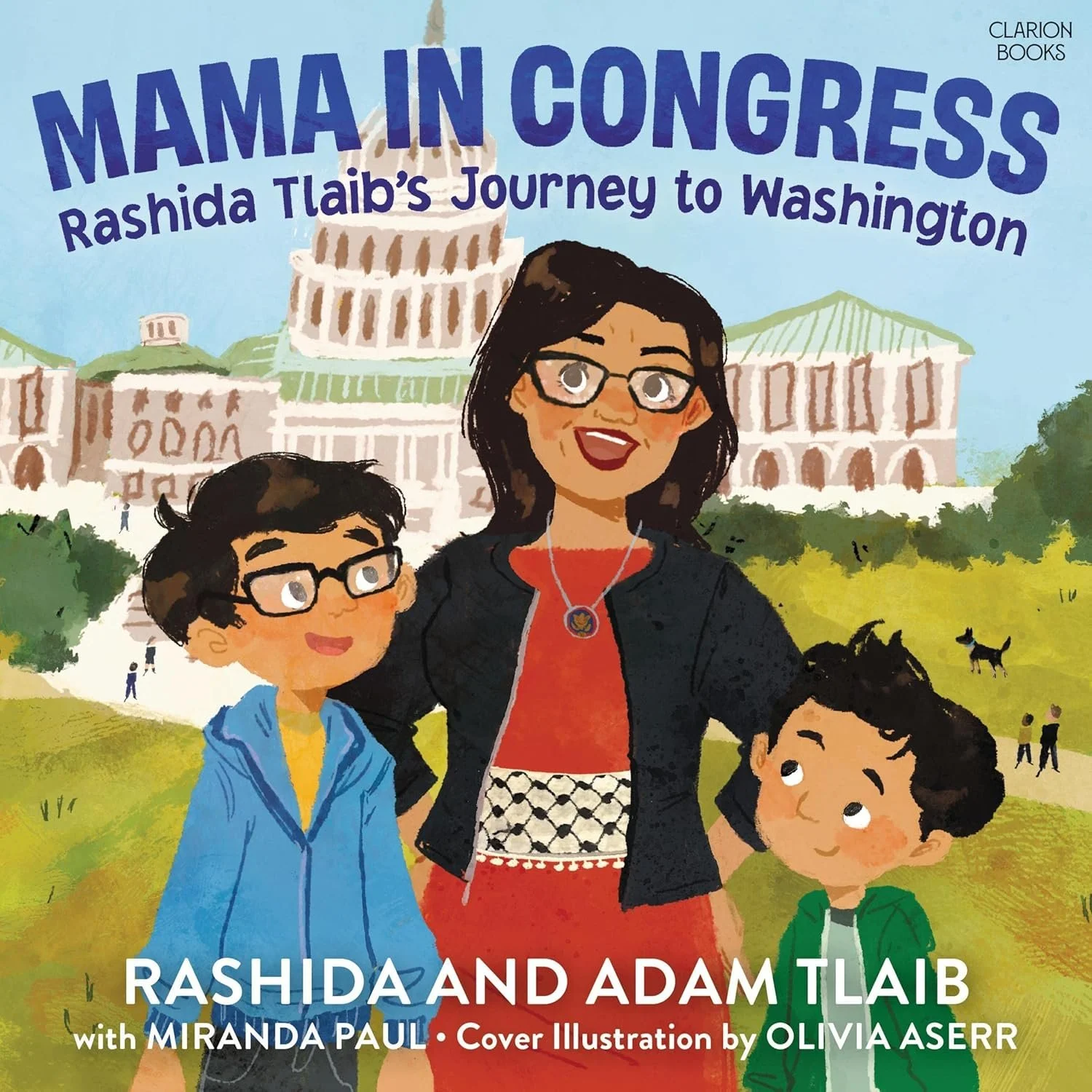
Mama In Congress
Book Summary:
Told through the eyes of her son Adam, this biography traces the journey of Rashida Tlaib from her childhood as the daughter of Palestinian immigrants in Detroit to becoming one of the first Muslim women elected to the U.S. Congress. The story highlights how experiences with poverty, discrimination, and community challenges inspired her to become a lawyer, activist, and elected official dedicated to helping others. Along the way, readers learn how elections, government, and civic engagement can be tools for creating change.
Recommended Questions:
How did Rashida Tlaib’s experiences growing up influence the type of leader she became and the issues she chose to address as a community leader and elected official?
The book mentions that Mama’s story of “opening doors” began long before she was elected to Congress. What does “opening doors” mean in terms of power, opportunity, and representation? How can one person’s journey help create opportunities for others?
When Adam suggests it might be safer to hide his identity, his mother explains that it is important to be our authentic selves. What does this moment in the story teach us about self-expression and standing up for who you are?
What responsibilities do members of Congress have to the people they represent?
Why is it important for people from different backgrounds and experiences to serve in government?
The book uses a tree analogy to describe the three branches of government. Why is it important that Congress, rather than the President alone, has the power to make laws? How does this system help ensure that many voices are represented in government?
Rashida was motivated to address pollution that was making people sick in her neighborhood. Why is pollution both a health and social justice concern?
Before being elected to Congress, Rashida worked as a community activist and lawyer. Which role do you think is more effective for creating change: working from the outside as an activist or from the inside as a lawmaker? Explain your reasoning.
NCSS Theme 10: Civic Ideals and Practices
The book demonstrates how citizens can participate in democracy by identifying community problems, advocating for change, and serving in government. Rashida Tlaib's story shows that civic participation extends beyond voting and includes organizing, speaking out, and representing community voices. Students can explore how democratic institutions work and why representation matters.
Social Justice Anchor Standard 17: Responsibility to stand up to injustice
Throughout the story, Rashida Tlaib identifies problems affecting her community and takes action to address them. Rather than accepting unfair conditions, she becomes involved in public service and advocacy, demonstrating how individuals can use their voices and talents to create positive change for others.
WA Civics 2: Understands the purposes, organization, and function of governments, laws and political systems
The story highlights how individuals can participate in civic life to address issues affecting their communities. Tlaib used education, activism, law, and elected office to advocate for people facing challenges such as poverty, environmental concerns, and unequal opportunities. Students can examine how civic involvement can take many forms and how individuals can contribute to the common good.
