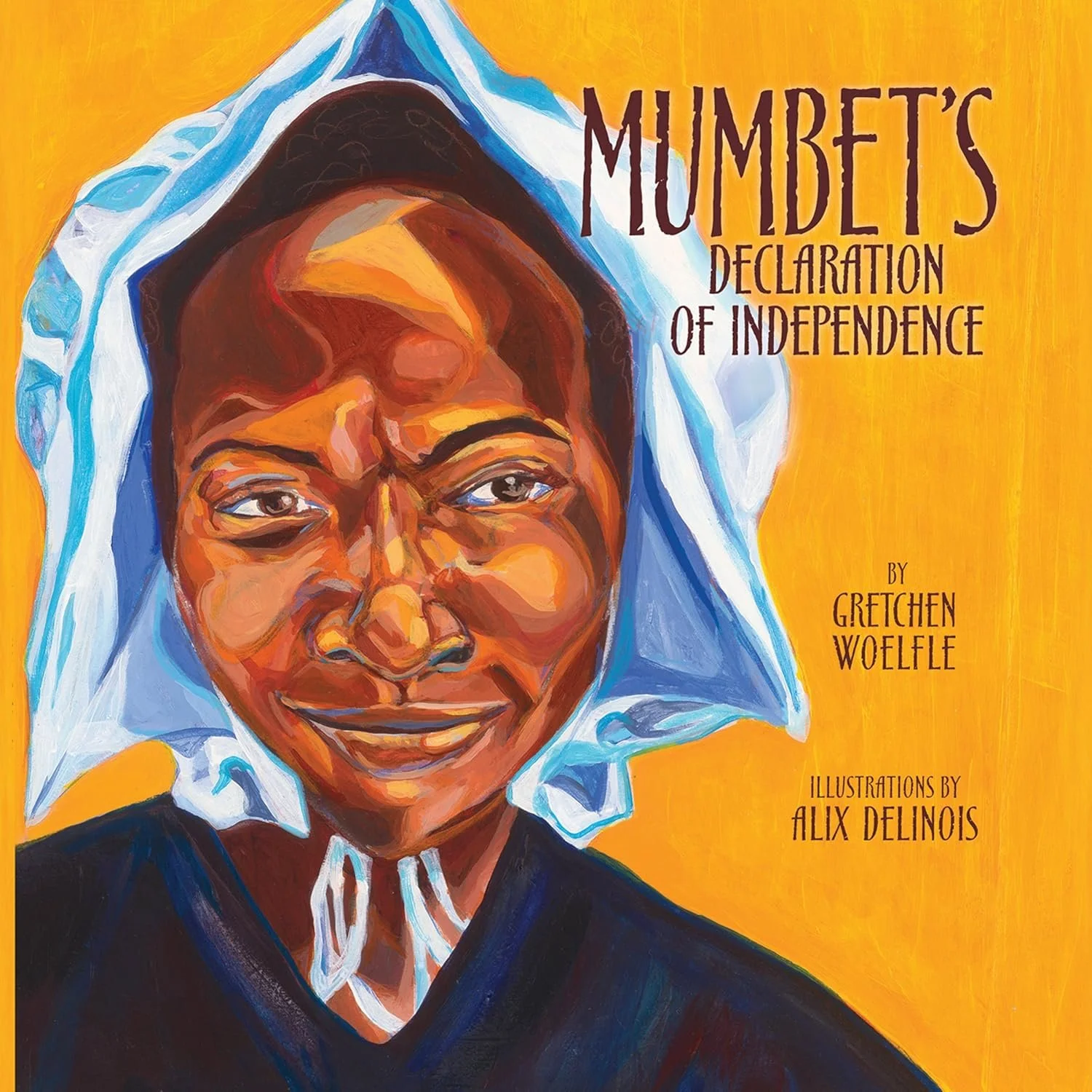
Mumbet’s Declaration of Independence
Book Summary:
This biography tells the story of Elizabeth Freeman, an enslaved Black woman living in Massachusetts during the American Revolution. After hearing the words of the new Massachusetts Constitution proclaim that all people are born free and equal, Mumbet challenged her enslavement in court and won her freedom. Her case helped expose the contradiction between the nation's ideals of liberty and the reality of slavery and contributed to the end of slavery in Massachusetts.
Recommended Questions:
The story contrasts the colonists’ fight for freedom from Britain with their denial of freedom to enslaved people. What contradictions did Mumbet notice between American ideals and the reality of slavery?
At the beginning of the story, Mumbet is enslaved in Massachusetts, a state many people think of as “free.” How does her story help us recognize that systemic injustice existed in many parts of the United States, not just the South?
After hearing the words of the new Massachusetts Constitution read aloud, Mumbet declared, “I am not a dumb critter. I have a right to freedom.” How did the law change from being a tool that supported slavery to a tool that could help secure her freedom?
Why do you think Mr. Sedgwick agreed to take Mumbet’s case?
When Mr. Sedgwick explained that they might lose, Mumbet responded, “I’ll be no worse off.” Explain the significance of this statement.
If you were a lawyer at that time, what arguments from the Massachusetts Constitution or the Declaration of Independence would you use to support Mumbet’s case?
How does Mumbet’s story deepen or change your understanding of the American Revolution?
What does Mumbet’s story reveal about the gap between a nation’s ideals and its actions?
If Mumbet were alive today, what gaps between American ideals and reality do you think she might notice and challenge?
NCSS Theme 6: Power, Governance and Authority
The book explores how laws and governments can both uphold and challenge injustice. Mumbet used the legal system to argue that the promises of freedom and equality in Massachusetts should apply to her as well. Students can examine how people use laws, courts, and government institutions to seek justice and expand rights.
Social Justice Anchor Standard 17: Responsability to stand up to injustice
Rather than accepting the limitations imposed on her, Mumbet took action to challenge an unjust system. By bringing her case to court, she demonstrated courage, persistence, and a belief that change was possible. Her story shows how ordinary individuals can take action to challenge unfair laws and create a more just society.
WA Civics 1: Understands key ideals and principles of the United States
This book helps students examine the civic ideals of liberty, equality, justice, and individual rights that are foundational to American democracy. After hearing the Massachusetts Constitution declare that all people are born free and equal, Mumbet recognized that these principles should apply to her as well and challenged her enslavement in court. Her story encourages students to consider what happens when a nation's actions do not match its stated ideals and how citizens can use democratic principles and the rule of law to advocate for justice and expand rights for others.
