I’m Sorry You Got Mad
Book Summary:
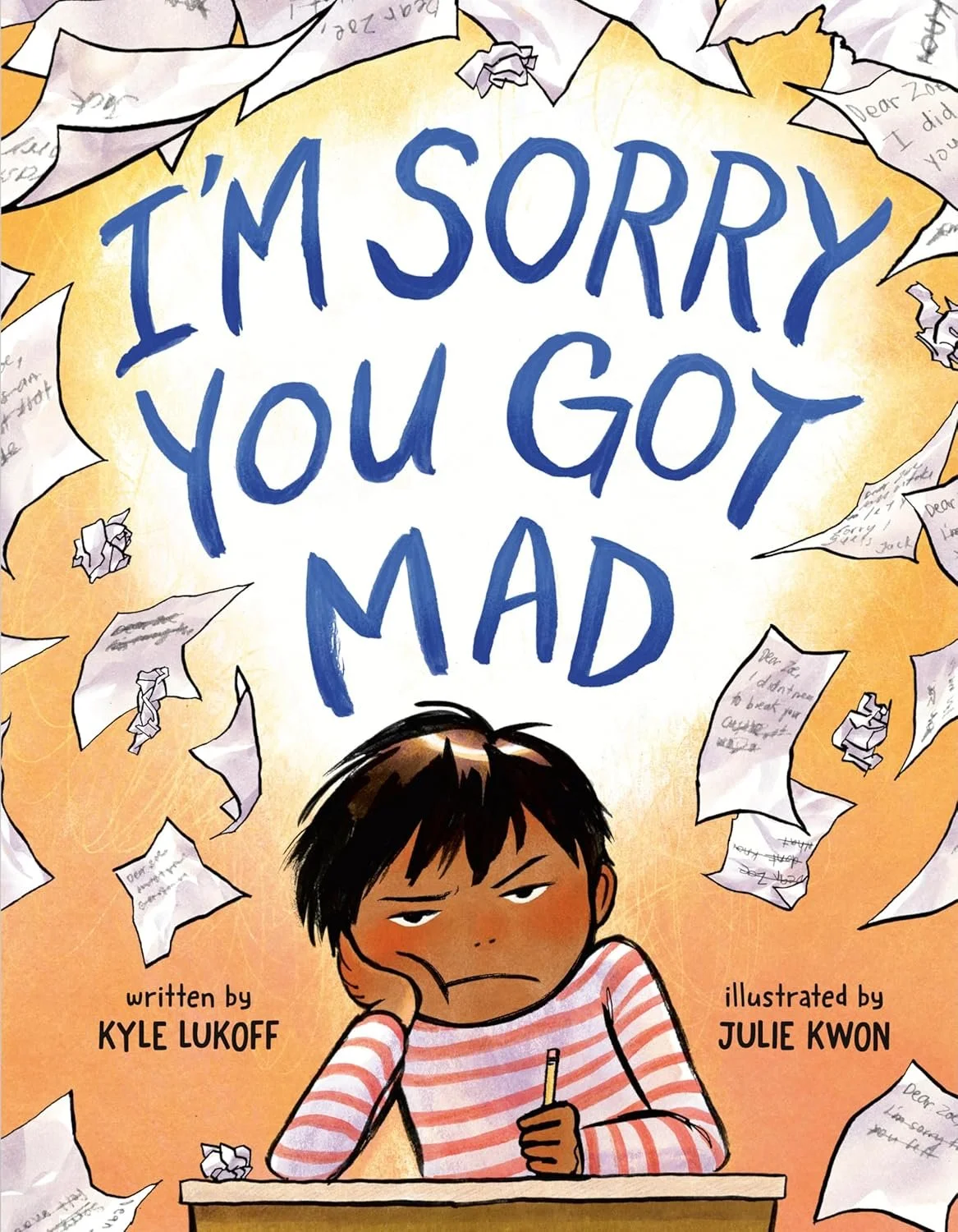
After hurting his classmate Zoe's feelings, Jack is asked to write an apology. At first, his notes focus on defending himself and blaming Zoe for being upset, but with guidance from his teacher, he gradually learns that a genuine apology requires acknowledging his actions, expressing remorse, and making amends. Told through a series of notes and revisions, the story explores the difference between saying "I'm sorry" and truly taking responsibility for harm caused.
Recommended Questions:
What is a stereotype? How can stereotypes be harmful to individuals and communities?
Jack admits he knocked over the castle because other boys told him that “castles are for girls.” Why do you think he listened to them instead of doing what he knew was right? What could he have said or done instead?
How can we make sure our classroom all genders are welcomed?
What is the difference between saying “I’m sorry” and taking responsibility for your actions?
Why can apologizing sometimes feel difficult?
What makes an apology sincere, meaningful, and effective?
Select three versions of Jack’s apology. Why was each one ineffective, and how did his later revisions improve it?
How did Ms. Rice help Jack improve his thinking without simply telling him what to write? Why was it important Ms. Rice not tell him what to write?
How did Jack’s understanding of the situation change throughout the story?
What role does accountability play in creating fair, respectful, and inclusive communities?
Why is revision important—not only in writing, but also in relationships?
NCSS Theme 5: Individuals, Groups, and Institutions
The story examines how individuals interact within a classroom community and how institutions, such as schools, help students learn social responsibility. Through Ms. Rice's guidance, Jack learns skills that strengthen relationships and contribute to a respectful community. The book demonstrates how groups and institutions can help individuals develop empathy, accountability, and conflict-resolution skills.
Social Justice Anchor Standard 11: Recognize stereotypes and their harm
The book explicitly addresses gender bias when the character Jack reveals he knocked over a castle because other boys told him "castles are for girls". This provides a direct opportunity for students to discuss how sterotypes and exclusion lead to hurt feelings and conflict.
WA Social Studies Skills 1: Uses critical reasoning skills to analyze and evaluate claims
The story encourages students to evaluate different forms of apologies and determine which are sincere and effective. As Jack revises his notes, readers analyze how perspective, evidence, and reasoning influence conflict resolution. Students can examine the consequences of blame-shifting and consider how accountability helps repair harm and strengthen relationships.
