Teaching Change
Book Summary:
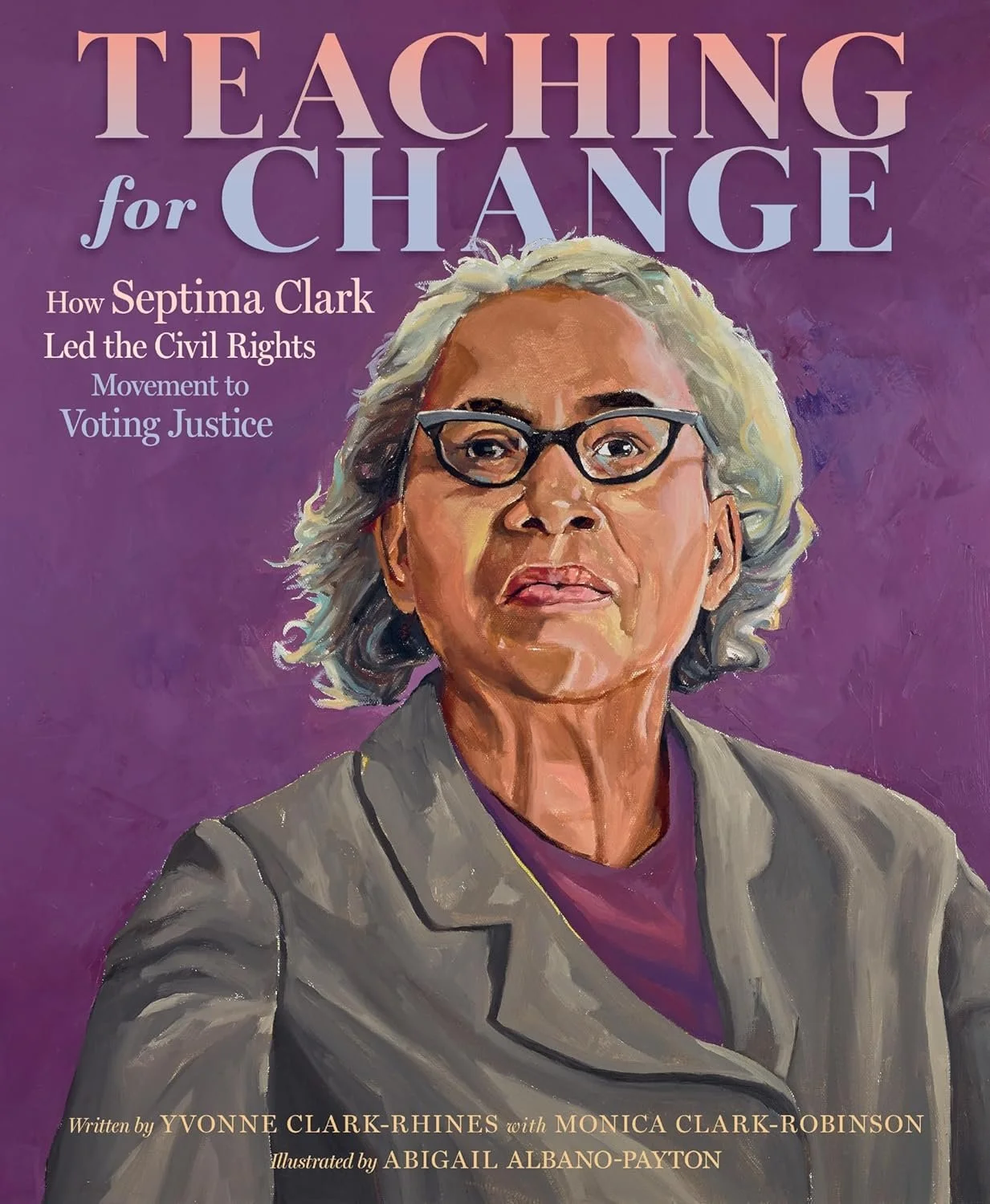
This biography chronicles the life of Septima Clark, an educator and activist who believed literacy and education could empower people to fight injustice. During the Civil Rights Movement, she helped organize Citizenship Schools that taught Black citizens reading, writing, and civic skills needed to overcome voter suppression. The story highlights how Septima Clark challenged systemic inequality through grassroots activism, demonstrating that education can be a powerful tool for liberation and social change.
Recommended Questions:
The book describes discriminatory literacy tests designed to keep Black adults from voting. How did these tests violate the civic ideals of the United States, and why was education one of the most powerful ways to fight back against them?
In this story, education was used in two very different ways: the government used literacy tests to exclude people, while Septima Clark used Citizenship Schools to empower and include them. How can education be used for both harm and good?
Where does Septima Clark’s work fit within the timeline of the Civil Rights Movement? How did her focus on literacy and education help pave the way for major events like the Voting Rights Act of 1965?
Dr. Martin Luther King Jr. once described Septima Clark’s work as the “foundation” of the movement. Why do you think education and grassroots organizing were so important to the success of the Civil Rights Movement?
Many people know about Dr. Martin Luther King Jr., but fewer know about Septima Clark. Why do you think history books sometimes focus on the "famous speakers" rather than the teachers who worked behind the scenes?
Clark did not just fight for change herself—she empowered “ordinary people” to become leaders. Why is teaching communities to organize themselves often more powerful than relying on one single leader?
Septima Clark once said, “The greatest evil in our country is not racism, but ignorance.” If she were alive today, what kinds of “ignorance” or injustice do you think she would encourage people to learn more about and challenge?
NCSS Theme 10: Civic Ideals and Practices
This book demonstrates how Septima Clark used literacy as a tool for political empowerment and voter registration. Through her Citizenship Schools, she taught Black adults to overcome discriminatory voting tests, positioning education as a fundamental act of democratic participation and civic responsibility.
Social Justice Anchor Standard 17: Stand up to injustice
The book highlights Septima Clark’s commitment to fighting injustice through education and grassroots activism. Even after losing her teaching job because of her activism, Clark refused to stop organizing Citizenship Schools and empowering Black citizens to overcome voter suppression. Her story models courageous action, perseverance, and the belief that ordinary people can work together to challenge systemic inequality and create social change.ion against injustice.
WA History 1: Understands history chronology
The book helps students place Septima Clark’s work within the broader timeline of the Civil Rights Movement and the struggle for voting rights in the United States. Students can trace how segregation, voter suppression, and grassroots activism developed over time and led to important changes in civil rights and civic participation. Understanding the sequence of these historical events helps students recognize how individuals and movements contributed to social change.
