One Can
Book Summary:
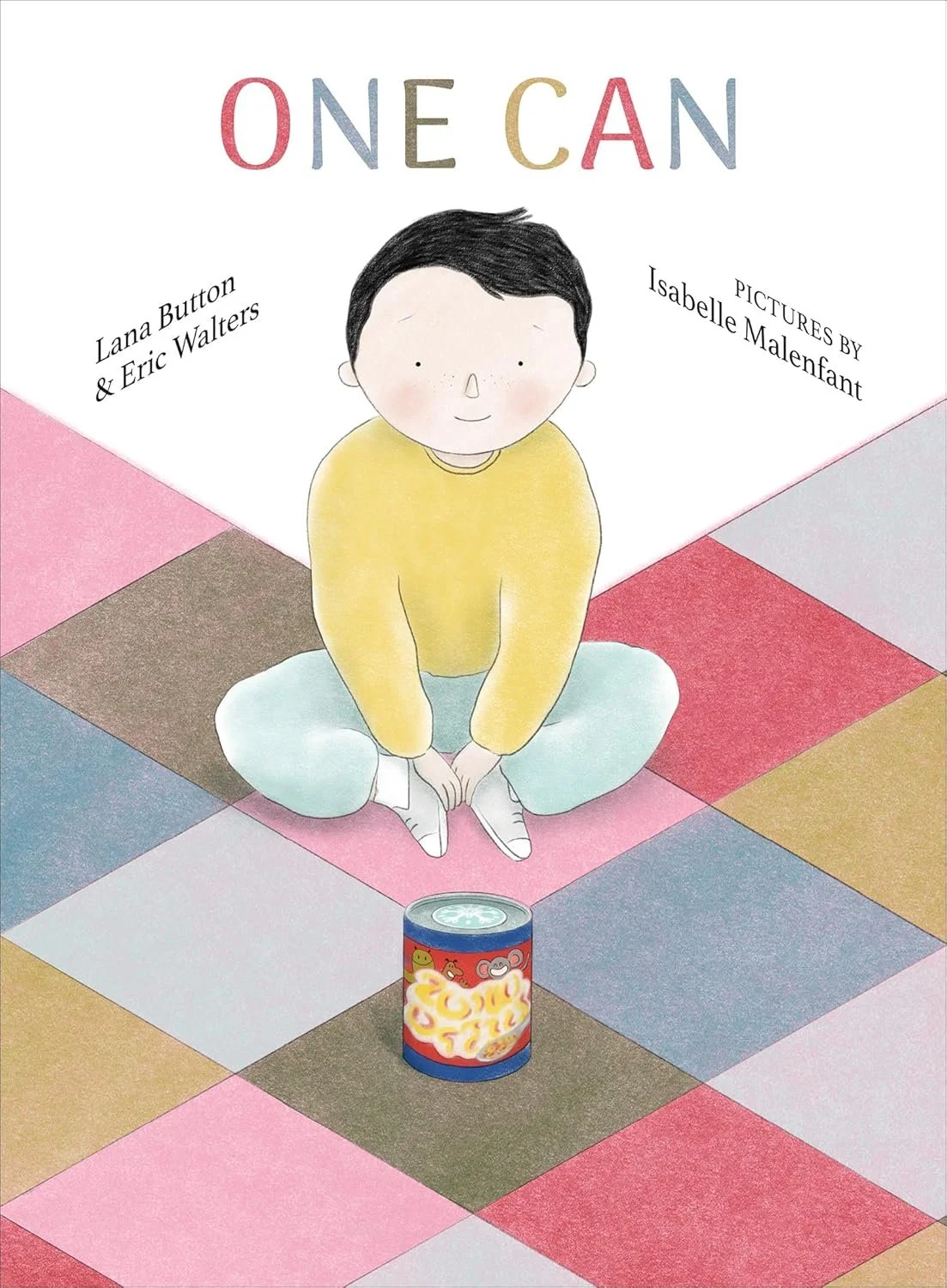
In One Can, a class food drive inspires a young child to donate their favorite meal—a can of “Zoodelicious” noodles—even though their own family is struggling to afford food. After the can later reappears in their own kitchen with the class snowflake sticker still attached, the child realizes that community support can work both ways: sometimes people are able to give, and sometimes they need help themselves. The story highlights empathy, food insecurity, and the power of communities caring for one another.
Recommended Questions:
Why do some families struggle to get enough food even when grocery stores have plenty of food available?
Why might a family have a job and a home but still not have enough “purchasing power” to fill their pantry? How do community organizations, like the one in the book, help fill gaps when the traditional economic system does not meet everyone’s needs?
Just like the family in the story, many people struggle “behind closed doors.” Why might a family that appears “okay” on the outside still experience food insecurity?
The child chose to donate their favorite soup, even though their mother said it might not be replaced. Why does choosing a favorite item show more generosity than just picking any random can from the cupboard?
After the child realizes that their own family needs help, they don't stop giving; they find their blue mittens to donate to the mitten tree. What does this action tell you about the child’s character and values?
We learn about the child through what they do more than what they say. Based on their actions—like placing the 100th can or writing a note for the mittens—how would you describe their personality to someone who hasn't read the book?
The author writes, “Sometimes we give and sometimes we are given.” Can you think of a time when you were the “helper” and another time when you were the “helped”? Why is it important to understand both experiences?
What does this story teach us about sacrifice and generosity?
What lessons does One Can teach about empathy, scarcity, and collective responsibility within a community?
NCSS Theme 7: Production, Distribution and Consumption
One Can shows how communities work together to distribute resources, such as food, to people in need. The story highlights that access to basic necessities is not always equal and demonstrates how food drives and community support systems help meet people’s needs when traditional economic systems fall short. Students are encouraged to think about scarcity, sharing resources, and the role communities play in supporting one another.
Social Justice Anchor Standard 16: Empathy and Community Action
Students will express empathy when people experience hardship and recognize the importance of supporting one another through community action. The story shows how small acts of generosity can make a meaningful difference and highlights the importance of both giving and receiving help within a community.
WA Economics 1: Wants vs needs
This book highlights how people must often make difficult choices between wants and needs and consider the outcomes of those decisions. In One Can, the child chooses to donate a favorite meal even though the family’s pantry is nearly empty, and the mother supports the decision despite their own financial struggles. The story encourages students to think about sacrifice, generosity, and how communities can help meet people’s needs through collective support.
