Simone
Book Summary:
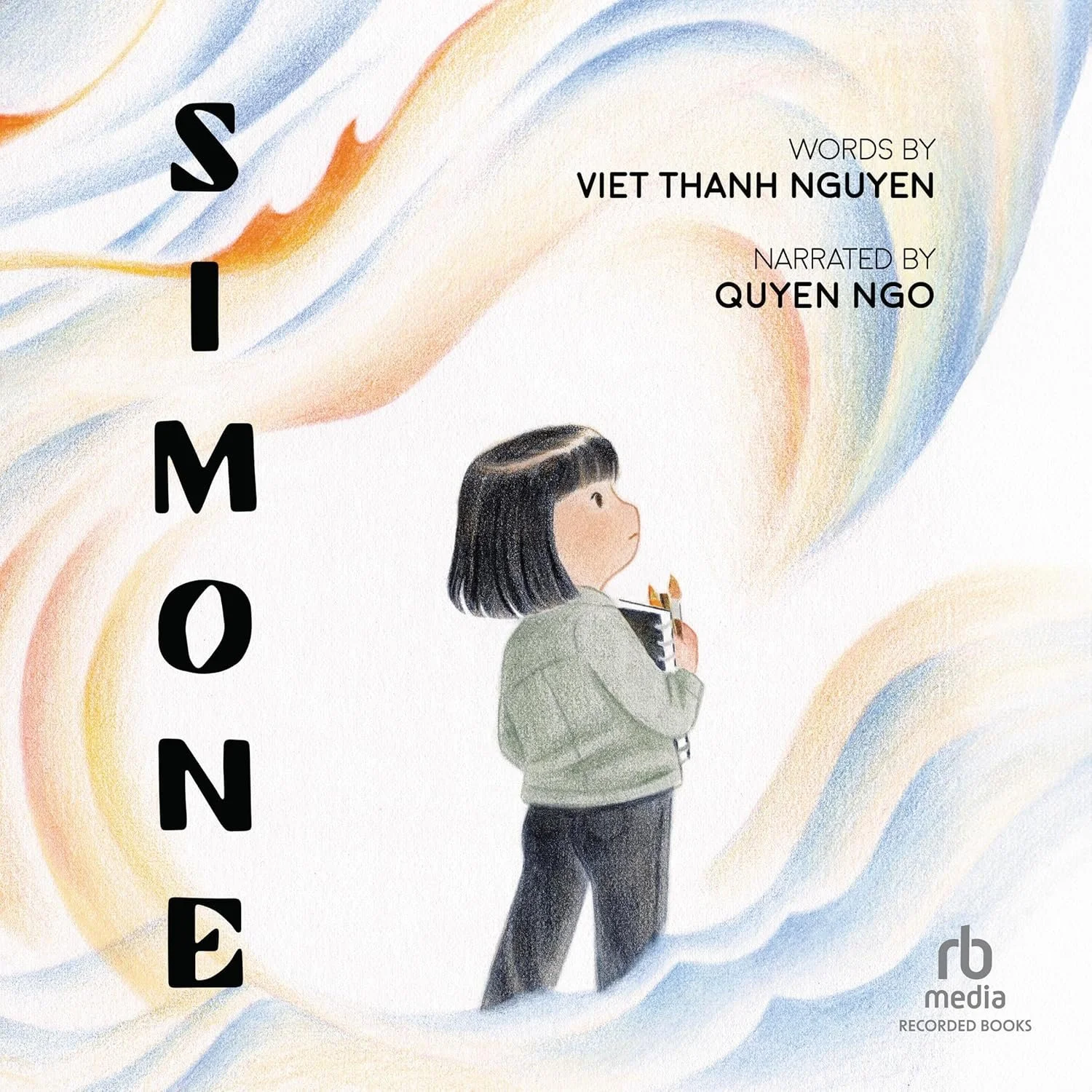
Simone follows a young Vietnamese American girl whose life is disrupted when a wildfire in California forces her and her mother to evacuate their home. As they seek safety, Simone learns about her mother’s earlier displacement in Vietnam caused by severe flooding, drawing connections between past and present climate disasters. Through creativity, memory, and community support, Simone discovers resilience and hope in the face of environmental upheaval.
Recommended Questions:
How does the illustrator’s use of color—and especially shades of gray—shape your understanding of the story’s mood, themes, and emotional shifts?
In what ways does Simone help us think about climate change and how it affects families and communities today?
How does Simone’s mother’s story of past displacement help Simone understand her own experience?
Who has access to emergency shelters during a wildfire? Who might face barriers to entering or using these shelters?
What role does art play in how Simone copes with fear and helps others?
How are community shelters funded? What role do local, state, or federal governments play in supporting them?
How might income, immigration status, language, disability, or incarceration status affect someone’s access to safety during a disaster?
What does the reference to incarcerated firefighters reveal about labor, fairness, and inequality during emergencies?
In the story, how does the community come together to support people during the wildfire? What does this suggest about collective responsibility?
NCSS Theme 10: Global Connections
Simone connects to global issues by showing how climate-related events like wildfires and floods affect families across borders and generations. Students can explore how environmental change connects communities in California and in Vietnam, highlighting shared challenges and the need for cooperation and understanding across cultures. The book encourages thinking about how local experiences are intertwined with global patterns of climate impact and human movement.
Social Justice Anchor Standard 13: Examining inequity
Simone encourages students to examine who has access to community shelters during climate emergencies and how those shelters are funded and supported. The story opens space to discuss how economic inequality, housing instability, immigration status, or incarceration can influence access to safety and resources. At the same time, it highlights how communities come together in times of crisis, demonstrating collective responsibility and mutual aid in response to structural inequities.
WA Economics 4: Understands the economic issues and problems that all societies face
Simone highlights how environmental disasters intersect with economic systems, including evacuation costs, access to resources, and labor practices. The reference to incarcerated firefighters earning very low wages invites students to examine how labor is valued differently within the economy and how economic structures can create inequality. Students can analyze how climate events expose economic disparities and influence decisions that affect communities and vulnerable populations.
