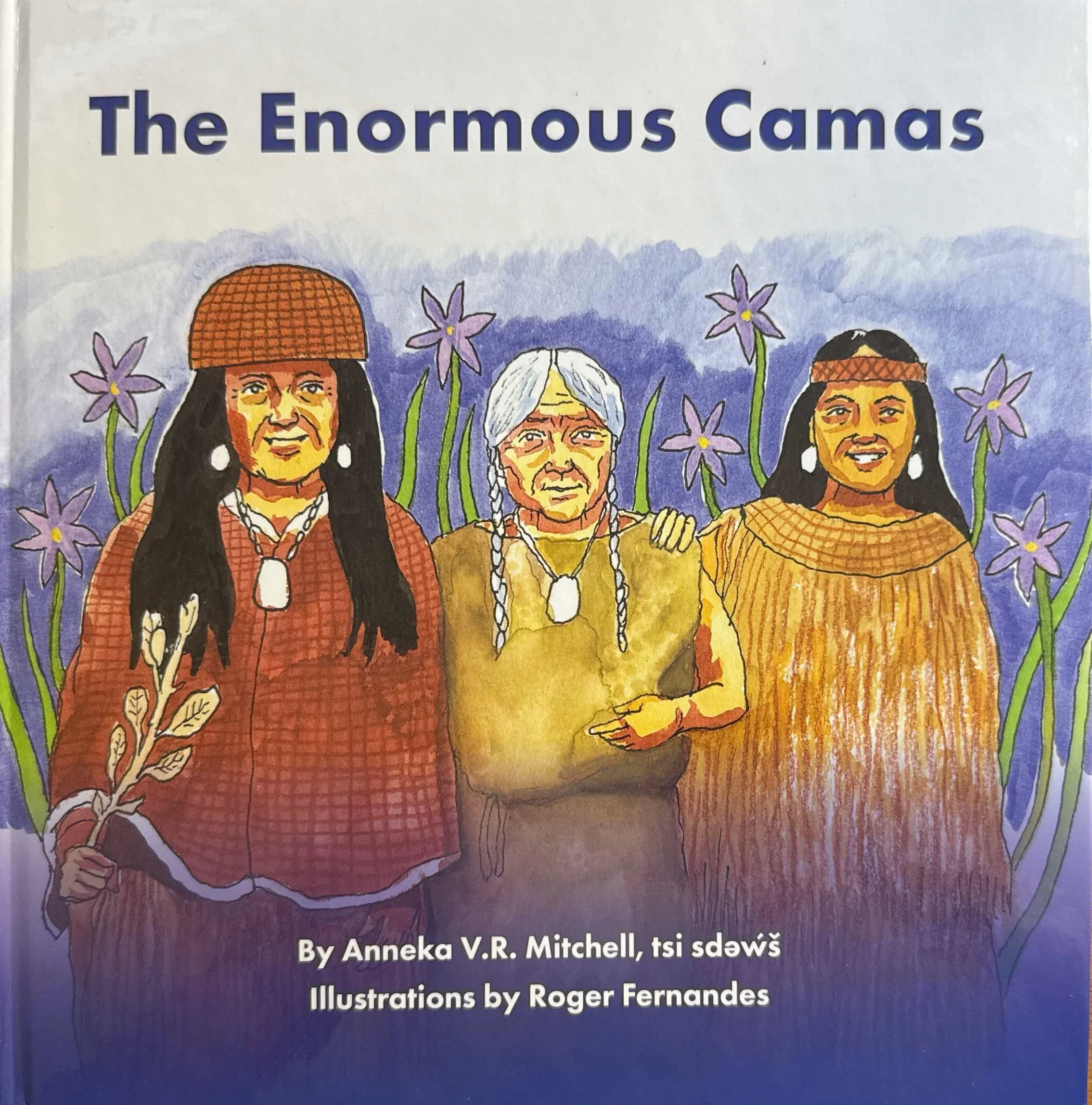
The Enormous Camas
Book Summary:
The Enormous Camas tells the story of an Indigenous woman (the tribe is not specified, though the author is Swinomish) who plants a camas seed and carefully tends to it by burning the land, following traditional practices. One bulb grows so enormous that she cannot pull it out on her own. In beautiful, repetitive language that children enjoy, she calls on her mother—and then many animals—for help until the giant bulb is finally freed. In the end, the enormous camas provides abundant food to share, emphasizing community, cooperation, and the generosity of the land.
Recommended Questions:
What is camas, and why is it important to the author (Swinomish)?
How is the restoration of camas connected to the revitalization of Tribal practices that were disrupted or outlawed during colonization?
What environmental conditions help camas flourish?
What foods are made with camas?
The book describes how the main character plants the seed then burns the weeds. How does this action reflect a traditional Indigenous land management practice?
After burning the weeds, the book states, “She didn’t know there was going to be trouble.” What trouble might result from burning? How was this cultural practice restricted or outlawed during colonization?
When the girl cannot pull the camas by herself, she first asks her mother for help. How does this moment illustrate intergenerational knowledge, learning, and connection?
Research one of the animals selected to help pull the camas. What is this animal’s connection to the Coast Salish region? What is its specific connection to the Swinomish area?
NCSS Theme 7: Production, Distribution and Consumption
This story illustrates how food is produced through knowledge, labor, and environmental stewardship. The planting, tending, harvesting, and sharing of camas reflect an Indigenous economic system rooted in cooperation and sustainability rather than profit. Through this lens, students can examine how cultural values shape systems of production and how communities meet their needs using local resources.
Social Justice Anchor Standard 18: Positive social identities
The Enormous Camas invites students to examine how Indigenous land management practices—such as cultural burning—were restricted or outlawed through colonization, disrupting both food systems and cultural traditions. The story also highlights the revitalization of these land practices, showing how restoring camas cultivation is directly connected to reclaiming cultural knowledge, identity, and sovereignty. By learning about both the historical injustice and the ongoing restoration of land and traditions, students deepen their understanding of justice, resilience, and the importance of honoring Indigenous knowledge systems.
WA Civics 3: Understands the purposes and organization of Tribal and international relationships and US foreign policy
The Enormous Camas creates space for students to explore how Tribal governments work to protect cultural traditions, land practices, and food sovereignty. The revitalization of camas cultivation and cultural burning reflects Tribal sovereignty and the authority of Tribal nations to manage their lands and sustain their communities. Students can examine how Tribal governments interact with state and federal systems—especially in areas such as environmental policy and land management—to restore practices that were once restricted through colonization.
Links to Related Primary and Secondary Sources
**Teachers wishing to deepen their knowledge of camas are encouraged to view the Swinomish Camas Project video available on Vimeo. Two links are provided below thorough more videos can be found online. **
