Daughter of the Light-Footed People
Book Summary:
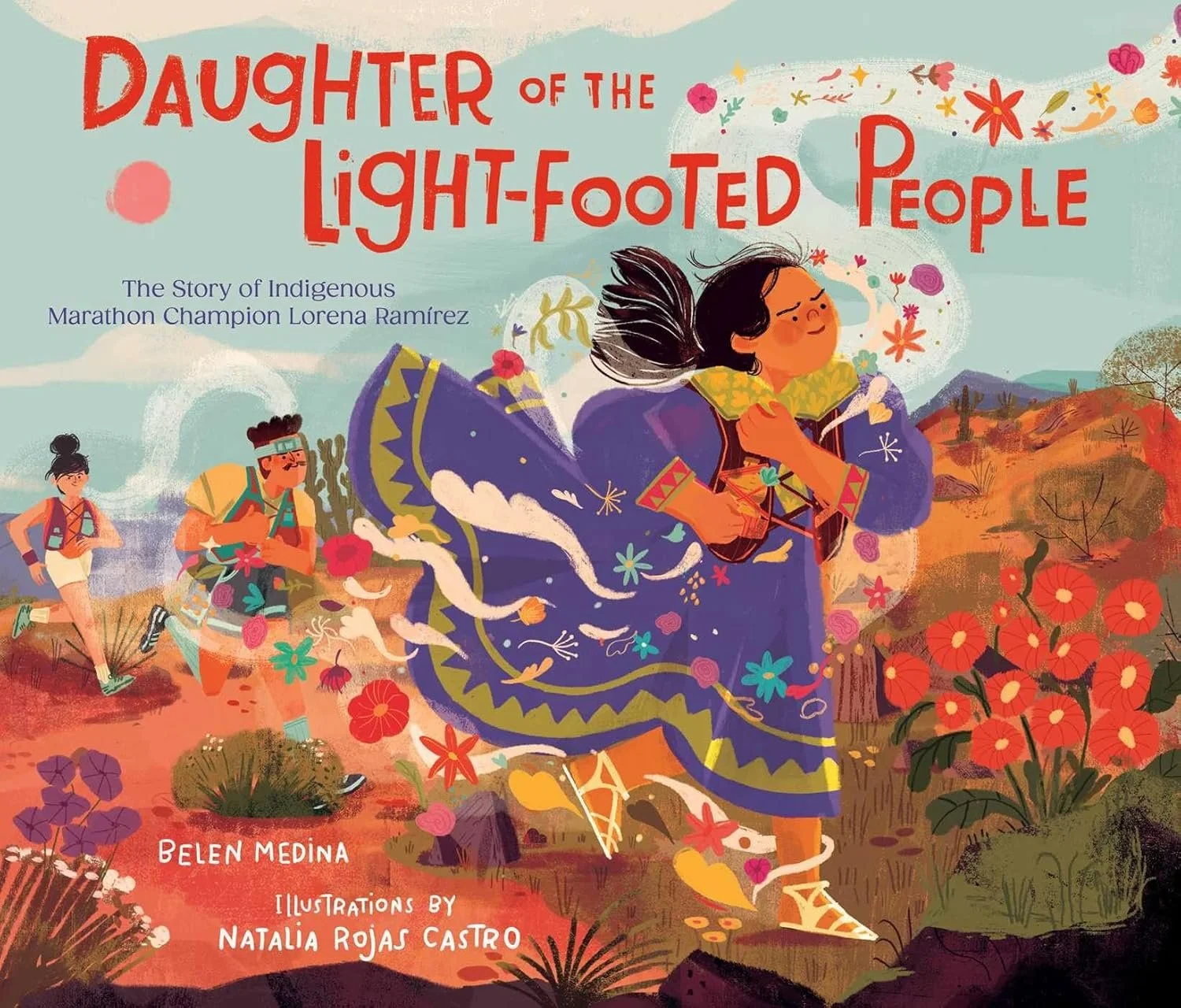
Daughter of the Light-Footed People tells the true story of Lorena Ramírez, an Indigenous Rarámuri (Tarahumara) runner from northern Mexico. Drawing strength from her culture, community, and deep connection to the land, Lorena runs long distances in traditional clothing and sandals, eventually becoming a world-renowned ultramarathon champion. The book highlights perseverance, cultural pride, and defining success on one’s own terms.
Recommended Questions:
Who are the Rarámuri people, and how does their culture influence Lorena’s running? Research and learn more about the Rarámuri people to deepen your understanding of the text and cultural context in the book.
How does Lorena’s connection to land and community shape her success? In what ways do family, community, and tradition support her running?
Why does Lorena choose to run in traditional clothing and huaraches/sandals?
What message does this choice send about identity, values, and cultural pride?How does this story challenge stereotypes about elite athletes and the use of technology? Consider why modern, high-tech running shoes were sent to her and why she chooses not to use them.
What obstacles does Lorena face, and how does she respond to them?
How does the environment play a role in Lorena’s training and endurance? What does the landscape of her homeland contribute to her abilities as a runner?
Find primary sources (images, videos, newspaper articles) featuring Lorena’s story to learn more about her. What new insights do these sources add to your understanding of her life, culture, and achievements?
NCSS Theme 1: Culture
The book centers Rarámuri cultural values, including endurance, humility, community, and respect for the land. Lorena’s running is not just a sport but a cultural practice rooted in tradition and daily life. Students learn how culture shapes identity, choices, and ways of participating in the world.
Social Justice Anchor Standard 13: Harmful impact of bias
The book highlights how Indigenous athletes are often pressured to conform to dominant norms of success and technology. Although fans have sent Lorena Ramírez modern, high-tech running shoes, she chooses to continue wearing her traditional huaraches, explaining that she feels like she will slip otherwise and stating, “I don’t think I’m going to use them. The people wearing them are always running behind me.” This moment challenges assumptions about progress and excellence, affirming Indigenous knowledge, cultural autonomy, and the right to define success on one’s own terms.
WA Geography 2: Understands human interaction with the environment
The story shows how Lorena’s running is shaped by the mountains and trails of her homeland and by sustainable relationships with the land. Students see how environment influences movement, livelihoods, and cultural practices. This supports understanding of reciprocal relationships between people and place.
