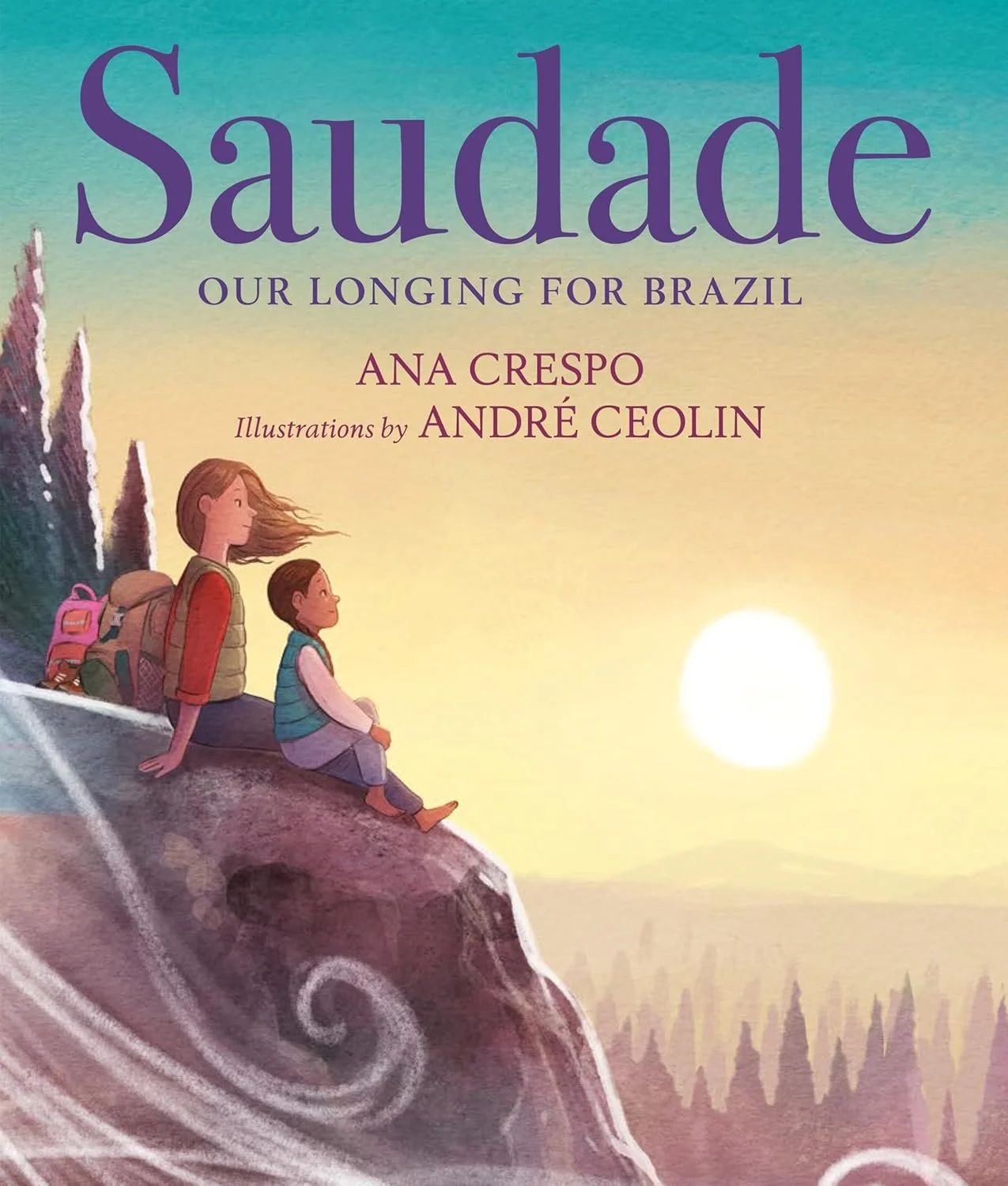
Saudade
Book Summary:
Saudade tells the story of a young girl whose family immigrates from Brazil to the United States and experiences deep feelings of homesickness and belonging. The book explains that saudade is a Portuguese and Galician word with no perfect translation into English, expressing love, longing, memory, and connection to home all at once. Through this untranslatable word, the story explores translanguaging, showing how families use multiple languages together to express identity, emotion, and cultural connection.
Recommended Questions:
Which illustration and accompanying text helped you best understand the meaning of saudade? Why was this combination effective?
How would you explain why the main character’s feeling about ice cream is not saudade? What makes saudade different from simply liking or missing something?
Why is it important that the family uses more than one language to express their feelings and identity?
How do traditions, foods, and memories help the family stay connected to Brazil?
How does moving to a new country affect the way the characters experience language and culture?
How does language help people carry culture with them when they move to a new place?
How does the family stay connected despite the long distance between them? Why is maintaining that connection important to them?
Have you ever felt that one word or one language was not enough to express how you felt? How is that experience similar to saudade?
NCSS Theme 1: Culture
This book highlights how culture is expressed and preserved through language, traditions, food, and family relationships. By centering a word that cannot be fully translated into English, the story shows how cultural meaning lives within language itself. Students learn that culture travels with people and is sustained through shared practices and multilingual expression.
Social Justice Anchor Standard 8: Respectfully express curiosity about others
By introducing saudade as a word without an English equivalent, the book invites students to value linguistic and cultural differences. It encourages respect for multilingualism and helps students understand that not all experiences fit neatly into one language. This supports empathy, inclusion, and appreciation of diverse ways of knowing.
WA Geography 1: Understands the physical characteristics, cultural characteristics, and location of places and regions
This story contrasts life in Brazil with life in the United States, helping students understand how place shapes language, traditions, and identity. Memories tied to landscapes, foods, and family routines show how people remain connected to places they no longer live. This supports understanding of how geographic location influences cultural experience and belonging.
