Rainbow Allies
Book Summary:
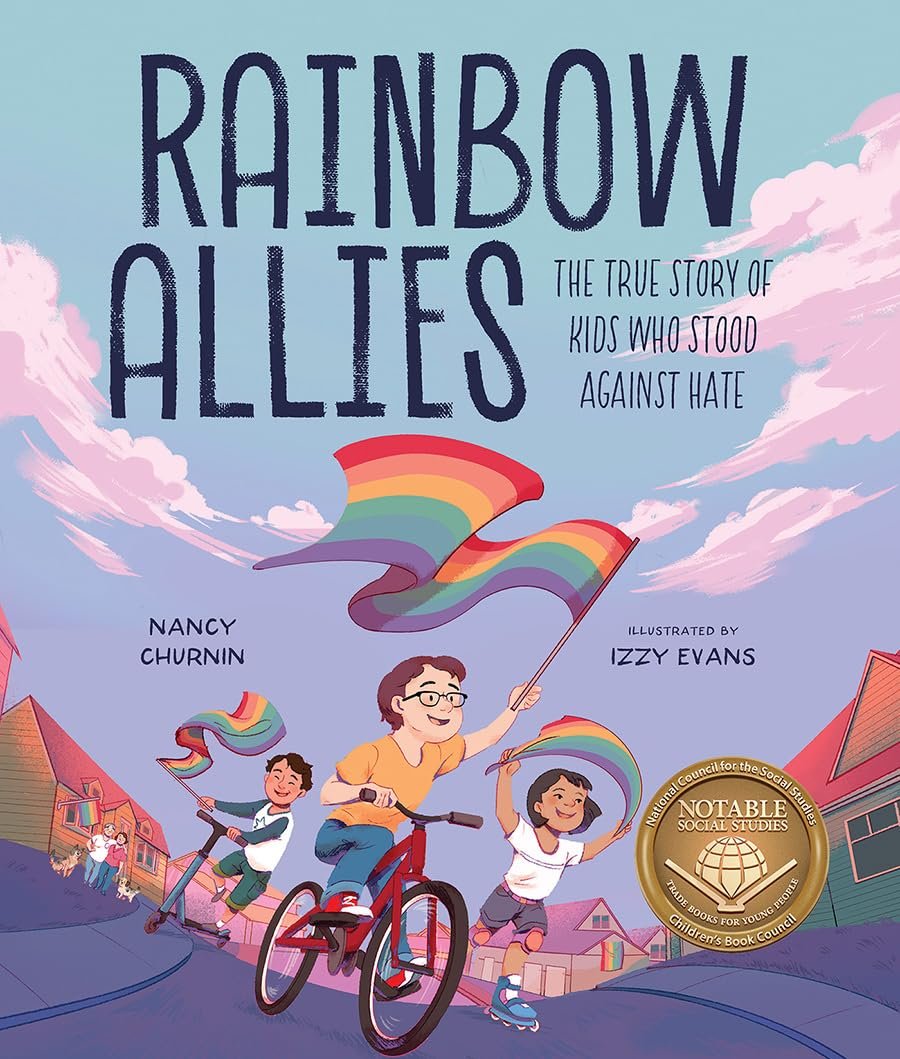
Rainbow Allies: The True Story of Kids Who Stood Against Hate is a picture book based on real events in Natick, Massachusetts, where a lesbian couple’s Pride flag was stolen and their home vandalized. In response, neighborhood children organize an uplifting community-wide display of rainbow flags to show support and affirm belonging, demonstrating allyship, kindness, and inclusion. The story highlights how young people can transform hate into acts of love and community unity.
Recommended Questions:
What does it mean to be an ally?
Examine the illustrations in the book. What details show that Natick is an accepting and supportive community? Create a list of examples and explain why this kind of acceptance is important for individuals and for the community as a whole.
Why is it important for community members to show support for people who experience hurt, exclusion, or hate?
How can support change how people feel and how a community responds to injustice?
About halfway through the story, the children brainstorm several possible solutions to the problem. Why do you think their final solution was more effective than the other ideas they considered?
The author’s note explains that the events in Natick were inspired by a real community response to hatred in Billings, Montana, directed at a Jewish boy. Research this historical event- what happened and how the community responded?
How does this story—and its inspiration from the events in Billings—remind us of the importance of learning history?
In what ways can understanding past events help us respond to present-day problems with fairness, empathy, and unity?
NCSS Theme 5: Individuals, Groups and Institutions
In Rainbow Allies, children work together to respond to an act of hate by organizing a peaceful, visible show of support for their neighbors. Rather than using formal authority, they exercise collective power through unity, kindness, and community action, influencing others to stand against discrimination. The story shows how young people can help shape fair and caring communities by working together to solve problems and promote love and belonging.
Social Justice Anchor Standard 19: Collective Action
This book demonstrates how the children move beyond recognizing harm to taking collective, positive action. They model allyship by standing with their neighbors and showing that even small acts can challenge hate. The story encourages students to see themselves as capable of making change.
WA Civics 4: Understands civic involvement
The children in Rainbow Allies demonstrate civic engagement by organizing peaceful, inclusive action in response to discrimination. Their actions show how community members—even young people—can participate in democracy by standing up for fairness and protecting the dignity of others. The story emphasizes that civic responsibility includes caring for and supporting all members of a community.
