I Love Salmon and Lampreys
Book Summary:
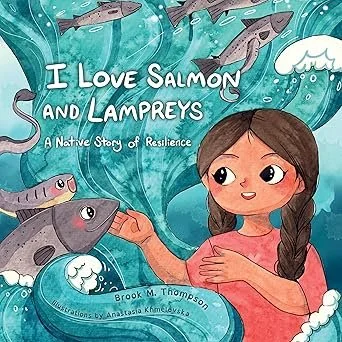
I Love Salmon and Lampreys: A Native Story of Resilience is an autobiographical picture book about growing up Yurok and Karuk along California’s Klamath River and learning the cultural and ecological importance of salmon and lampreys. After witnessing the devastating 2002 Klamath River fish kill, Thompson describes how Native communities organized to protect the river and successfully advocated for the removal of four dams, inspiring her to become a scientist and work toward restoring the river.
Recommended Questions:
Why are salmon and lampreys important to Indigenous communities in the story?
How do dams affect rivers, salmon, and lampreys?
Why do dams especially impact Indigenous peoples and their cultural traditions?
What kinds of activism does the book describe to protect salmon and lampreys?
How does removing dams help both the environment and communities?
What responsibilities do people have when human-made structures harm living beings?
How does the book connect culture, food, and environmental justice?
The book explains that it took nearly 20 years of activism to remove dams and restore rivers for salmon and lampreys. What does this tell you about how long change can take, and why is persistence important when working toward justice and environmental restoration?
How does this story honor both family knowledge and college education? What images or examples from the book help show how these two ways of learning work together?
What can young people do to help protect rivers and fish in their own communities?
NCSS Theme 8: Science, Technology and Society
This book examines how human-made technologies—especially dams—affect rivers, fish migration, and communities. It shows how scientific knowledge and Indigenous ecological knowledge are used to understand the harmful impacts of dams on salmon and lampreys. The book also highlights how science and technology can be applied responsibly through dam removal and river restoration, demonstrating how societies can use knowledge to repair environmental harm and support justice.
Social Justice Anchor Standard 19: Collective Action
I Love Salmon and Lampreys highlights Indigenous activism to remove dams that harm rivers, fish populations, and cultural food systems. The book shows how communities take informed, collective action to protect ecosystems and uphold cultural responsibilities. It encourages students to see advocacy and environmental restoration as meaningful ways to improve community well-being and pursue justice.
WA Geography 2: Understands human interaction with the environment
The book explains how human-built dams disrupt river ecosystems by preventing salmon and lampreys from migrating, which harms both fish populations and Indigenous communities. It also highlights how people can take action—such as advocating for dam removal—to restore rivers and ecosystems. Students learn that human decisions can damage environments but can also help heal them.
