Unstoppable
Book Summary:
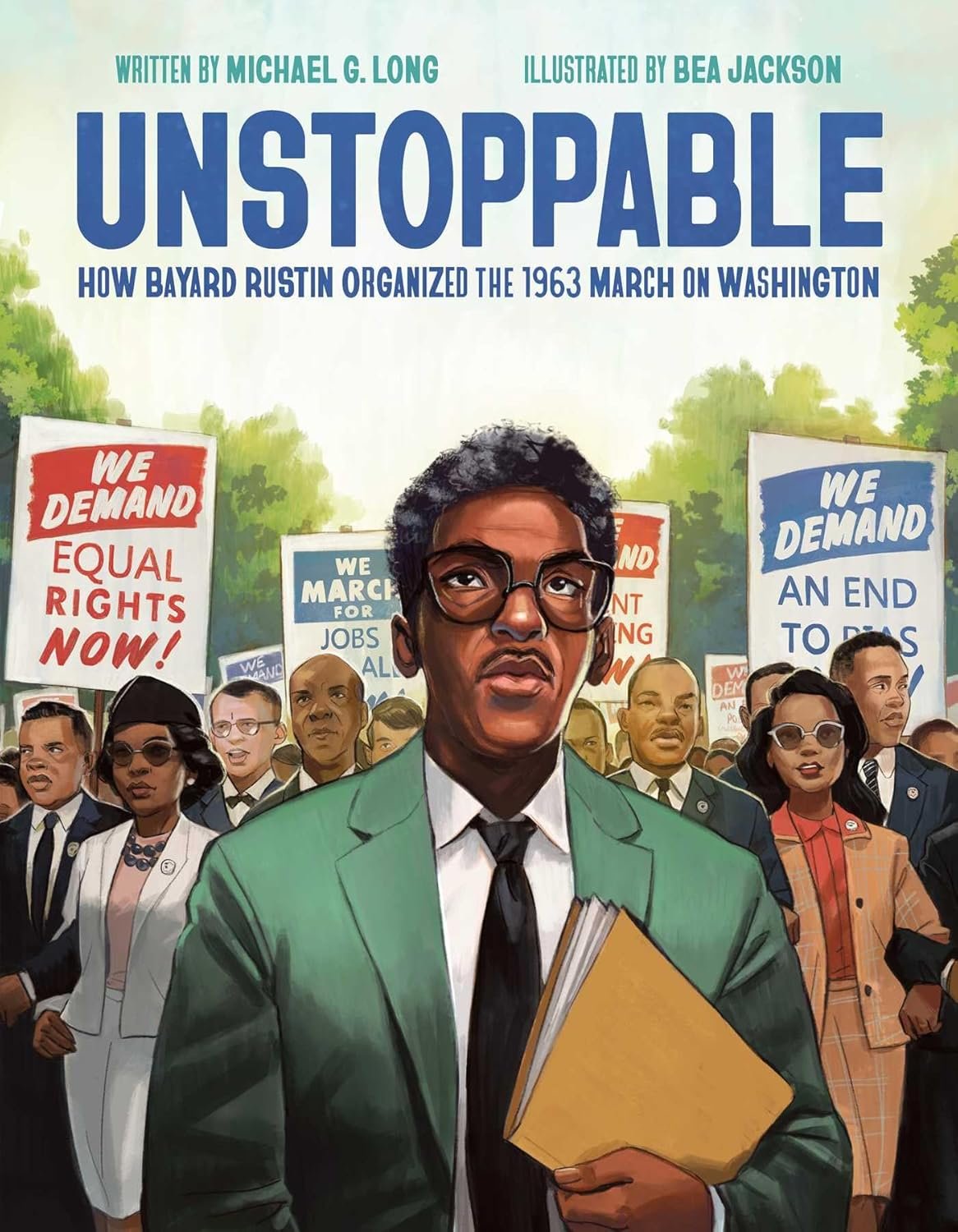
Unstoppable tells the story of Bayard Rustin, the brilliant but often overlooked strategist behind the 1963 March on Washington. The book highlights how Rustin’s lifelong commitment to justice, nonviolence, and organization made the march possible, even as he faced discrimination for being Black, gay, and a pacifist. Through vibrant illustrations and clear storytelling, readers see how Rustin’s behind-the-scenes leadership changed history.
Recommended Questions:
The book begins and ends by calling Bayard Rustin a “troublemaker.” After reading his story, how do you think the author is redefining this word? What kind of “trouble” was Bayard making, and why was it important?
How were the police able to arrest Bayard for sitting in the white section of the movie theater even though no law prohibited it? What does this incident reveal about power, discrimination, and enforcement during segregation?
Research Bayard’s mentor, A. Philip Randolph. What were his major accomplishments, and how did his leadership and activism shape Bayard Rustin’s own work for justice?
Bayard was deeply inspired by the ideas of Mohandas Gandhi even though they never met one another. How did Bayard learn about Gandhi’s philosophy of nonviolence? Who inspires you, and why?
If Bayard organized the March on Washington, why is Dr. King more widely recognized for the event than Bayard is? What factors—historical, social, or personal—might explain this?
President Obama awarded Bayard Rustin the Presidential Medal of Freedom decades after his death and stated that Rustin had been denied his rightful place in history because he was openly gay. Why do you think it was important for President Obama to acknowledge Rustin?
Look closely at the illustrations of the crowd at the March on Washington. What do you notice about the people, signs, and emotions shown? How do these illustrations compare with actual primary-source photographs from the march? What can each type of source help us understand?
Standards:
NCSS Theme 6: Power, governance and authority
This book shows how Rustin worked within and outside formal power structures to advocate for justice and civil rights. It illustrates how ordinary citizens can organize and challenge unjust systems, and how leadership, civic action, and political structures shape public life. Rustin’s story helps students understand how governance operates—and how it can be transformed through collective action.
Social Justice Anchor Standard 13: Examining Inequity
Rustin’s life exemplifies identifying injustice and taking strategic, nonviolent action to address it. The book shows how he confronted racial segregation, discriminatory policing, and barriers created by homophobia—yet persisted in organizing one of the most significant demonstrations for equality in U.S. history. Students see concrete examples of what it looks like to challenge inequity and to engage in collective action.
WA Civics 4: Understands civic involvement
Rustin’s work demonstrates how individuals and groups engage in civic life to influence government and social change. The March on Washington is a primary example of citizens using their voices, organizing resources, and participating in peaceful protest to shape public policy and awareness. Studying Rustin helps students understand what civic involvement looks like and the impact it can have.
