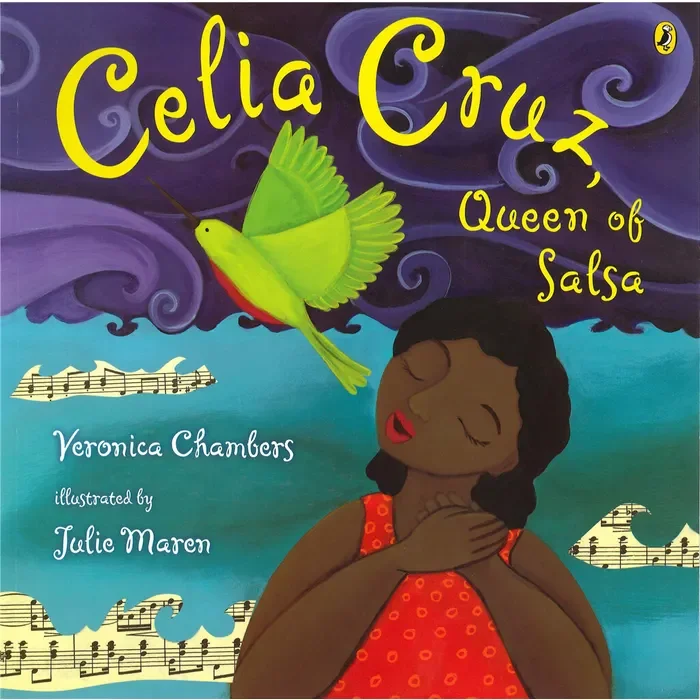
Celia Cruz Queen of Salsa
Book Summary:
Celia Cruz: Queen of Salsa tells the story of Celia Cruz’s childhood in Cuba, her love of music, and her rise to international fame as the “Queen of Salsa.” The book follows her journey from local competitions to global stages, sharing the joy and energy of Afro-Cuban rhythms with audiences everywhere. Even after leaving Cuba, Celia used her music to keep her heritage alive and connect with people around the world.
Recommended Questions:
How does including women’s voices change or expand our understanding of the American Revolution?
What surprised you most about the women you learned about in this book?
Examine the spies and scouts in this book. Why might women have excelled in these roles during the war? In what ways did their actions show a different kind of courage than the soldiers on the battlefield?
How does the timeline at the bottom of each page deepen your understanding of the information presented?
On page 4, the “founding fathers” are listed, and on page 5 a girl holds a flag saying “hi.” If this girl represented an independent dame from the book, what might she say after she said “hi”?
Are women’s stories the only stories that have been overlooked in history? Explain your thinking.
Standards:
NCSS Theme 9: Global Connections
The book shows how Celia Cruz became an international ambassador of Afro-Cuban music, spreading her culture across borders and influencing listeners worldwide. Her life illustrates how art, migration, and political events link people from different countries and shape shared global experiences. Students see how cultural traditions travel, evolve, and affect communities far beyond their places of origin.
Social Justice Anchor Standard 3: Identity and Context
Celia’s story highlights how her multiple identities—Afro-Cuban, immigrant, Spanish speaker, artist, woman, and cultural icon—shaped her life and musical style. The book shows that her artistry was not defined by a single aspect of who she was, but by the rich combination of her heritage, history, personality, talents, and experiences. Students see that identity is layered and complex, and that understanding a person requires recognizing how these different layers connect and influence one another.
WA History 3: Understands that there are multiple perspectives and interpretations of historical events
Celia’s life reveals how major historical events—particularly the Cuban Revolution and the resulting political tensions—affected people differently depending on their circumstances and choices. Her perspective as an exile contrasts with those who remained in Cuba, helping students understand that historical experiences vary widely. Through Celia’s personal story, students learn that understanding history requires considering diverse viewpoints and interpretations.
Links to Related Primary and Secondary Resources
Video of Celia Cruz returning to Cuba to sing at the US Base
