The Truth About Dragons
Book Summary:
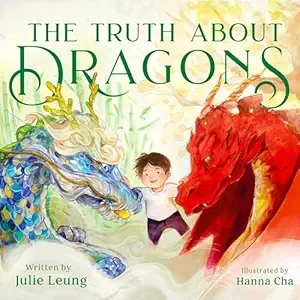
The Truth About Dragons follows a young Chinese American boy who learns that dragons are viewed differently across cultures—fearsome and destructive in some stories, wise and benevolent in others. As he reflects on his own identity and family heritage, he discovers that understanding multiple perspectives helps him embrace who he is. The story explores cultural duality, belonging, and the power of narrative.
Recommended Questions:
How are dragons portrayed differently in Western stories versus Chinese traditions?
Why might different cultures tell different stories about the same creature?
How does learning about dragons help the main character understand his identity?
What does the story teach about having more than one cultural perspective?
How can stories and myths reflect a society’s values?
Have you ever experienced something being understood differently in two cultures?
How does understanding multiple perspectives help build stronger communities?
In the book, the narrator says, “Inside your heart is where the two forests meet. Both journeys are yours to take. Both worlds are yours to discover.” What do you think the author means by this statement? How might it connect to the main character’s experience growing up between two cultures?
NCSS Theme 9: Global Connections
The Truth About Dragons explores how ideas, symbols, and stories travel across cultures and take on different meanings around the world. By comparing Western and Chinese interpretations of dragons, the book helps students understand how global cultural exchange shapes beliefs and identities. It demonstrates that cultural symbols are not universal but are influenced by history, geography, and interconnected societies.
Social Justice Anchor Standard 10: Diversity in social, cultural and historical context
The story highlights how cultural stories and symbols carry deep meaning within communities. By presenting dragons through both Western and Chinese lenses, the book promotes respect for cultural differences and challenges simplistic stereotypes. Students learn that understanding multiple perspectives strengthens empathy and inclusion.
WA Social Studies Skills 1: Uses critical reasoning skills to analyze and evaluate claims
The Truth About Dragons encourages students to analyze how the same symbol—a dragon—can hold different meanings depending on cultural context. Students evaluate contrasting perspectives and question assumptions about “good” and “bad” narratives. The book supports critical thinking about how culture shapes interpretation.
