Fish for Jimmy
Book Summary:
A Flag for Juneteenth tells the story of young Huldah and her community in Texas as they learn of their freedom on June 19, 1865—more than two years after the Emancipation Proclamation. On the very day Huldah is celebrating her tenth birthday, the announcement of emancipation arrives, and her community gathers in joyful celebration. Together, they create flags to mark the historic moment and gift one to Huldah, honoring both her birthday and their newly recognized freedom. The story celebrates Black resilience, collective joy, and the enduring significance of Juneteenth.
Recommended Questions:
Why were Japanese American families sent to incarceration camps during World War II?
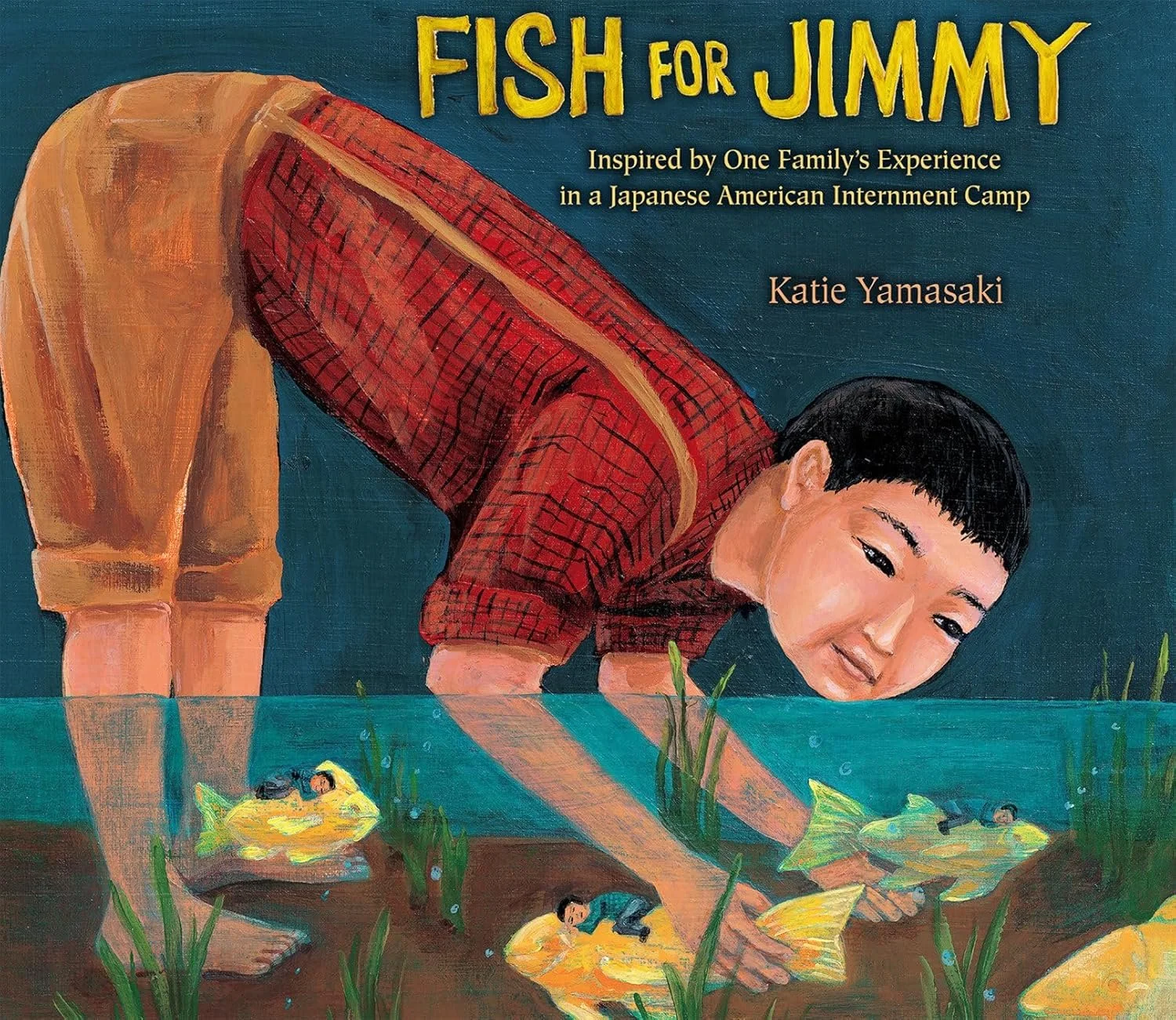
Examine the illustrations closely. What additional evidence of racial discrimination or unfair treatment do you notice beyond what is stated in the text? How do the images deepen your understanding of the injustice experienced by Japanese American families during this time period?
What did Executive Order 9066 authorize, and how did it impact Japanese American families?
At the beginning of the story, how does the family work together in their family business? Why do you think the author includes this detail?
Why is it so important to Taro that he cares for his younger brother, Jimmy?
In this story, fish represents more than just a meal. What might the fish symbolize about home, identity, memory, or resistance?
Read the author’s note to learn how this story connects to the author’s family experience. Then look closely at the author’s signature at the bottom of the page. What might she be conveying through the symbols embedded in her signature?
In 1988, the U.S. government formally apologized through the Civil Liberties Act of 1988. What did this law acknowledge about Executive Order 9066?
Why do you think it took more than 40 years for the U.S. government to issue an official apology?
The Civil Liberties Act included financial reparations for surviving incarcerees. What is the purpose of reparations in cases of injustice? Research how people responded to the apology and reparations.
NCSS Theme 6: Power, Authority and Governance
Fish for Jimmy examines how government power was exercised during World War II through the forced removal and incarceration of Japanese American families. The story highlights how authority, through wartime policies, led to the unjust suspension of civil liberties based solely on ancestry. Through Taro’s experience, students analyze how injustice can occur when power is misused.
Social Justice Anchor Standard 12: Individual and institutional injustice
The story highlights the injustice of incarcerating Japanese American families based solely on ancestry. It encourages students to examine how fear and prejudice can lead to systemic discrimination. The book fosters empathy and critical thinking about civil rights and equity.
WA History 3: Understands that there are multiple perspectives and interpretations of historical events
Fish for Jimmy presents World War II history from the perspective of a Japanese American child living in an incarceration camp. This viewpoint encourages students to consider how government decisions affected families differently. The book supports analysis of historical events through personal narratives and lived experience.
