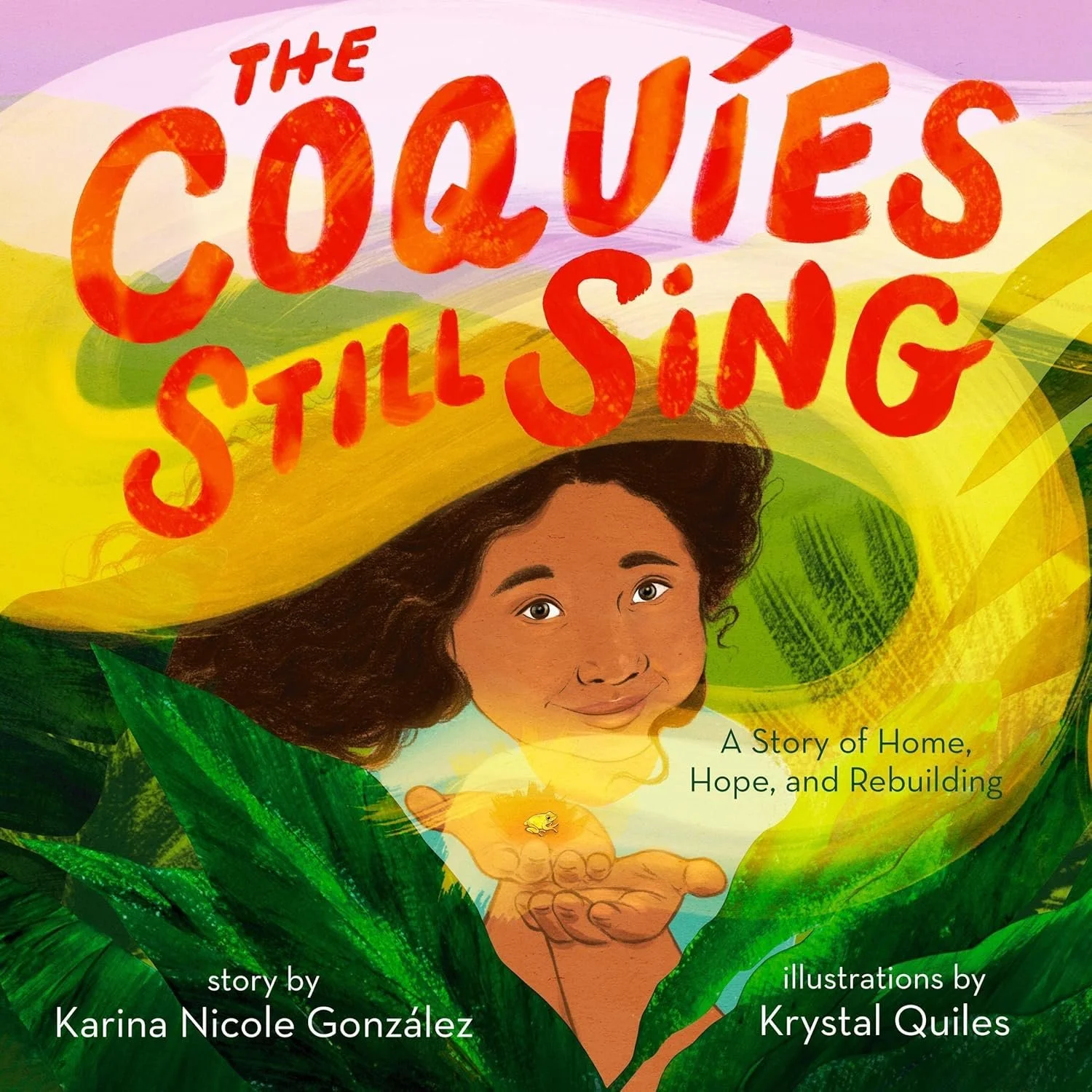
The Coquíes Still Sing
Book Summary:
The Coquíes Still Sing follows Elena and her family in Puerto Rico after Hurricane María nearly destroys their home. As they work together with neighbors to rebuild their community, the familiar sound of coquí frogs begins to return, symbolizing resilience, hope, and a sense of home. The story shows how community strength, culture, and nature help people recover after disaster.
Recommended Questions:
What role do the coquí frogs play in Elena’s sense of home, and why are their sounds important?
How does Hurricane María change Elena’s life and community?
How do family and neighbors work together to rebuild after the hurricane?
Why do you think the return of the coquíes’ song brings hope to Elena and her community?
How do environmental events like hurricanes demonstrate the connection between people and place?
What lessons about resilience and community support can we learn from this story?
What does it mean that Puerto Rico is a U.S. territory and not a state? How might that affect the rights and resources available to its residents?
How did Puerto Rico’s political status influence the type of aid it received after Hurricane María?
Why was the Jones Act mentioned in the author’s note, and how can laws impact disaster recovery?
What responsibilities do governments have to territories during times of crisis?
The author’s note lists several organizations that supported Puerto Rico in the aftermath of Hurricane María. Choose one organization to research. What is its mission and connection to disaster recovery, and what is one specific way individuals or communities could support its work?
The final page of the book includes a Puerto Rican flag. Research the different shades of blue that have been used in the triangle of the Puerto Rican flag and the historical and political significance of each shade. Which shade of blue does this book use? What might that choice symbolize? What message could the author and illustrator be sending through this detail, and how does it connect to the other historical and political information presented in the book and author’s note?
NCSS Theme 3: People, Places and the Environment
This book explores how a community’s relationship to its place—home, nature, and environment—shapes experiences, recovery, and identity. The story shows how a hurricane impacts people, their homes, and familiar sounds like the coquíes, and how the environment becomes a source of emotional grounding. Students learn that environments are deeply connected to culture, belonging, and community resilience.
Social Justice Anchor Standard 14: Power and privilege impact decisions and impact of decisions
The author’s note explains that Puerto Rico is a U.S. territory, not a state, which limited access to international humanitarian aid after Hurricane María and shaped how recovery efforts unfolded. Political decisions—such as temporarily waiving the Jones Act—demonstrate how institutional power directly impacts communities’ access to resources. The book invites students to examine how political status, policy, and governmental authority affect recovery, equity, and access to basic necessities like electricity, housing, and medical care.
WA Geography 2: Understands human interaction with the environment
The Coquíes Still Sing illustrates how humans interact with and respond to environmental events such as hurricanes. The story shows how natural disasters can disrupt daily life and how people, by working together, restore their community and environment over time. Students learn how environmental forces influence human lives and require thoughtful community responses.
