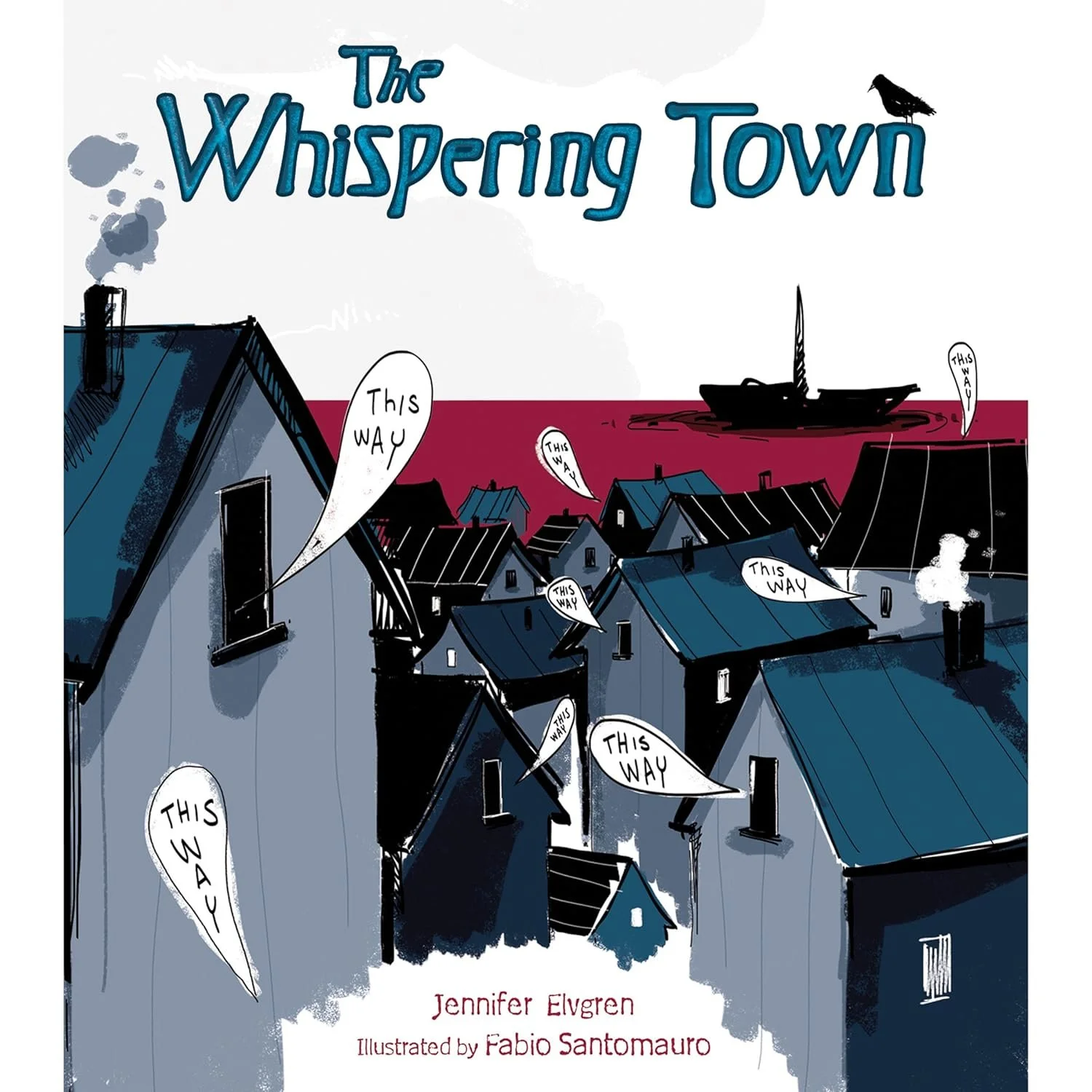
The Whispering Town
Book Summary:
The Whispering Town tells the story of Anett, a young girl living in Nazi-occupied Denmark during World War II. When her family helps hide a Jewish mother and son in their basement, Anett and her neighbors work together to secretly guide them to safety. The story highlights collective courage and the quiet resistance of ordinary citizens who risked their lives to protect others.
Recommended Questions:
What context clues in the story help you determine the time period in which it takes place?
How do we determine when laws are unjust? What criteria should people use to evaluate government policies?
What risks did Anett’s family take by hiding their Carl and his mom?
In what ways did Anett’s family show care for their Carl and his mom beyond providing shelter?
How might fear have influenced the townspeople’s decisions?
How do you think Anett knew he could trust his neighbors to guide Anett and his mom to safely without alerting the authorities? What evidence in the story suggests they were trustworthy?
Why was it important that the entire town worked together? What does this reveal about the power of collective action?
How does this story illustrate that resistance can take many forms—not only armed conflict? In what ways does the community’s quiet action serve as a powerful form of resistance?
NCSS Theme 6: Power, Governance and Authority
This book explores how governments can use power to oppress certain groups—in this case, Jewish people during Nazi occupation. Students examine how authority can be abused and how ordinary citizens can respond to unjust laws. The story invites discussion about moral responsibility when government policies violate human rights.
Social Justice Anchor Standard 12: Individual and institutional bias
The book illustrates how the Danish community recognized the injustice of Nazi persecution and acted collectively to resist it. Students see that injustice is not only something to observe but something that requires response. The story reinforces the idea that solidarity and cooperation are powerful tools for social change.
WA Civics 4: Understands how historical events inform analysis of contemporary issues and events
The story demonstrates how civic participation can take many forms, including quiet resistance and collective action. The townspeople’s coordinated efforts to protect their Jewish neighbors show how individuals can influence events even under oppressive systems. Students can analyze how civic responsibility sometimes requires personal risk to uphold democratic values and human rights.
