Elmer and the Rainbow
Book Summary:
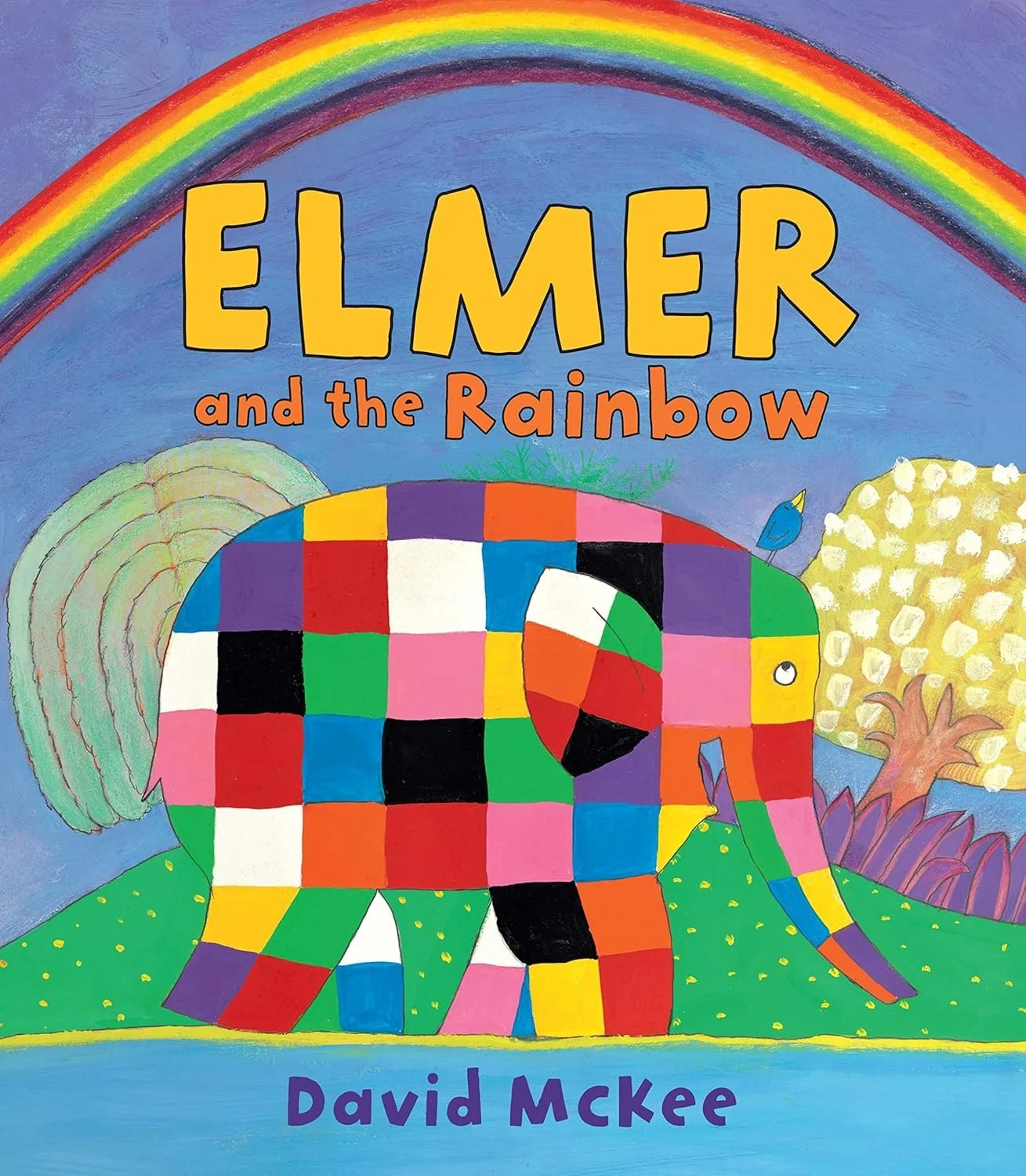
Elmer and the Rainbow tells the story of Elmer, the colorful patchwork elephant, who discovers that the rainbow has lost its colors after a storm. Wanting to help, Elmer searches for the end of the rainbow and offers his own colors to restore it, only to realize that sharing them does not take his colors away. The story highlights themes of generosity, kindness, and the idea that love and happiness grow when they are shared.
Recommended Questions:
When the rainbow got its colors back, how did that change the "mood" of the whole jungle? Why is it important for a community to have things that are beautiful or make people happy, even if they aren't "necessary" like food or water?
Elmer says that things like love, happiness, and kindness are things you can give away and still keep. Can you think of a time you gave someone a "resource" like a smile or a helping hand? Did you have "less" of it after you gave it?
In the beginning, the elephants thought Elmer’s patchwork was his "wealth" (what made him special). By the end, they realized his willingness to give was his real value. In our classroom, what makes someone "rich"? Is it what they have or what they do?
Elmer didn't wait for the rainbow to ask for help; he saw it was "pale" and "sad" and took action. How can we practice "seeing" when someone in our school is feeling "pale" or left out?
If Elmer were exactly like the other elephants, he wouldn't have had any colors to give. How do our different backgrounds and talents make our "classroom rainbow" stronger?
Elmer had to go on a journey to find the "base" of the rainbow. Why is it important to find the root of a problem before you try to fix it?
NCSS Theme 10: Civic Ideals and Practices
Elmer embodies these civic ideals by identifying a problem in his world—the colorless rainbow—and taking the personal responsibility to solve it, even at a perceived risk to himself. The story teaches students that active participation and selfless giving are the foundations of a healthy, vibrant society.
Social Justice Anchor Standard 17: Stand up to injustice
While the rainbow isn’t a person, Elmer’s reaction to its "sadness" or "loss" mirrors the empathy required to stand up for others in a social justice context. Elmer refuses to be a bystander to the rainbow's misfortune, showing students that taking action to restore beauty and fairness to the world is a brave and necessary choice.
WA Economics 1: Understands choices people make between wants and needs and evaluates the outcomes of those choices
Elmer must decide whether to give his colorful patches to help restore the rainbow. This choice reflects the idea of giving up something valuable to help meet a need in the community. Students can consider how individuals make decisions about sharing resources and how those choices can positively affect others.
