Thurgood
Book Summary:
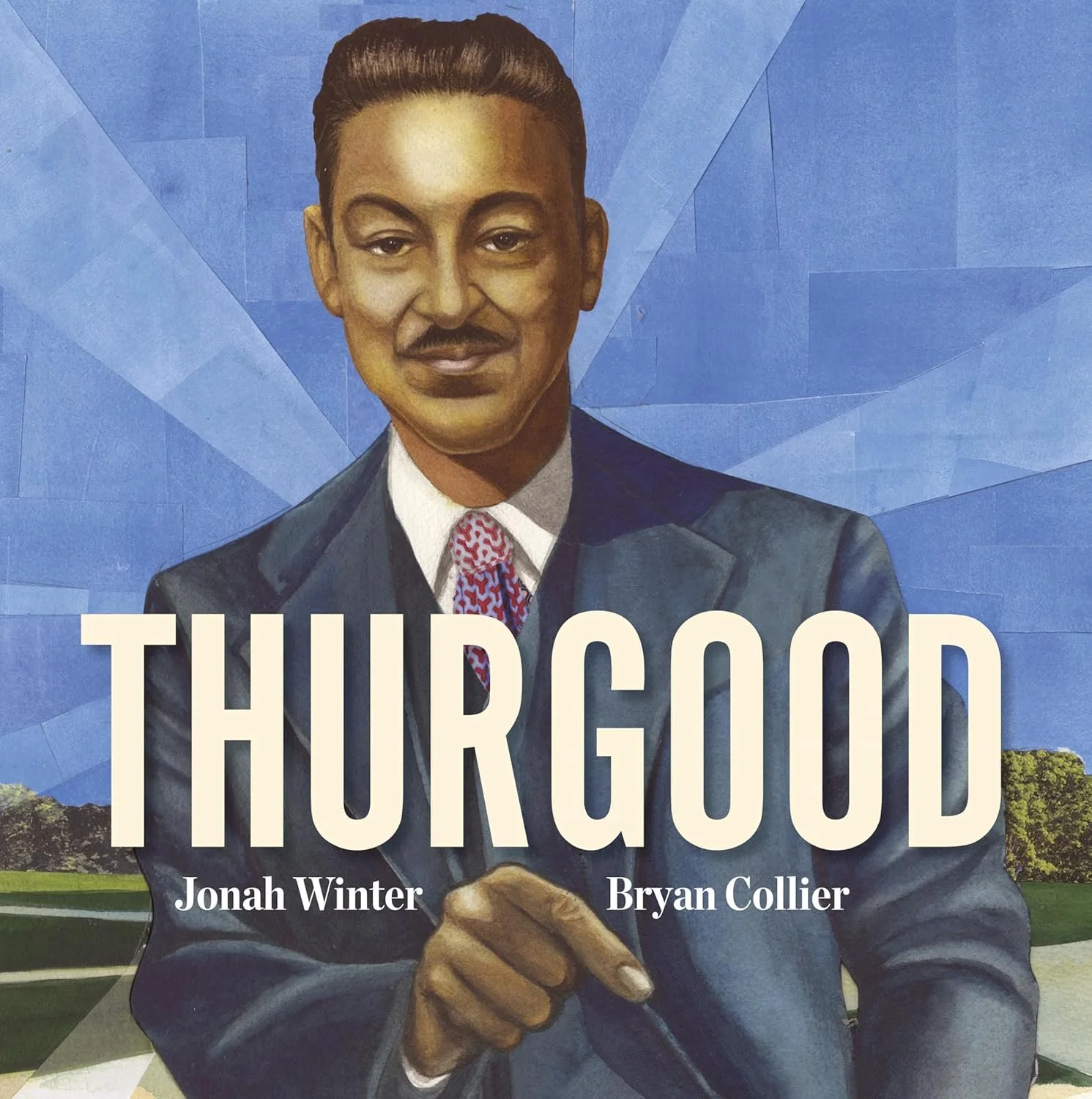
Thurgood tells the story of Thurgood Marshall, who grew up in Baltimore and became one of the most influential civil rights lawyers in American history. As a young boy, Thurgood learned to question unfair rules and developed strong skills in debate and argument. These abilities later helped him fight segregation and win the landmark case of Brown v. Board of Education.
Recommended Questions:
In several places, the author presents information using a “Facts:” format. Why is this important? Why do you think the author chose this format? How might this approach connect to the way Thurgood Marshall used facts and evidence to challenge unjust laws?
For many years, the doctrine of “separate but equal” was permitted in the United States. The story provides several facts showing how segregated schools were separate but not equal. Identify three examples from the book and explain why each example demonstrates inequality.
The book explains, “Thurgood’s first major legal battle was against the very law school that would not accept him because of his skin color.” Imagine you are Thurgood preparing for this case. How might you prepare your arguments? How could your emotions and past experiences strengthen your work as a lawyer? What challenges or cautions might you consider?
The book notes that Thurgood Marshall’s work focused on the Equal Protection Clause of the Fourteenth Amendment. Research this clause. What does it say, and why is it important to civil rights in the United States?
What does this book teach us about how the legal system works?
Why is it important for people to question rules or laws that may be unfair?
How can courts and laws be used to create positive change in society?
On the front cover, the author includes a special note thanking Bryan Stevenson, calling him “the Thurgood Marshall of our era.” Research who Bryan Stevenson is and explain why the author might describe him this way. How is Stevenson’s work similar to Thurgood Marshall’s efforts to challenge injustice through the legal system?
NCSS Theme 6: Power, Authority and Governance
The book shows how laws and courts shape people’s rights. Thurgood Marshall challenged unjust segregation laws that were in violation the equal protection clause of the 14th Amendment of the US Constitution. His work demonstrates how the legal system can be used to challenge unfair rules and promote greater fairness and equality.
Social Justice Anchor Standard 15:
The book introduces students to Thurgood Marshall as a key figure in the struggle for civil rights in the United States. Students learn about important events such as Brown v. Board of Education and the strategy of using the legal system to challenge segregation. Through Marshall’s story, students see how individuals and organizations used the courts as a strategy to advance social justice and equality.
WA Civics 1: Understands key ideals and principals of the USA including the Constitution
The story of Thurgood Marshall illustrates the American ideals of equality and justice found in the Constitution. Through his legal work challenging segregation, Marshall argued that laws separating students by race violated the principle of equal protection under the law. His efforts in cases such as Brown v. Board of Education helped move the nation closer to the promise that all people should be treated equally.
