Many Things at Once
Book Summary:
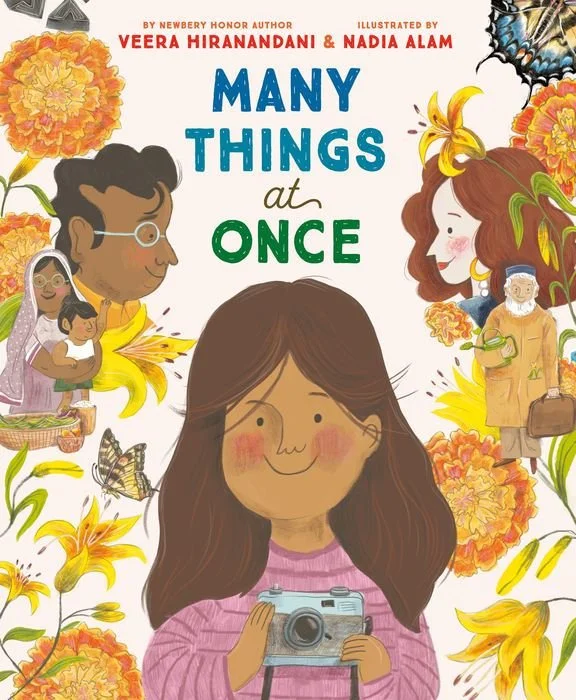
Many Things at Once follows a young girl who reflects on her identity as someone with a multicultural background. As she experiences school, family traditions, and everyday life, she realizes she can belong to many cultures, communities, and experiences at the same time. The story celebrates the richness and complexity of identity.
Recommended Questions:
What does the title Many Things at Once mean in the context of the story?
How does the main character describe her identity and cultural background?
Why might it be limiting to describe someone using only one label?
How does the story show that a person can belong to multiple communities?
What are some of the different identities or communities you belong to?
The story references important historical events, including the division of India and Pakistan and the pogroms in Poland in 1920. Read the author’s note to learn more about these events, then reread the story. How does this historical context change or deepen your understanding of the characters’ identities and family history?
Why might these historical events affect families for generations?
NCSS Theme 5: Culture
The book explores how culture shapes identity, traditions, and perspectives. Through the child’s reflections on family, language, food, and community, students see how people can draw from multiple cultural influences.
Social Justice Anchor Standard 1: Positive Social Identities
The story affirms that individuals can belong to multiple groups and cultures at the same time. It supports students in developing pride and confidence in their identities while recognizing that identity can be complex and evolving.
WA Social Studies Skills 3: Deliberate on public issues
Many Things at Once encourages students to discuss and deliberate issues related to identity, belonging, and fairness in diverse societies. As the main character reflects on how people sometimes misunderstand or simplify her identity, students can consider broader public questions about inclusion, stereotypes, and representation. The story provides an entry point for respectful dialogue about how communities can better understand and support people everyone identities.
