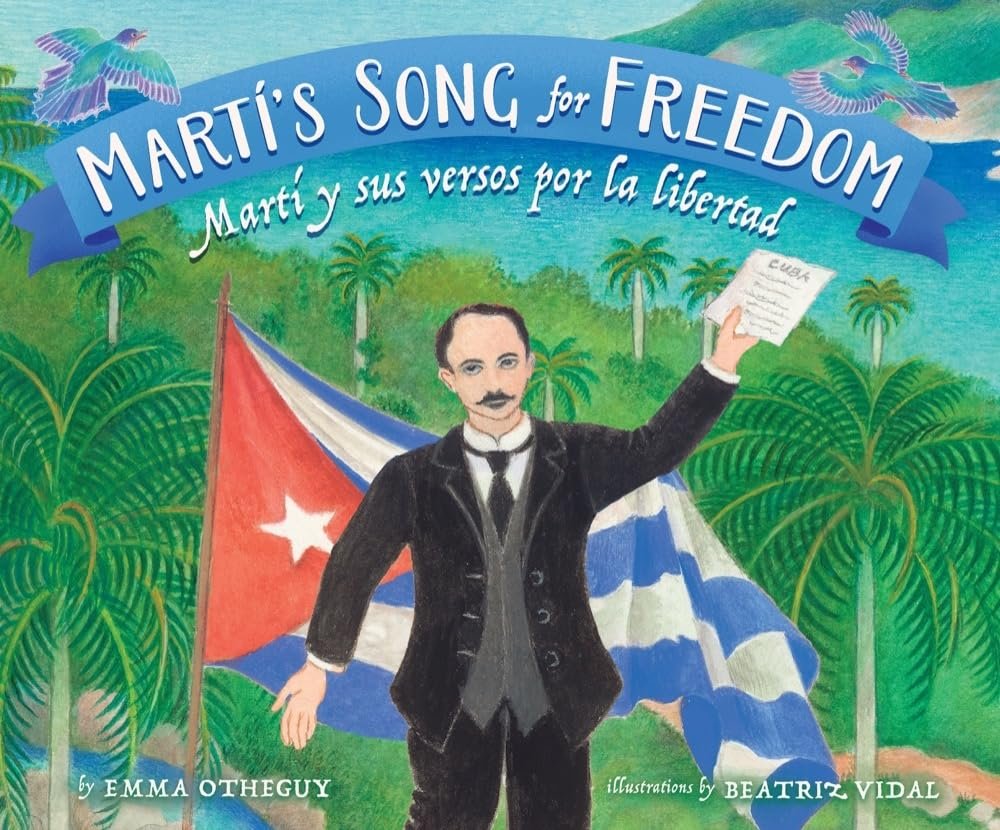
Martí’s Song for Freedom
Book Summary:
Martí’s Song for Freedom introduces readers to José Martí, a Cuban poet, writer, and activist who used words to fight for freedom and justice. Exiled from his homeland, Martí wrote passionately about independence, dignity, and equality for all people. The book shows how ideas, language, and culture can inspire movements for social and political change.
Recommended Questions:
What experiences shaped José Martí’s belief in freedom, justice, and equality?
The book describes how the enslavement of people made Martí “shake with rage.” What does this reaction reveal about his sense of justice and his care for others?
Why was Martí forced to live in exile, and how did exile influence his ideas, writing, and activism?
Why do you think Spanish authorities agreed to free Martí only if he left Cuba? What does this tell us about how governments sometimes deal with people who challenge their power?
What does this story teach us about the power of ideas, language, and expression in movements for justice?
How does this book help us understand colonialism?
How does the story show the political and historical connections between Spain, Cuba, and the United States?
How did Martí participate in civic life even though he did not hold formal political power?
Why do you think Martí chose to return to Cuba as a soldier despite knowing the dangers and having lived in exile?
What do you think Martí would say today about the importance of protecting freedom of speech and expression?
NCSS Theme 6: Power, Governance and Authority
This book explores how colonial rule denied Cubans political freedom and self-determination. Martí challenged imperial power through writing, organizing, and advocacy rather than formal political office. His story helps students understand how people resist unjust authority and work toward independence and democratic ideals.
Social Justice Anchor Standard 12: Systemic unfairness
Martí’s life and work were deeply shaped by unjust systems of colonial rule, exile, and censorship that denied people political freedom and dignity. By showing how Martí used writing, ideas, and collective action to challenge those unjust systems, the book reinforces that unfair social and political structures can be identified, questioned, and transformed.
WA Civics 3: Understands the purposes and organization of tribal and international relationships
Martí’s Song for Freedom helps students understand international relationships shaped by colonialism, exile, and struggles for national sovereignty. José Martí’s life illustrates how people living under imperial rule organized across borders to challenge foreign control and advocate for self-determination. The book encourages students to think about how global power relationships, independence movements, and international influence shape civic life beyond the United States.
