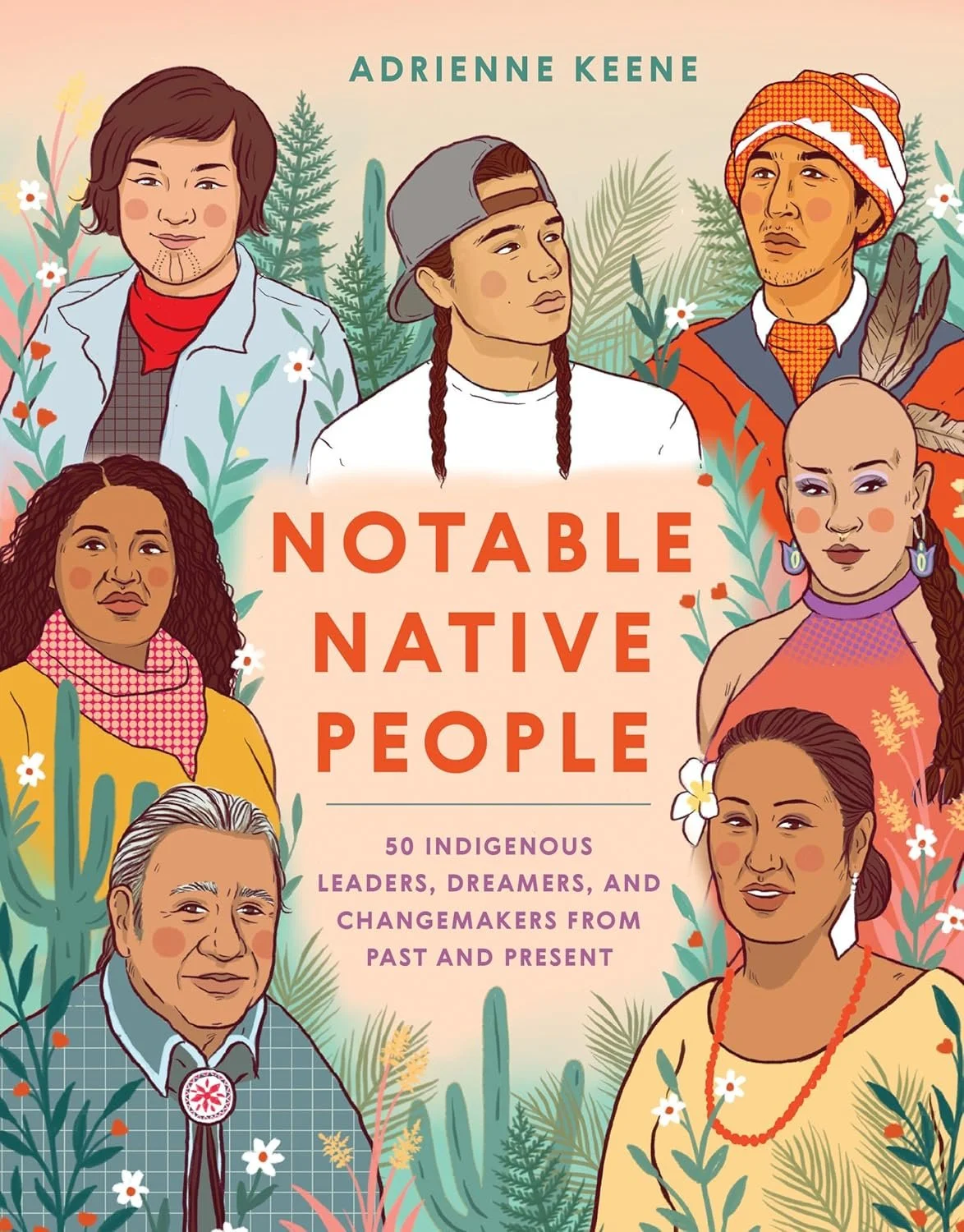
Notable Native People
Book Summary:
Notable Native People introduces readers to fifty contemporary Indigenous leaders, artists, activists, scientists, athletes, and change-makers. The book highlights the diversity, creativity, and ongoing contributions of Native peoples today, countering the idea that Indigenous history exists only in the past. It affirms Native presence, innovation, and leadership in modern society.
Recommended Questions:
General Questions You Can Use to Investigate Any Person Featured in This Book
Who is this person, and what Nation(s) or community do they belong to?
Where are they from, and how does place matter in their life or work?
How does their work benefit their community, Nation, or the broader society?
How does this person balance tradition and innovation?
How does this person use their voice, skills, or position to create change?
How does their work relate to tribal sovereignty, self-determination, or representation?
Why is it important that this person’s story is included in this book?
How does this person’s story help us better understand Native peoples today—not just in the past?
NCSS Theme 1: Culture
This book showcases the diversity of Indigenous identities, experiences, and cultural expressions across many Nations. It helps students understand that Native cultures are dynamic and living, not static or historical. Through real-life examples, the book emphasizes how culture shapes identity, values, and contributions to society.
Social Justice Anchor Standard 4: Pride and healthy self-esteem
The book affirms Indigenous identities by highlighting Native excellence, leadership, and resilience. It supports positive representation and challenges deficit-based stereotypes about Native peoples. By centering pride and accomplishment, the text helps all students understand identity as a source of strength and dignity.
WA Civics 3: Understands the purposes and organization of tribal and international relationships
This book centers Indigenous leaders whose work is grounded in Tribal sovereignty, nationhood, and self-determination. The book helps students understand that Tribal Nations are distinct political entities with their own governments, relationships, and responsibilities, not cultural groups of the past. By highlighting contemporary Native leaders, the text reinforces that tribal governance and nation-to-nation relationships continue to shape civic life today.
