Separate is Never Equal
Book Summary:
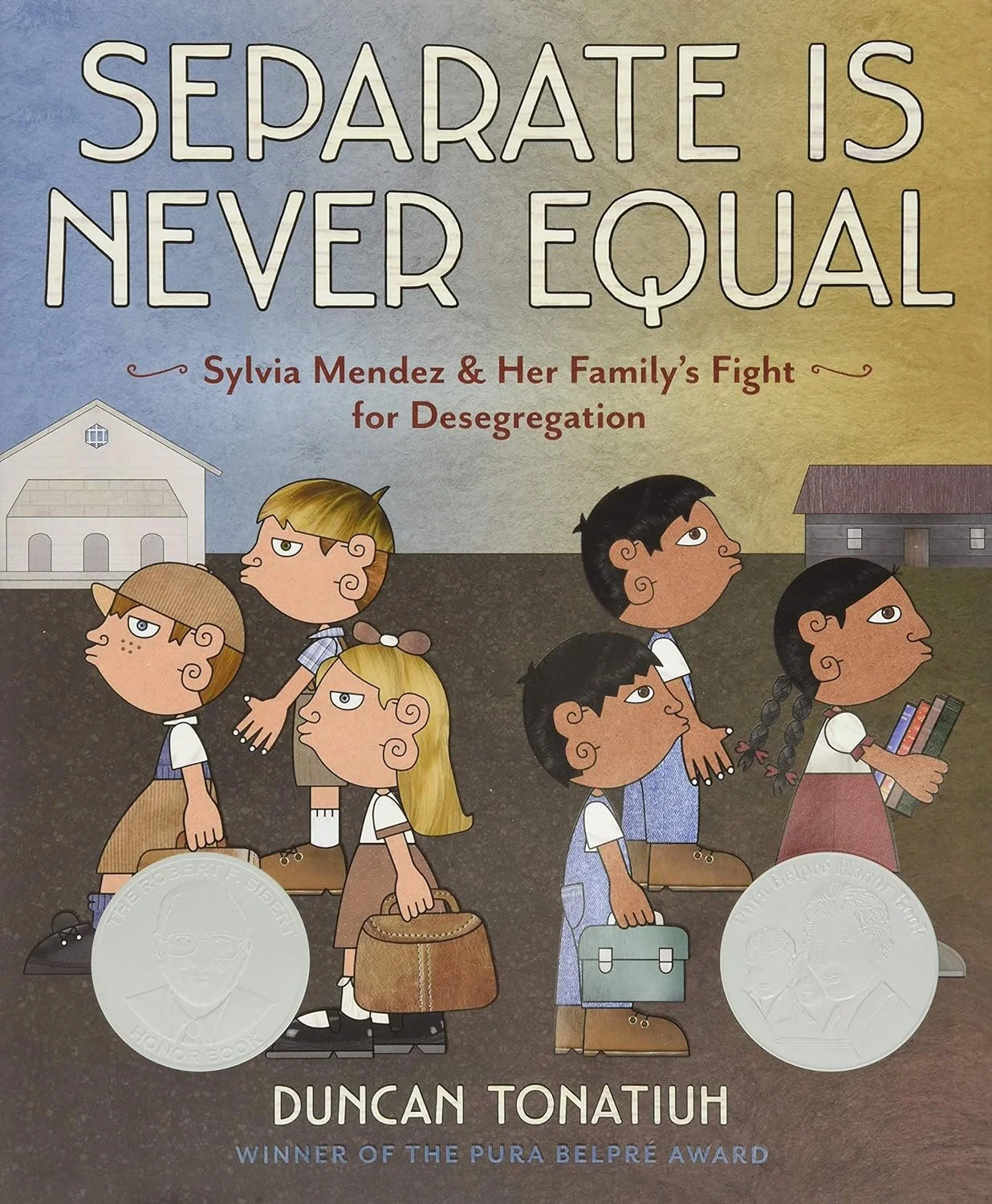
Separate Is Never Equal tells the true story of young Sylvia Mendez and her family’s courageous fight to end school segregation in California in the 1940s. Despite being U.S. citizens of Mexican and Puerto Rican heritage, Sylvia and her siblings were barred from attending a local school because of their ethnicity, motivating her parents to organize their community and file a lawsuit that helped lead to desegregation in California schools years before Brown v. Board of Education.
Recommended Questions:
On Sylvia’s first day of school, a student yells, “Go back to the Mexican school! You don’t belong here!” Imagine you hear someone say that today. How could you respond to let them know this language is not acceptable at school, and why is it important not to ignore a statement like that if you hear it?
Why do you think the school secretary assumed Sylvia was Mexican even though she was American? Why was this assumption unfair?
Why do you think Aunt Soledad chose not to enroll any of the children, even though she could have enrolled Alice and Virginia? What does this decision reveal about Aunt Soledad’s values? Do you agree or disagree with her choice?
Why do you think the community refers to Hoover Elementary as “the Mexican school” instead of using its proper name?
What are some ways in which the two schools were unequal?
If you were Mr. Mendez, would you have hired David Marcus as a lawyer even if it meant spending all your savings? What does this decision tell us about Mr. Mendez?
How do we see the community supporting each other in this story?
What does this story teach us about the meaning of “equal protection under the law”? How does it connect to larger civil rights movements?
** Consortium of Latin American Studies Programs created an entire teaching guide for this book access it here**
NCSS Theme 2: Time, Continuity and Change
This book shows how historical events and legal struggles (like the Mendez case) shaped education rights and civil liberties over time. Through Sylvia’s story, students can trace how families and communities responded to injustice, the continuity of activism, and how change in laws and attitudes developed within U.S. history.
Social Justice Anchor Standard 13: Harmful impact of bias and injustice historically and today
Separate Is Never Equal shows how systemic bias and injustice—specifically school segregation against Mexican American children—negatively affected families and communities. By following Sylvia Mendez’s story, students can see both the personal and societal consequences of discrimination, as well as how activism and legal action challenged these unfair systems. This helps learners analyze how bias and injustice have shaped history and continue to influence society today.
WA History 1: Understands physical and cultural characteristics and location of places, regions and spatial patterns on the Earths surface
This book presents the events of the Mendez family’s fight for school desegregation in a clear historical sequence, showing how their actions in the 1940s contributed to later civil rights advances, including Brown v. Board of Education. By following the chronological order of events—school denial, community organizing, the lawsuit, and the legal outcome—students can see how individual and collective actions shape history over time. It helps learners understand cause-and-effect relationships and how historical events build upon one another to create social change.
