Mother Jones And Her Army of Mill Children
Book Summary:
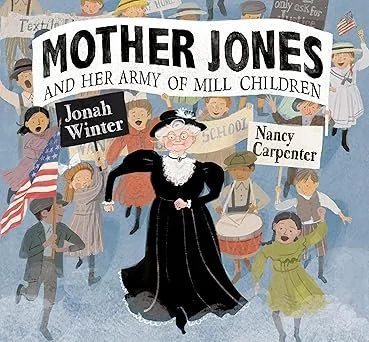
This book tells the story of Mother Jones, who in 1903 led the “Children’s Crusade” to protest harsh child labor conditions. The book describes how she led 100 children on a 100-mile march from Philadelphia to the home of President Theodore Roosevelt to raise awareness about child labor. Although Roosevelt refused to meet with them, the march gained national attention and helped build support for future child labor reforms.
Recommended Questions:
Why were working conditions dangerous and unfair for children?
Why do you think some businesses continued using child labor despite the harm it caused?
How did child labor impact children’s education, health, and future opportunities?
Why do you think many families depended on children working in mills and factories?
Mother Jones chose a 100-mile march to draw public attention to child labor. Why do you think she chose a march instead of simply writing letters or calling for a strike? Do you think the march was more effective? Why or why not?
Why was it important for people across the country to see and hear directly from the children affected by labor conditions?
What rights and protections for children exist today because of activism like this?
Why do you think President Roosevelt refused to meet with the marchers?
When President Roosevelt refused to meet with the marchers, did that mean the “Children’s Crusade” was a failure? Why or why not?
What lessons from the “Children’s Crusade” can still apply to movements for justice and workers’ rights today?
NCSS Theme 10: Civic Ideals and Practices
The book highlights how citizens can organize, protest, and advocate for change when systems are unfair. Mother Jones encouraged workers and children to speak out against injustice and demand better treatment. Students can explore how civic action and public protest have shaped democracy and social reform.
Social Justice Anchor Standard 17: Stand up to injustice
The story encourages students to recognize injustice and consider how people can take action to address unfair systems. Mother Jones organized collective action to advocate for vulnerable children and workers. Students can reflect on how speaking out and working together can create social change.
WA Civics 4: Understands Civic Involvement
Students can examine how individuals and groups participate in efforts to improve society. Mother Jones and the mill children used marches and public awareness to influence change and bring attention to unfair labor practices. The story helps students understand the importance of civic participation and advocacy.
