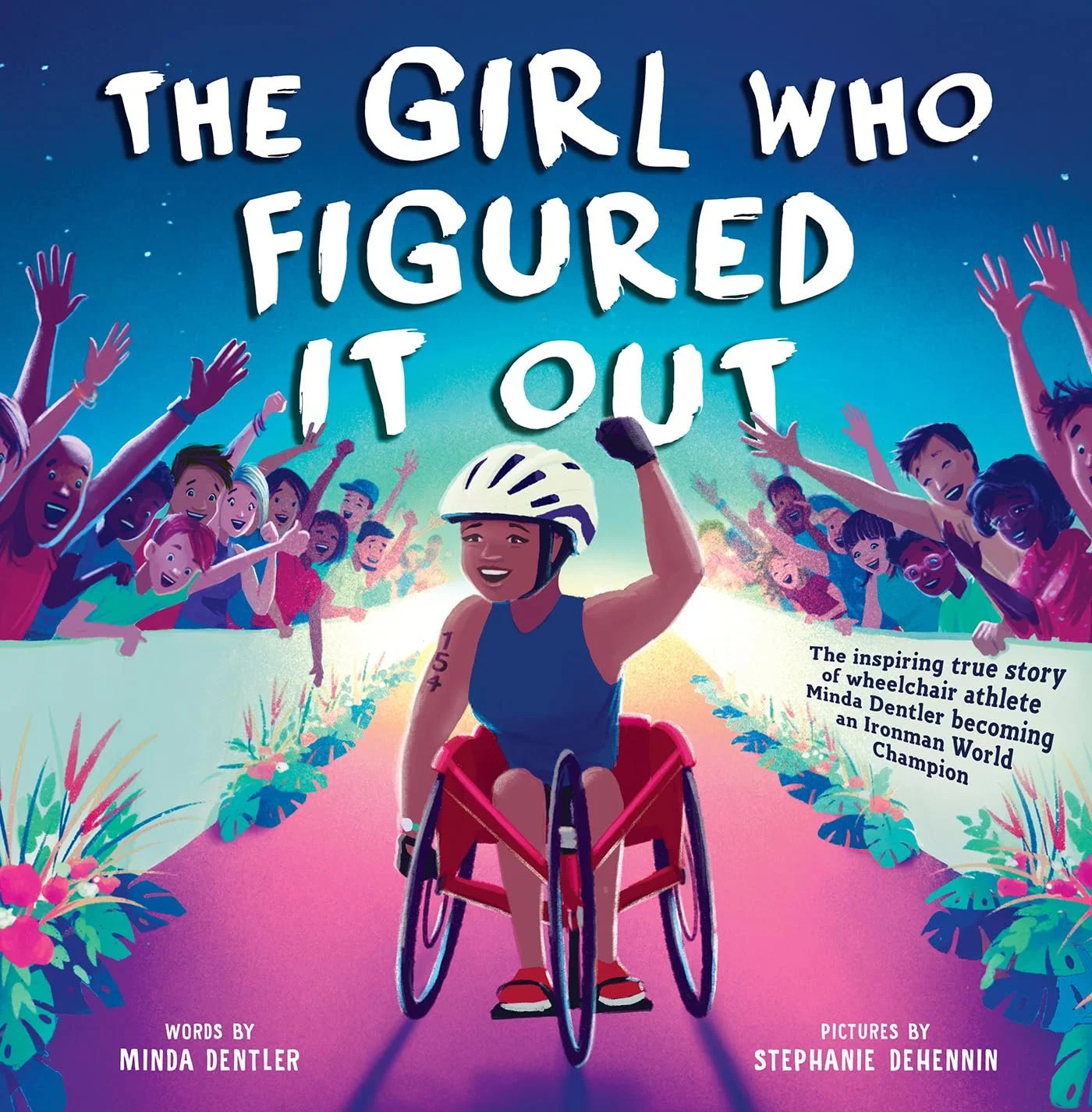
The Girl Who Figured It Out
Book Summary:
This biography tells the story of Minda Dentler, who contracted polio as a baby in India and was later adopted by an American family. Minda had numerous surgeries, and refused to let her leg braces and crutches define her capabilities. The book culminates in her historic achievement as the first female wheelchair athlete to complete the grueling Ironman World Championship.
Recommended Questions:
What barriers did institutions sometimes create for Minda?
What role did supportive individuals and groups play in helping Minda succeed?
What examples of unfairness or bias did Minda experience?
How did Minda respond when others underestimated or excluded her?
What can people do when they see someone being treated unfairly because of a disability or difference?
What strategies did Minda use to overcome obstacles and achieve her goals?
How can we evaluate whether a system, rule, or environment is accessible and fair to everyone?
What evidence from the story shows that determination alone is not always enough without support and access?
How is adoption an important part of Minda’s story?
How might adoption shape a person’s identity?
What does Minda’s story teach us about love, support, and family relationships?
NCSS Theme 5: Individuals, Groups and Institutions
Minda Dentler’s story highlights how schools, sports organizations, healthcare systems, and communities can either create barriers or provide support for people with disabilities. Throughout her life, Minda interacted with institutions that sometimes underestimated or excluded her, while other individuals and groups helped encourage her success. The book encourages students to examine how institutions shape opportunity and why inclusion and accessibility are important within communities.
Social Justice Anchor Standard 18: Making a difference
Minda Dentler’s story encourages students to recognize and challenge assumptions and barriers faced by people with disabilities. Her perseverance demonstrates the importance of advocating for inclusion and accessibility when systems or attitudes exclude others. The book inspires students to speak up respectfully when they witness unfair treatment and to help create more equitable communities.
WA Social Studies Skills 1: Uses critical reasoning skills to analyze and evaluate claims
Students can analyze the barriers Minda faced and evaluate the choices and strategies she used to overcome them. The story encourages critical thinking about accessibility, fairness, and how systems and attitudes can either support or limit opportunities.
