Main Street: A Community Story About Redlining
Book Summary:
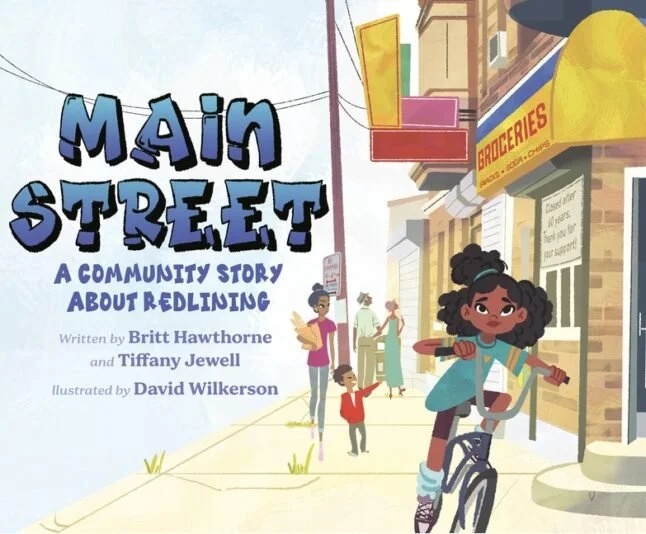
Main Street: A Community Story About Redlining follows a young girl named Olivia who learns the hidden history of her vibrant neighborhood after a friend’s comment makes her feel ashamed of where she lives. Through the stories of her elder neighbor, Ms. Effie, Olivia discovers how systemic "redlining" was used to deny loans to Black families and how her community fought back with resilience and solidarity. The book celebrates the power of collective action and the beauty found in neighborhoods that have stayed strong despite unfair treatment.
Recommended Questions:
Why do you think Alison’s mother claimed Main Street wasn’t "safe"? Was it fair for her to make that judgment without knowing the community?
The book describes redlining as a "system." What is the difference between one person being unfair and an entire system—like a bank or the government—creating unfair rules for everyone?
How does the bond between Ms. Effie and Olivia demonstrate the deep care and history that neighbors share on Main Street?
When Ms. Effie’s family was denied a loan, how did they and their neighbors take action together? What are some other ways the people in the story supported one another to improve their community?
What does it mean for a community to be "resilient"? How do the events of the story show that the people of Main Street are resilient?
What does the 62nd annual block party tell you about the traditions and the long history of this neighborhood?
How does the story of Ms. Effie’s past help us understand the challenges communities still face today? Why is it important for different generations to talk about these "past" injustices?
Even though the laws have changed, how can past injustices like redlining still impact the way neighborhoods look and feel today?
The Author’s Note mentions "Building and Loan Associations" (B&Ls). Based on what you’ve read or researched, how did these organizations help families when traditional banks refused?
NCSS Theme 6: Power, Authority and Governance
The book examines how government policies and institutions used power to create unequal opportunities through redlining. It helps students understand how laws and systems can shape where people live, learn, and work. Students are encouraged to critically examine how government decisions can either promote fairness or reinforce inequality.
Social Justice Anchor Standard 15: Systemic Injustice
The book helps students recognize how discrimination can become embedded within systems and institutions. It highlights the unfair treatment of communities based on race and encourages students to think critically about equity, access, and justice. Students are encouraged to consider how communities can work toward repairing harm and creating fairer systems.
WA Geography 2: Human interaction with the environment
Main Street shows how human decisions shape neighborhoods and access to resources. Redlining influenced where families could buy homes, which impacted schools, parks, transportation, and economic opportunities. Students can analyze how geography and policy interact to shape community experiences over time.
