Drawn Together
Book Summary:
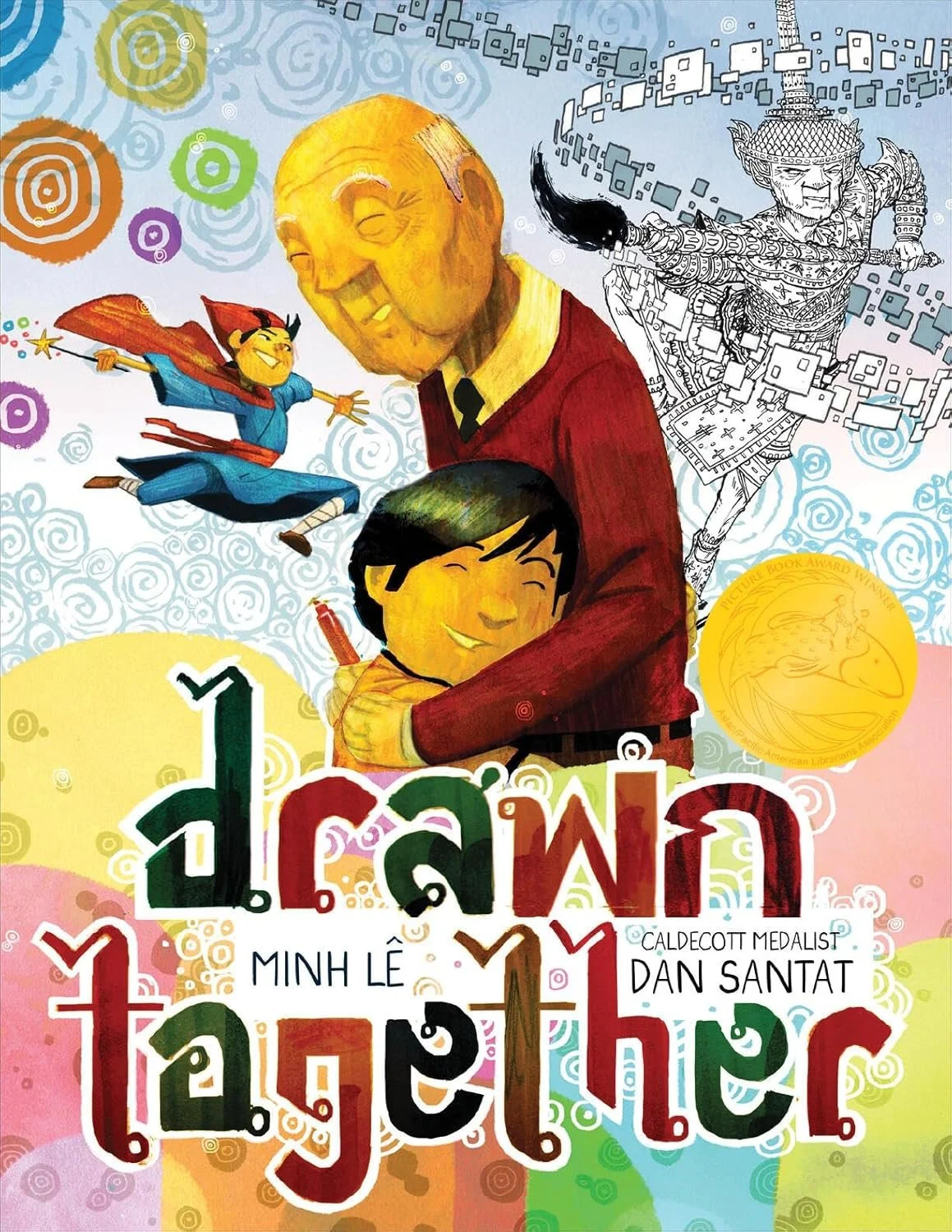
Drawn Together tells the story of a young boy and his grandfather who struggle to communicate because they do not share a common spoken language. Through drawing and art, they find a powerful way to connect, share stories, and build a meaningful relationship. The book highlights how creativity can bridge language and generational differences.
Recommended Questions:
Why is it difficult for the boy and his grandfather to communicate at first? What helps them begin to understand each other?
How does drawing help the characters share their thoughts and feelings? What are other ways people can communicate without using words?
How might the grandfather feel at the beginning of the story? How might the boy feel? How do their feelings change over time?
What do the drawings tell us about the grandfather’s past and experiences? Why is it important to learn and share our family’s stories?
What does this story teach us about respecting people who speak different languages or come from different cultures?
In what ways can art be used to speak up, teach others, or bring attention to important issues? Can art be a form of civic involvement or activism? Why or why not?
How does creating or sharing art help people feel connected and valued in a community?
Create an inventory of art in your school or community. What patterns do you notice? Whose stories are represented in this art? Whose stories are not yet included?
NCSS Theme 4: Individual Development and Identity
The story explores how identity is shaped by family, culture, language, and personal expression. As the boy and his grandfather connect through art, students see how people can understand one another in many ways beyond spoken language.
Social Justice Anchor Standard 6: Comfort with people who are both similar to and different from you
The book models respectful engagement across language and cultural differences. By showing how the characters listen, observe, and connect through art, Drawn Together helps students see that differences do not prevent meaningful relationships.
WA Civics 4: Understands civic involvement
Drawn Together shows that civic involvement is not limited to laws or protests but can include creative expression that builds understanding and connection. Through art, the characters share stories, honor lived experiences, and bridge language and cultural differences. The book helps students see how art can be a powerful way to give voice to experiences, foster empathy, and strengthen inclusive communities—key elements of civic participation.
