Juneteenth for Mazie
Book Summary:
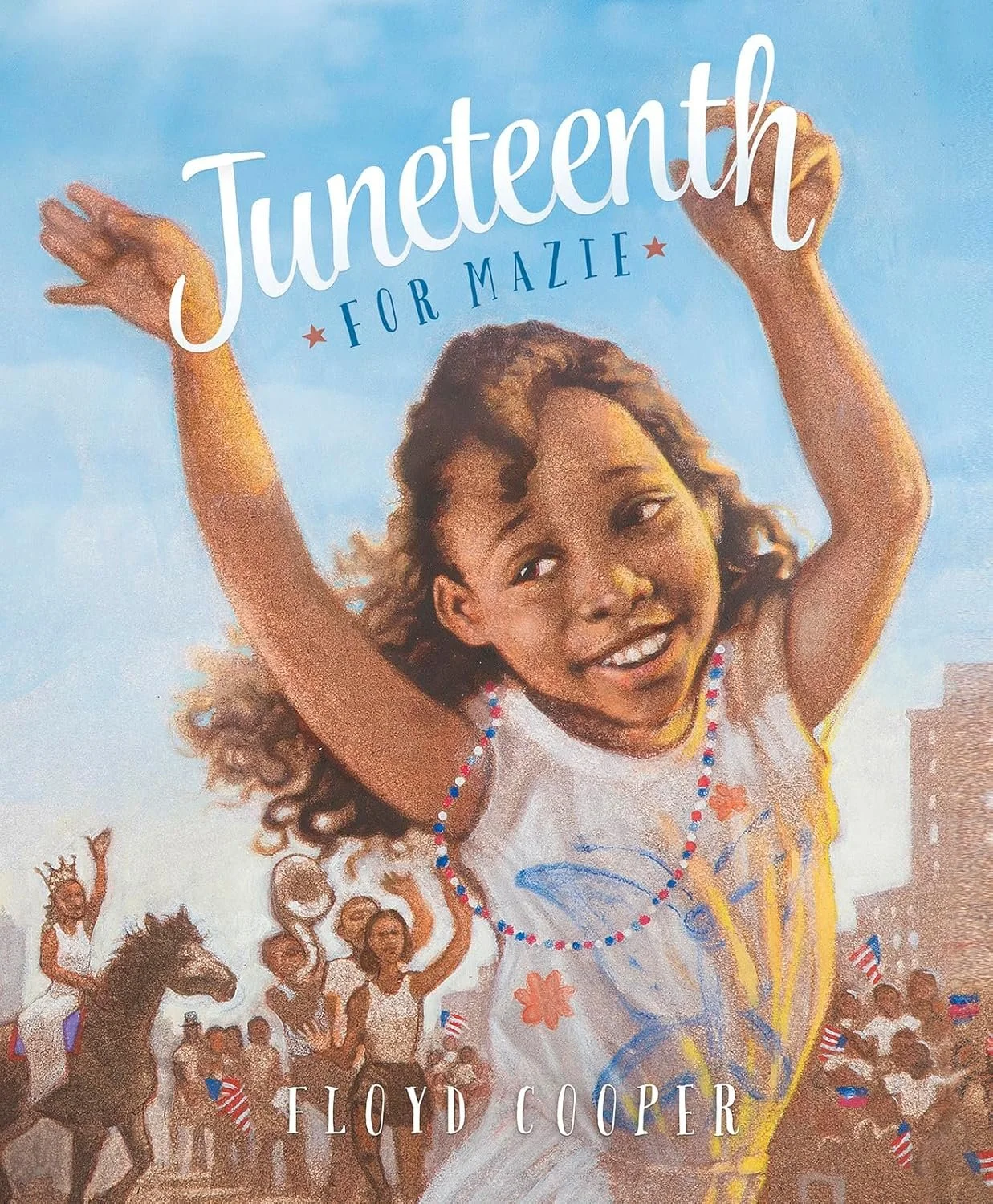
Juneteenth for Mazie tells the story of a young girl named Mazie who learns about Juneteenth, the day enslaved people in Texas finally learned of their freedom. As her father shares the struggles and triumphs of their ancestors, Mazie begins to understand the importance of freedom, equality, and remembrance. The story honors the resilience of Black Americans and celebrates progress while recognizing the work that remains.
Recommended Questions:
What is Juneteenth, and why is it important to Mazie and her family?
How does learning about Juneteenth help Mazie understand freedom and fairness?
How can remembering Juneteenth help people take action for justice today?
What lessons does Mazie learn about her ancestors’ courage and strength?
How does Mazie’s story show that celebrating history can also be a call to action?
Why do you think learning about difficult parts of history is important for building a better future?
Does your community have any Juneteenth celebrations?
Standards:
NCSS Theme 2: Time, Continuity and Change
Through Mazie’s learning, students explore how historical events—like emancipation and Juneteenth—continue to influence modern values, cultural identity, and civic celebrations of equality and perseverance.
Social Justice Anchor Standard 16: Speaking Up
Mazie’s story inspires readers to celebrate freedom and reflect on the importance of equality in their own lives. By learning about Juneteenth, students are encouraged to honor the struggles of the past and take part in building a more just society—whether through education, awareness, or acts of inclusion and respect. The book emphasizes that remembrance can inspire action toward continued progress.
WA History 4: Understands how historical events inform analysis of contemporary issues
This book helps students understand how the end of slavery and the celebration of Juneteenth relate to current discussions about racial justice, equity, and freedom. By linking past and present, students can see how historical experiences of injustice continue to shape civic engagement and the fight for equality today.
