Shin-Chi’s Canoe
Book Summary:
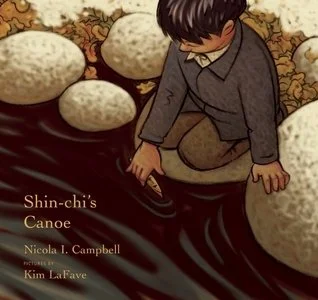
Shin-Chi’s Canoe by Nicola I. Campbell tells the story of a young First Nations boy, Shin-Chi, and his sister Shi-shi-etko, who are taken from their family to attend a residential school. Through their experiences, readers witness the emotional and cultural harm caused by these institutions and the strength of children who hold onto their language, memories, and identity. The story honors resilience and invites reflection on the long-lasting impact of colonial policies on Indigenous communities.
Recommended Questions:
Why did Shin-Chi and Shi-shi-etko have to leave their home? How do you think being forced to leave changed their lives?
When Shi-shi-etko’s mother says, “If we could, we would keep you here at home. We would never, ever let you go, but it’s the law,” who created that law and why was it unjust?
Why do you think the children rode in a cattle truck instead of a bus? What message does that send about how they were viewed?
What does Shin-Chi’s canoe symbolize in the story? How does it represent identity, family, and hope?
Identify three things about the residential school that were unfair or harmful. How did those things affect the children’s sense of belonging?
How do Shin-Chi’s small acts—like protecting his canoe or remembering his home—show resistance and courage?
How does learning about Shin-Chi’s experience help us understand why Indigenous communities today continue to seek truth and reconciliation?
What actions can individuals and communities take today to help address the harm caused by residential schools?
Why is it important to hear stories like Shin-Chi’s when learning about history? How do they help us understand current events and relationships between Indigenous and non-Indigenous peoples?
How can you stand up for fairness and justice in your own community when you see or learn about something that is wrong?
Standards:
NCSS Theme 4: Individual Development and Identity
This story highlights how personal identity is shaped by family, culture, and experiences—and how it can be threatened by unjust systems. Shin-Chi’s struggles to hold onto his sense of self because of unjust rules and restrictions of the residential school. This story also encourages empathy and respect for those whose identities have been marginalized or suppressed.
Social Justice Anchor Standard 14: Understanding Impact
Shin-Chi’s Canoe invites students to examine how Indigenous peoples resisted cultural erasure by keeping their traditions, language, and stories alive. It shows that even small acts of remembrance and courage can challenge unjust systems. The book encourages students to reflect on how people today can continue to promote justice, healing, and reconciliation in their own communities.
WA History 4: Understands how historical events inform analysis of contemporary issues and events
This story helps students connect the historical experience of residential schools with ongoing discussions about truth, reconciliation, and Indigenous rights today. By learning about Shin-Chi’s experience, students better understand how the past influences the present and how awareness of historical injustice can guide present and future actions toward equity and understanding.
