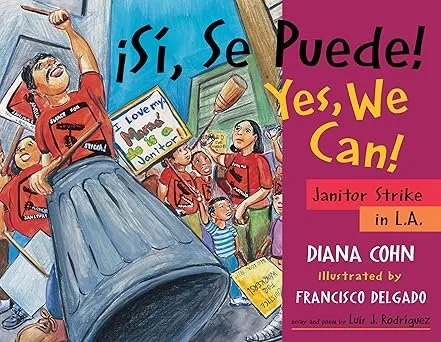
Sí, Se Puede/Yes, We Can: Janitors Strike in LA
Book Summary:
Sí, Se Puede tells the story of Carlitos, a young boy whose mother is part of the United Farm Workers movement, marching for better wages and working conditions. Carlitos learns about activism as he helps his mother and witnesses the power of collective action. The story highlights how ordinary people—adults and children alike—can work together to fight injustice and make meaningful social change.
Recommended Questions:
How do you think the protestors would describe the injustices they are trying to change?
Who benefits from these injustices, and who is harmed?
What fears might the protestors have? What fears might their opponents have?
How does the story show that some people have more power than others? How can people work to make power more fair?
How do you think Carlitos and his classmates feel about their parents working so much?
Carlitos decides to help his mom by bringing signs to the march. What are other ways that Carlitos could have helped?
Miss Lopez has a poster in her classroom that says, “Viva Cesar Chavez!” How was Chavez’s activist work similar to Carlitos’ and his mom’s activism?
Why is it important for children and young people to learn about activism?
How can small actions, like Carlitos helping his mom, make a difference in larger social movements?
How does this story connect to other social justice movements you’ve learned about?
Standards:
NCSS Theme 10: Civic Ideals and Practices
This book illustrates how civic participation and collective action can address social and economic injustices. Students see how organizing, protesting, and supporting workers’ rights contribute to democracy and social change. It emphasizes that citizenship involves standing up for fairness, equality, and human dignity.
Social Justice Anchor Standard 16: Speaking Up
Through Carlitos’ perspective, students learn to empathize with farmworkers who faced unfair wages and working conditions. The story encourages understanding the human impact of injustice and the importance of taking action, even in small ways, to support fairness and equity.
WA Civics 4: Understands Civic Involvement
The story shows how individuals and communities work together to advocate for rights and social change. Carlitos’ family’s participation in the United Farm Workers movement demonstrates civic engagement in action, allowing students to see the connection between activism, democracy, and societal improvements.
