Africville
Book Summary:
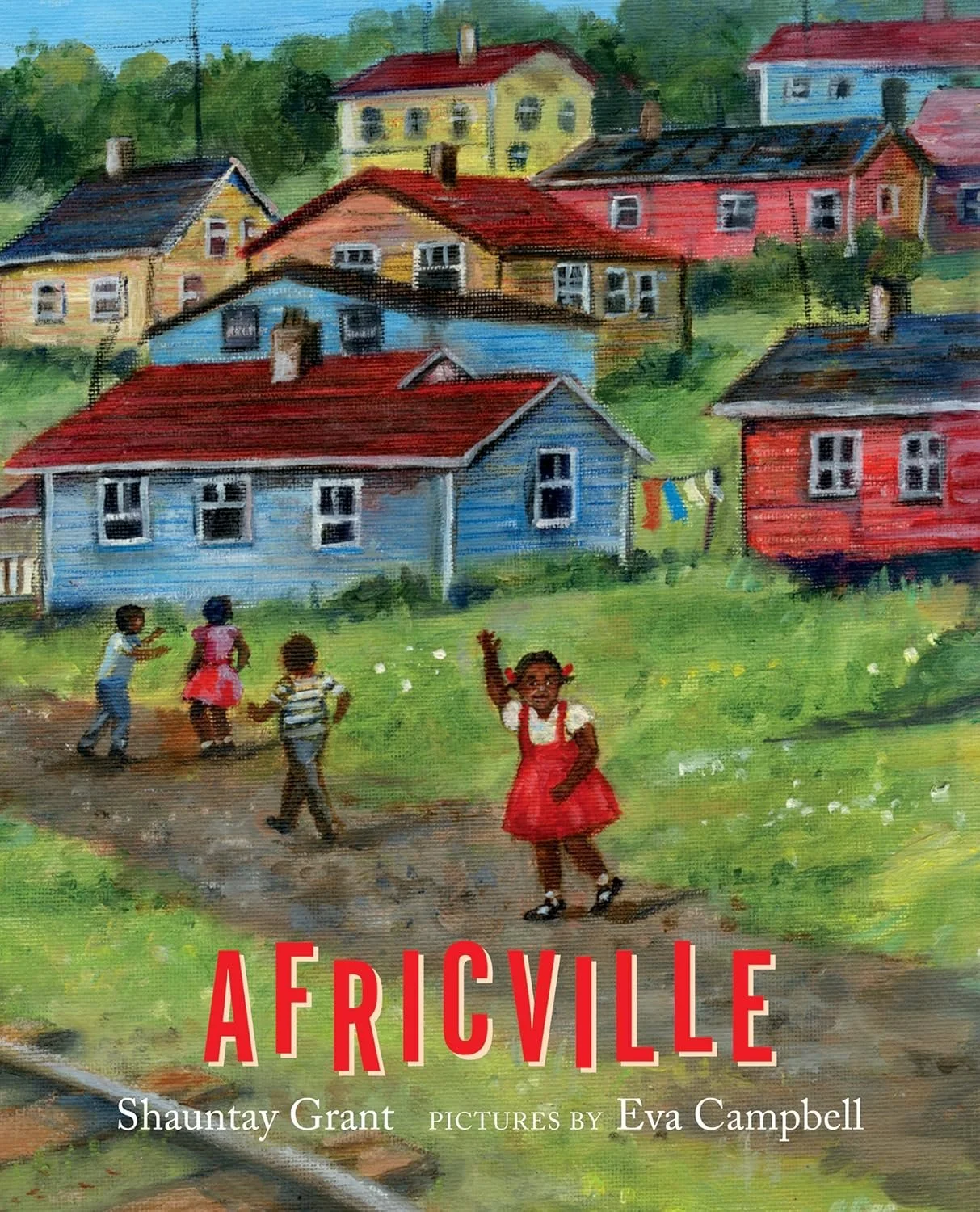
Africville celebrates the strong culture, traditions, and shared experiences of a close-knit Black community in Halifax, Nova Scotia. Through poetic language and vivid illustrations, the book portrays daily life, family connections, music, faith, and joy that bound the community together. The authors note tells the true story of a historic Black community in Halifax, Nova Scotia, that was forcibly relocated and destroyed by the government in the 1960s. The story emphasizes community, belonging, and the lasting impact of government decisions.
Recommended Questions:
What made Africville a strong and collaborative community? Why is a sense of belonging important to people and communities?
The story describes many joyful events in Africville. Which two events sound most inviting to you, and why?
The author’s note explains that Africville was a Black community located on the shores of the Bedford Basin in Halifax, Nova Scotia. Use a map to locate this region and learn about its geography and history.
Find and examine primary sources—such as photographs, news articles, or letters—to learn more about Africville and the forced relocation of its residents. What do these sources help you understand that the story alone may not show?
How does learning about Africville help us better understand current issues such as housing, racism, and community displacement?
On February 24, 2010, the City of Halifax issued an official apology to the former residents and descendants of Africville. Research the apology and analyze its purpose. Why are apologies important, and what responsibilities might still remain?
In 2012, the Africville Museum opened in a building that is a replica of the original Seaview African United Baptist Church. Explore the museum’s website to learn about past and current events connected to Africville and its vibrant community.
Why is it important to remember places like Africville? How can remembering history help prevent similar injustices in the future?
NCSS Theme 6: Power, Authority and Governance
The book examines how government power and policy decisions directly affected a community’s lives. Students learn how authority can be used unjustly and why fair governance, accountability, and community voice matter in decision-making.
Social Justice Anchor Standard 12: Injustice at the individual and institutional level
The book shows how systemic racism and government policies harmed Africville residents. Students are encouraged to identify injustice, understand its causes, and consider the importance of acknowledging harm and working toward justice.
WA History 4: Understands how historic events inform analysis of contemporary issues and events
Africville helps students understand how past government actions continue to shape present-day conversations about housing, racism, and community rights. By examining the destruction of Africville, students learn how historical injustices inform current efforts toward reconciliation, apology, and reparations.
Links to related Primary and Secondary Resources
