Berry Song
Book Summary:
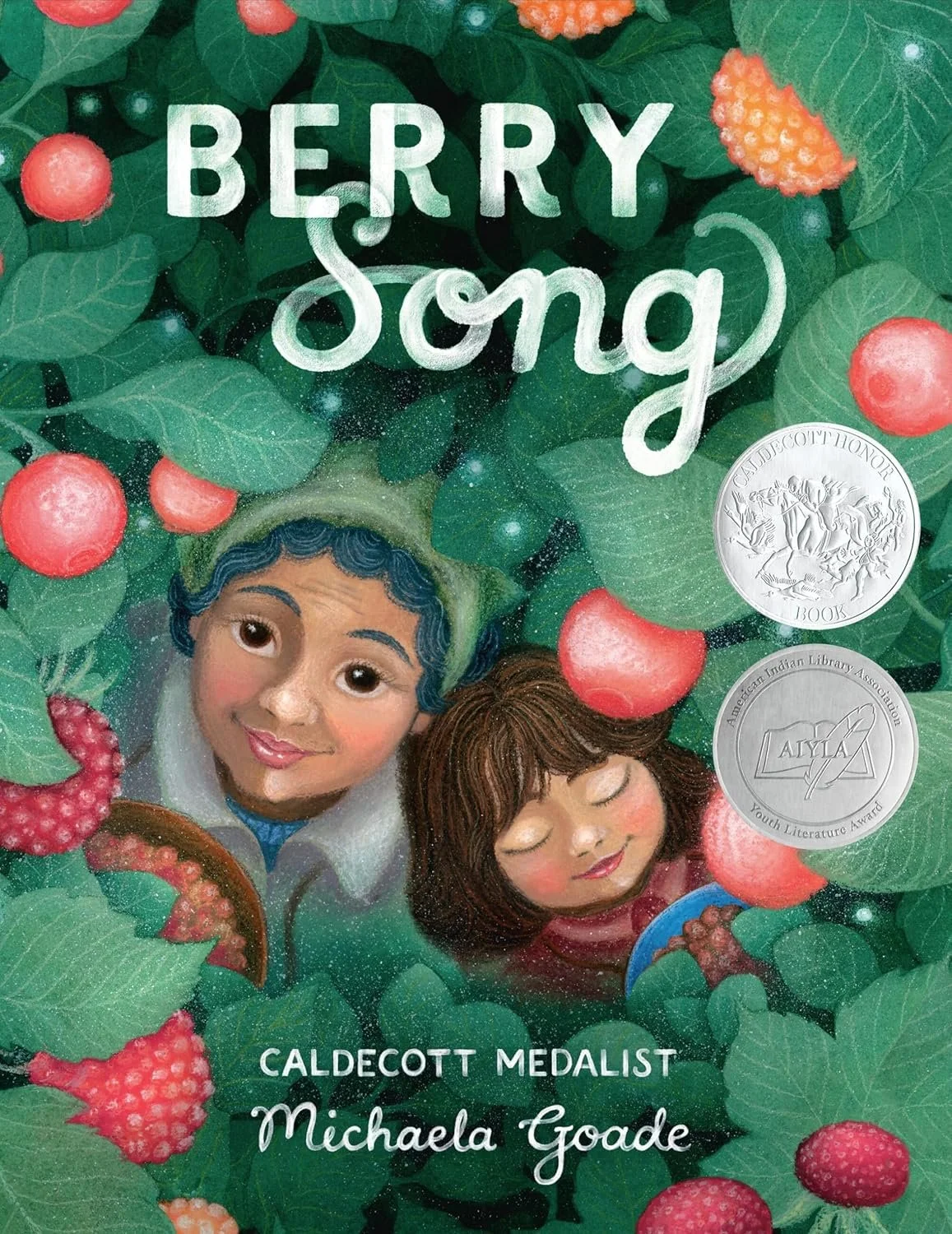
Berry Song follows a young Indigenous child and their grandmother as they gather berries, sharing songs, stories, and knowledge passed down through generations. The book does not name a specific tribe, allowing the experience to reflect shared Indigenous values of connection to land, family, and nature. Written and illustrated by Goade, who is Tlingit and Haida, the story is informed by her cultural perspective and connection to Southeast Alaska.
Recommended Questions:
How does the land help shape the traditions in this story? Why do you think place is important to the family’s way of life?
What does the grandmother teach the child during their time together? Why is learning from elders important?
How do the characters show respect for the land while gathering berries? Why is this important?
What are ways we can care for the environment in our own community?
Why is it important that cultural traditions are passed from one generation to the next?
Explain what you think the author means by “We speak to the land and the land speaks to us”. How does the story support your answer?
Explain what you think the author means by “We take care of the land and the land takes care of us.” How does the story support your answer?
Make a poster showing how you can help take care of the land where you live. Place your posters in locations where people interact with the land. Think about what your message emphasizes and how it encourages others to care for the environment.
The authors note conclude with “In many places around the world, Indigenous peoples are leading the way in protecting our planet. I encourage you to find out whose traditional territory you call home, learn about their history and the issues they are facing today, and seek ways to engage”. How can you take action to honor and support the Indigenous peoples of your local area? Research whose traditional territory you live on, learn about their history and current issues, and describe at least one way you can engage respectfully to help protect the land and support their community.
NCSS Theme 3: People, Places and Environments
The story highlights the close relationship between people and the natural environment, showing how land shapes cultural traditions and daily life. Students see how geography, seasonal cycles, and place influence identity, values, and community practices, particularly within Indigenous cultures.
Social Justice Anchor Standard 6: Valuing Diversity
Berry Song shows a child learning alongside a family member while honoring traditions that may be similar to or different from those of others. By centering an Indigenous cultural experience without naming a specific tribe, the book invites students to respectfully engage with ways of life that may differ from their own while finding shared values such as family, care for nature, and learning from elders. This helps students build comfort, respect, and appreciation for both similarities and differences among people.
WA Geography 2: Understands human interactions with the environment
Berry Song demonstrates how people interact with the environment in respectful and sustainable ways. Through berry gathering, students learn that humans rely on natural resources while also caring for and honoring the land, reinforcing the idea of stewardship and environmental responsibility.
