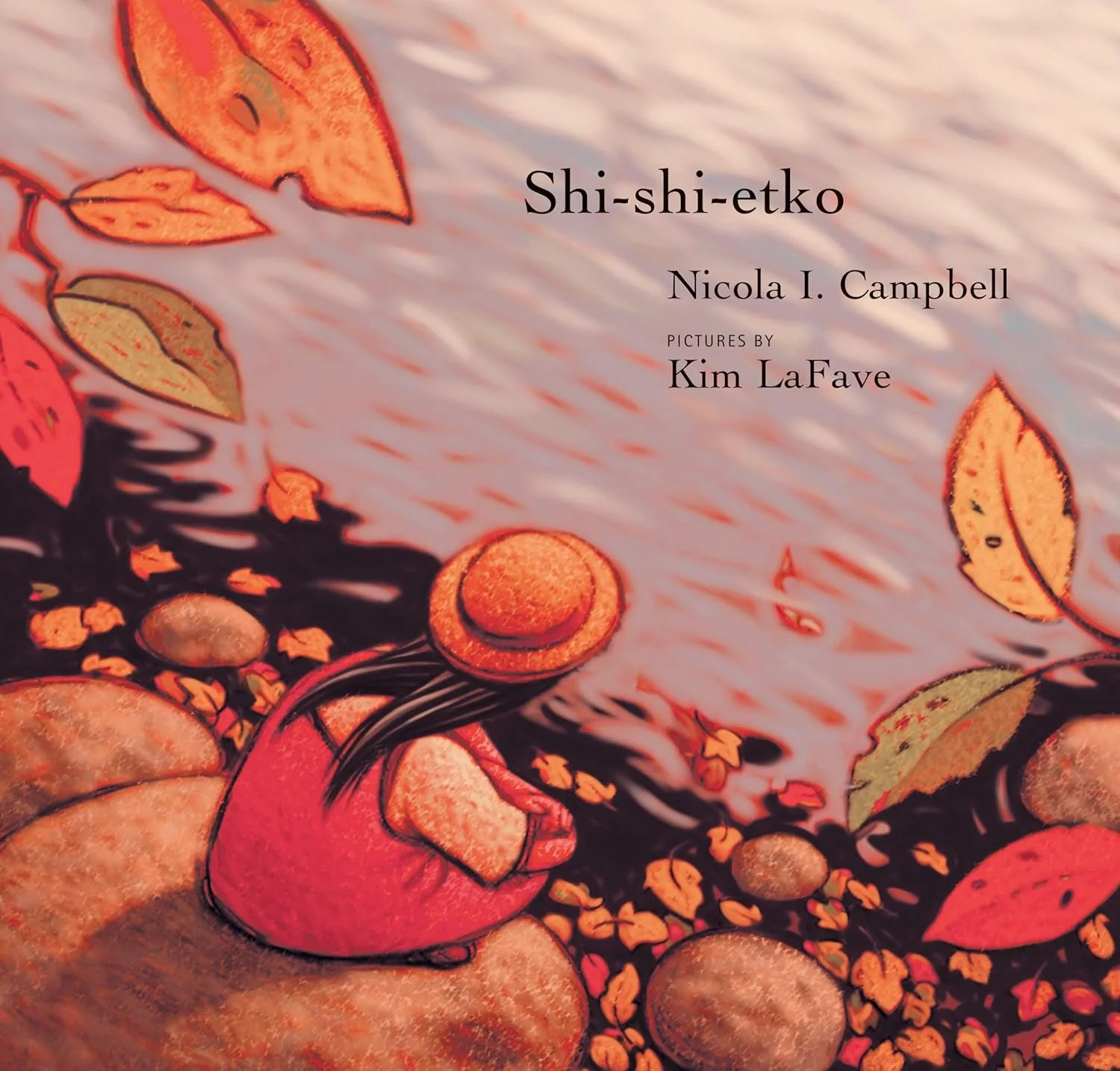
Shi-shi-etko
Book Summary:
Shi-shi-etko tells the story of a young Indigenous girl who spends her final days with her family before being taken to a residential school in Canada. As she walks the land with her elders, they help her remember her language, traditions, and identity so she can carry them with her. The story gently but powerfully shows the impact of forced assimilation on Indigenous children and families.
Recommended Questions:
Why is it important that Shi-shi-etko’s family helps her remember her language, land, and stories before she leaves?
How do the land and natural surroundings help Shi-shi-etko hold on to her identity?
The author’s note at the beginning of the book discusses Residential Schools in Canada. Research the Indian boarding schools in the United States and how they affected Indigenous peoples here, especially tribes near your community.
How did boarding and residential schools affect Indigenous sovereignty and self-determination?
Why is it important for tribes to have the right to govern themselves and protect their cultures today?
What responsibilities do schools and governments have to acknowledge and repair past harms?
How can school communities show respect for tribal sovereignty in their own communities?
How can remembering and honoring culture be an act of resistance?
How does this historical story connect to conversations about Indigenous rights and reconciliation today?
NCSS Theme 1: Culture
This book explores how cultural beliefs, traditions, language, and relationships shape identity. Through Shi-shi-etko’s experiences, students learn how culture is passed down through stories, land, and family—and how these cultural connections were threatened by residential schools. The book emphasizes the importance of preserving cultural knowledge despite oppression.
Social Justice Anchor Standard 13: Harmful impact of injustice historically and today
This book illustrates how Indigenous children were unjustly separated from their families and cultures through government-run residential schools. Students learn that laws and institutions can cause harm when they deny people their rights and identities. The story encourages reflection on historical injustice and the importance of acknowledging and addressing its lasting effects.
WA Civics 3: Understands the purposes and organization of tribal and international relationships
Shi-shi-etko helps students understand how colonial governments in both Canada and the United States used policies such as residential and boarding schools to control Indigenous populations across national borders. The book highlights how Indigenous peoples existed as sovereign nations long before modern borders and were affected by international and federal policies imposed upon them. Students learn that relationships between governments and Indigenous nations have lasting consequences and require respect for tribal sovereignty and self-determination.
