La Mariachi
Book Summary:
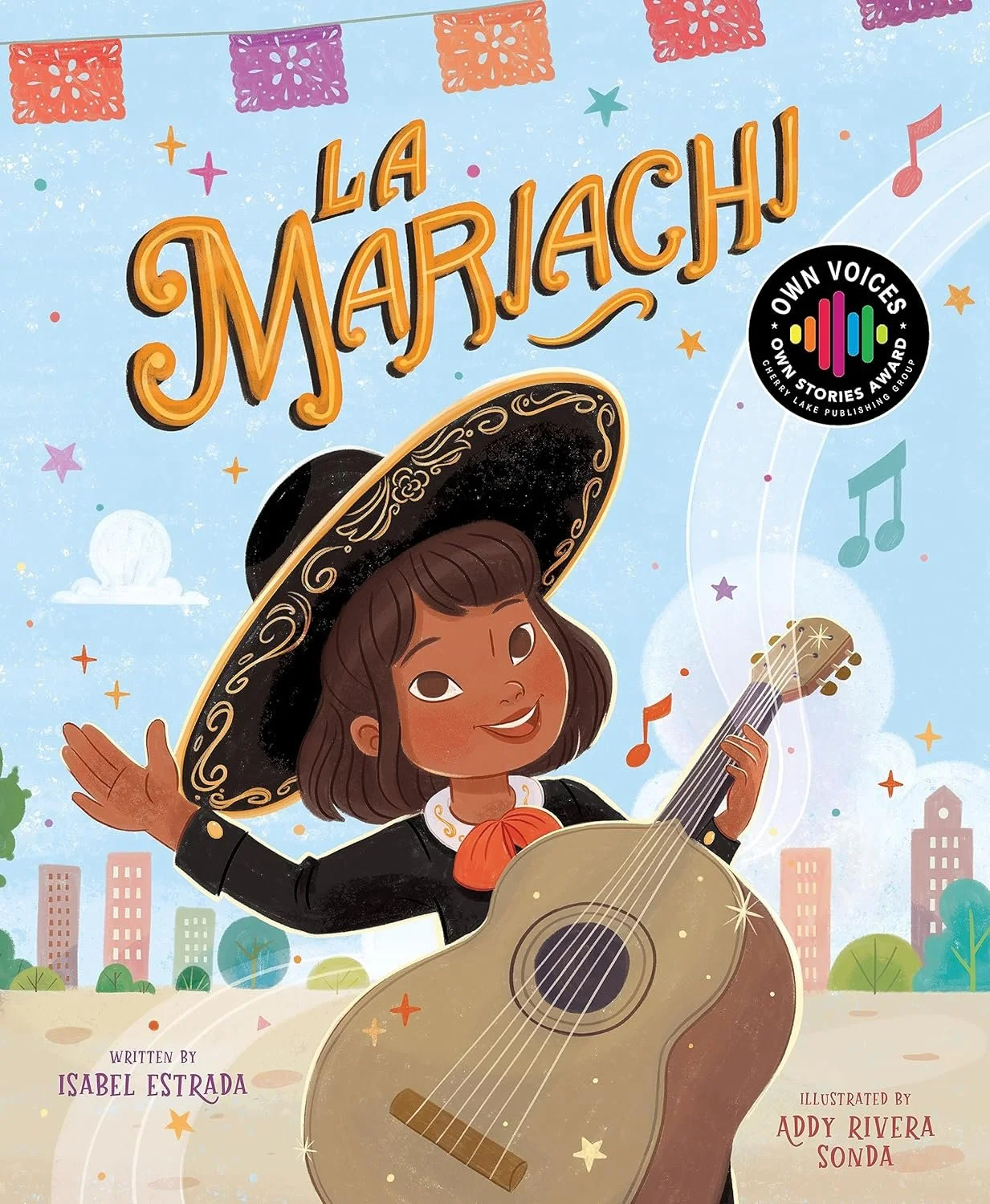
La Mariachi follows Tuchi, a young Latina girl in the 1970s who dreams of playing in her school’s mariachi band—only to be told that mariachi is “only for boys.” With encouragement from her nana and inspiration drawn from mariachi music and culture, Tuchi learns to play the guitarrón and proves she belongs in the band. The story celebrates perseverance, cultural pride, and breaking gender barriers.
Recommended Questions:
Why does Tuchi want so much to play in the mariachi band?
What challenges does Tuchi face because she is a girl who wants to play mariachi music?
How does Tuchi’s nana support her dream, and why is that support important?
How can traditions sometimes limit who is welcomed or excluded? How do we respect traditions while also advocating for them to evolve and be more inclusive?
What does this story teach us about Mexican-American culture? What evidence from the book supports your ideas?
How does the story help us understand the importance of perseverance and self-belief?
How do Tuchi’s challenges compare to similar barriers girls and women face today in music, sports, or other activities?
How does learning about Tuchi’s story help us understand the importance of challenging stereotypes today?
How can Tuchi’s perseverance inspire students to advocate for equity in their own schools or communities?
Why is it important to study historical examples of exclusion and barriers?
NCSS Theme 4: Individual Development and Identity
This book portrays Tuchi’s personal journey of growth, confidence, and self‑expression within her cultural tradition. She must confront and challenge gender expectations to pursue her passion, showing how identity is shaped by both cultural heritage and individual determination. Students see how personal strengths and beliefs help individuals navigate barriers and define who they are.
Social Justice Anchor Standard 3: Multiple Identities
This book shows how Tuchi’s experience is shaped by both her cultural identity and her gender identity. Because she is a girl who loves mariachi music—a tradition often dominated by men—she must navigate expectations tied to both gender and culture. Through Tuchi’s story, students learn to appreciate how different aspects of identity influence opportunities, and why it’s important to challenge limitations tied to those identities.
WA History 4: Understands historical how historical events inform analysis of contemporary issues
La Mariachi illustrates how traditional gender roles in cultural practices—like mariachi music—have historically limited opportunities for girls and women. By examining Tuchi’s experience, students can reflect on how these past social norms still influence expectations and opportunities today. The book encourages learners to analyze how understanding history helps us challenge stereotypes and advocate for inclusion and equity in modern communities.
