Shark Lady
Book Summary:
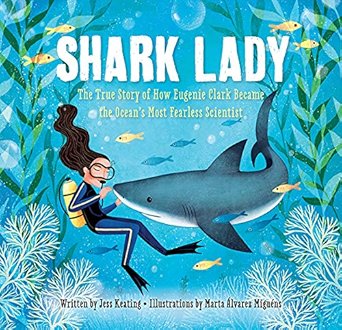
Shark Lady tells the true story of Eugenie Clark, a marine biologist who challenged fears and stereotypes to study sharks and other sea life. Despite being discouraged because she was a girl, Clark followed her curiosity and passion for science, making groundbreaking discoveries about sharks. Her work helped change how people understand and protect ocean animals.
Recommended Questions:
How did people’s beliefs about sharks influence how sharks were treated?
What challenges did Eugenie Clark face because she was a girl interested in science? Do similar gender stereotypes still limit certain professions today? How can we challenge these stereotypes? How did Eugenie Clark use research and evidence to change people’s minds?
How does Eugenie Clark’s story show her persistence in overcoming stereotypes—both about gender and about shark behavior? What actions did she take to challenge these beliefs? How does Clark’s story show perseverance?
How does studying sharks help protect the ocean environment?
Why is it important to question stereotypes or commonly held beliefs?
How can one person’s curiosity and persistence lead to change in society?
How does Eugenie Clark’s story connect to issues of conservation today?
What can students do to help protect animals and the environment in their own communities?
Research Eugenie Clark to find pictures and videos of her experiments, dives, scientific research, and legacy. Use the timeline at the back of the book to identify key events and terms that can help guide your search.
NCSS Theme 8: Science, Technology, and Society
This book shows how scientific inquiry can challenge misconceptions and improve understanding of the natural world. Eugenie Clark’s research transformed public attitudes toward sharks and contributed to ocean conservation. Students learn how science influences society and how individuals can use research to create positive change.
Social Justice Anchor Standard 10: Diversity in social, cultural, and historical contexts
Shark Lady situates Eugenie Clark’s experiences within the historical and social context of gender discrimination in science. Rather than presenting diversity as simply “being different,” the book shows how societal expectations limited women’s opportunities and how Clark’s work challenged those barriers. Students learn to understand diversity as shaped by history, power, and access, deepening their understanding of equity and inclusion.
WA Geography 2: Understands human interaction with the environment
Shark Lady examines how humans study, interact with, and influence ocean ecosystems. Eugenie Clark’s work demonstrates how scientific research can help people better understand animals rather than fear them. The book encourages students to think about responsible environmental stewardship and conservation.
