Golden Domes and Silver Lanterns
Book Summary:
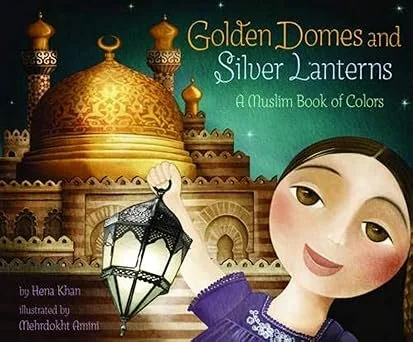
Golden Domes and Silver Lanterns introduces young readers to Islamic culture and traditions through the lens of colors, objects, and celebrations. The book highlights elements of daily life, clothing, festivals, and architecture while providing a gentle exploration of faith, community, and cultural identity. It combines vibrant illustrations with informative text to celebrate diversity and promote understanding.
Recommended Questions:
Which two colors mentioned in the book are your favorites? What do these colors help you learn about Muslim culture and traditions? Be sure to use the glossary at the end of the book to understand the meanings of important words and symbols.
Although the book focuses on a religious culture rather than a specific place, which three countries do you think might be represented in the story? What clues from the text or illustrations support your choices?
How does the book show daily life and family traditions in Muslim communities?
Why do you think it is important to learn about cultures and traditions different from your own?
How do celebrations, festivals, and architecture help people feel connected to their culture and community?
What are some similarities you notice between your own traditions and those described in the book?
How can learning about other cultures help reduce bias or misunderstanding in your community?
If you were to create a book celebrating your own culture, what objects, colors, or traditions would you include, and why?
NCSS Theme 1: Culture
This book explores how beliefs, traditions, and practices shape daily life in Muslim communities. Students learn how cultural expressions—such as architecture, clothing, and festivals—reflect values, identity, and shared heritage. The story encourages appreciation of cultural diversity and understanding of traditions different from one’s own.
Social Justice Anchor Standard 9: Diversity
The book connects to this standard by teaching students about Muslim culture while emphasizing shared human experiences, such as celebration, learning, and family life. It promotes respect, empathy, and understanding by helping students see both the uniqueness and universality of cultural traditions.
WA Geography 1: Understands the physical characteristics, cultural characteristics, and location of places, regions, and spatial patterns on the Earth’s surface
Golden Domes and Silver Lanterns connects to this standard by introducing students to regions where Islamic culture is prominent and highlighting features like mosques, domes, and lanterns that reflect cultural and physical environments. Students can examine how human culture interacts with geography to shape traditions and community life.
