Miya Wears Orange
Book Summary:
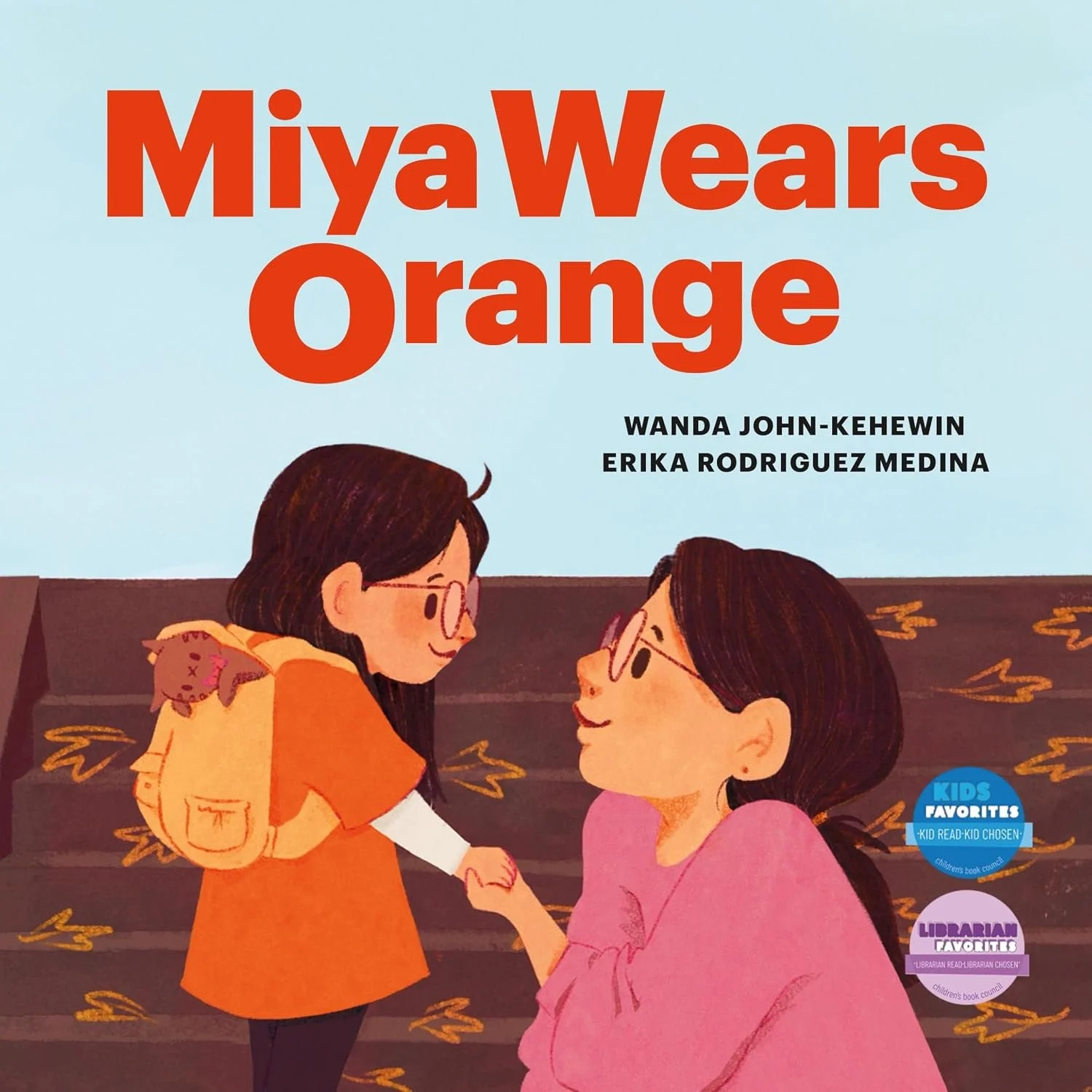
Miya Wears Orange follows Miya, a young Indigenous girl who loves school and storytime. When her teacher reads about children who were taken from their families and sent to a residential school. Miya, the only Native student in her class, becomes frightened that the same thing could happen to her. Her mother reassures her that children are no longer being forcibly taken to residential schools, helping Miya work through her fear and sadness while learning why remembering this history matters.
Recommended Questions:
What makes Miya afraid after hearing her teacher’s story? What can her reaction teach us about how learning history can affect people in the present?
Why were Indigenous children taken from their families and sent to residential schools? Where can we learn more about this history from Indigenous survivors, families, and communities?
How does Miya’s mother help her make sense of the past? Why is it important for families and communities to share their own stories and histories?
How does Miya’s understanding of residential schools change from the beginning to the end of the story? What experiences or conversations influence her thinking?
Why is it important to learn about history that can make us feel sad or uncomfortable? What might we miss if we avoid learning about difficult parts of the past?
Why should students learn about residential schools today, even though the schools are no longer operating? What can this history help us understand about the world we live in now?
Knowing that learning this history made Miya sad and afraid, what suggestions would you give her teacher to help students learn about residential schools in a thoughtful and supportive way?
Orange Shirt Day remembers children who attended residential schools, honors survivors, and recognizes the harm these schools caused. Why is it important to remember this history? What could happen if people ignored or forgot it?
What is the difference between feeling sad about an injustice and taking action to ensure it is remembered? How can schools and communities meaningfully honor the children and families affected by residential schools?
If you were helping your school plan an Orange Shirt Day activity, what would you include to help students learn about residential schools, honor survivors, and understand why this history matters?
NCSS Theme 2: Time, Continuity and Change
This book helps students understand how historical events continue to shape people’s lives and feelings in the present. By connecting the history of residential schools to Miya’s reaction, the story invites students to consider why learning about the past matters and how remembering historical injustices can contribute to a more informed and compassionate future.
Social Justice Anchor Standard 13: Harmful impact of bias and injustice
The book illustrates the harm caused when Indigenous children were forcibly separated from their families because of their identity. Through Miya’s fear and sadness, students can consider how historical injustice affects individuals and communities, including people who did not personally experience the original events.
WA History 4:
The story connects the history of residential schools to Miya’s present-day fears and questions. Students can examine how government policies that separated Indigenous children from their families continue to affect Indigenous communities and why learning this history remains important today.
Links to Related Primary and Secondary Resources
Authors reflection on the book
