Trudy’s Big Swim
Book Summary:
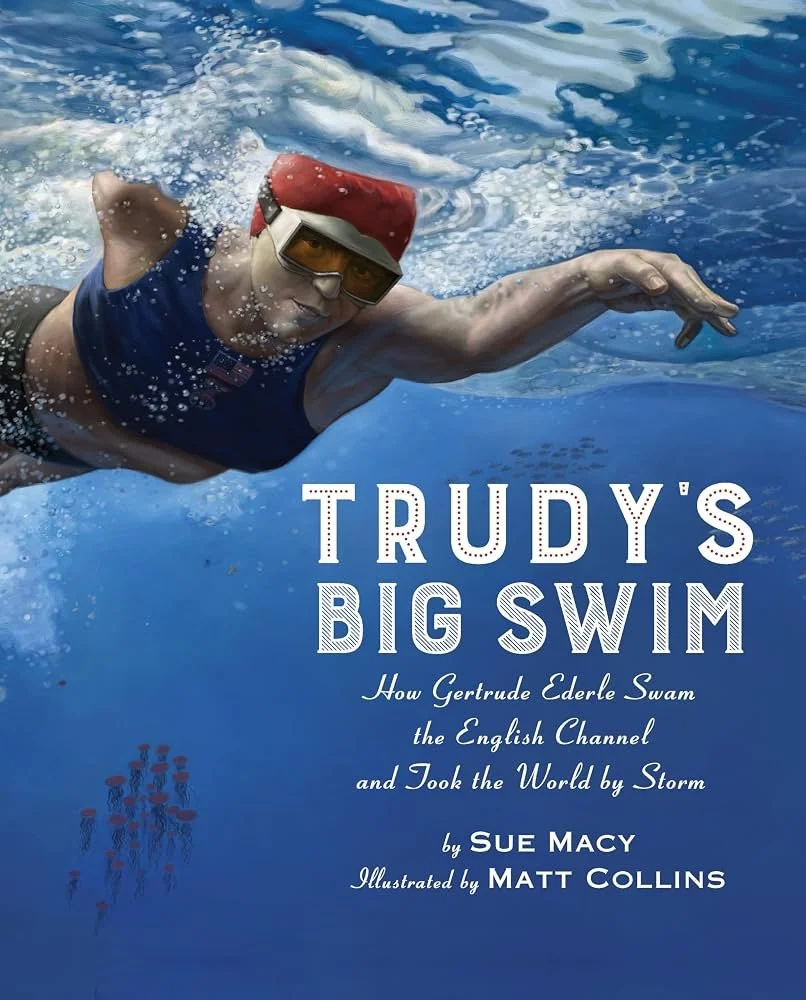
Trudy’s Big Swim tells the story of Gertrude “Trudy” Ederle, an accomplished American swimmer who became the first woman to successfully swim across the English Channel in 1926. Trudy had already achieved remarkable success as a competitive swimmer, setting numerous records and winning Olympic medals, but she wanted to take on the difficult challenge of swimming from France to England.
The swim was about 21 miles on a map, but strong tides and currents made the actual journey much longer. Trudy faced cold water, rough waves, jellyfish, exhaustion, and the memory of an earlier failed attempt. After 14 hours and 39 minutes, she reached the English shore, becoming the first woman to complete the swim and beating the existing record set by the fastest man by nearly two hours. Her accomplishment received international attention and became an important moment in the history of women's athletics.
Recommended Questions:
What year did Gertrude “Trudy” Ederle accomplish her historic swim? Review the timeline on the first page and investigate some important events in 1920s sports history. What was happening in sports during the time Trudy was becoming a competitive swimmer?
Trudy swam from France to England. Use a map to trace the route of her swim. What do you notice about the distance and location of the English Channel?
What dangerous physical conditions and natural hazards did Trudy face during her 21-mile swim, such as tides, currents, cold temperatures, waves, and wildlife? How did these conditions affect her journey?
Bill Burgess, Trudy’s trainer, had tried and failed 12 times to swim the English Channel. Why might someone who had not successfully completed the swim still be a good coach? What evidence from the book supports your thinking?
Review the songs the crew sang to Trudy while she was swimming. Why might “The Star-Spangled Banner” have motivated Trudy?
The final pages include illustrations of newspaper clippings about Trudy. Look closely at the words and headlines. Do you think the illustrations show actual newspaper words, or were they created by the illustrators?
Newspapers from 1926 can be important primary sources for historians. What can newspapers from the time help us learn about how people viewed Trudy and her accomplishment? What questions might historians ask when examining these sources?
Trudy finished the swim in 14 hours and 39 minutes, became the first woman to swim the English Channel, and beat the existing record set by the fastest man by nearly two hours. Why might this accomplishment have received so much attention?
What does Trudy’s story help us understand about women, sports, and changing ideas about what women could accomplish in the 1920s? Use evidence from the book and your research to support your thinking.
NCSS Theme 10: Civic Ideals and Practices
Fight of the Century strongly explores how democracy, freedom, voting rights, and civic participation. Alice Paul and the suffragists argued that women should have the right to participate in their government through voting. Their use of marches, petitions, public demonstrations, and other forms of protest shows students that civic participation can take many forms and that people can work together to advocate for changes they believe are important.
Social Justice Anchor Standard 20: Collective Action
Fight of the Century shows how people can work together to create change. Alice Paul organized with other suffragists who marched, petitioned, demonstrated, and continued their efforts even when they faced arrest and mistreatment. Their collective action helped bring national attention to women's suffrage and contributed to the eventual ratification of the 19th Amendment.
WA Civics 4: Civic Involvement
Fight of the Century shows how individuals and groups can participate in civic life to influence government and create change. Alice Paul and other suffragists organized a large parade, met with government leaders, gathered petitions, demonstrated outside the White House, and continued advocating for a constitutional amendment. Their actions demonstrate that civic involvement can include organizing, protesting, speaking to elected officials, and working with others to bring attention to an issue.
Links to Related Primary and Secondary Resources
Young Women of the Sea movie trailer about Trudy’s swimming adventures.
International Swimming Hall of Fame which includes interview clips with Trudy.
