The Tower of Life
Book Summary:
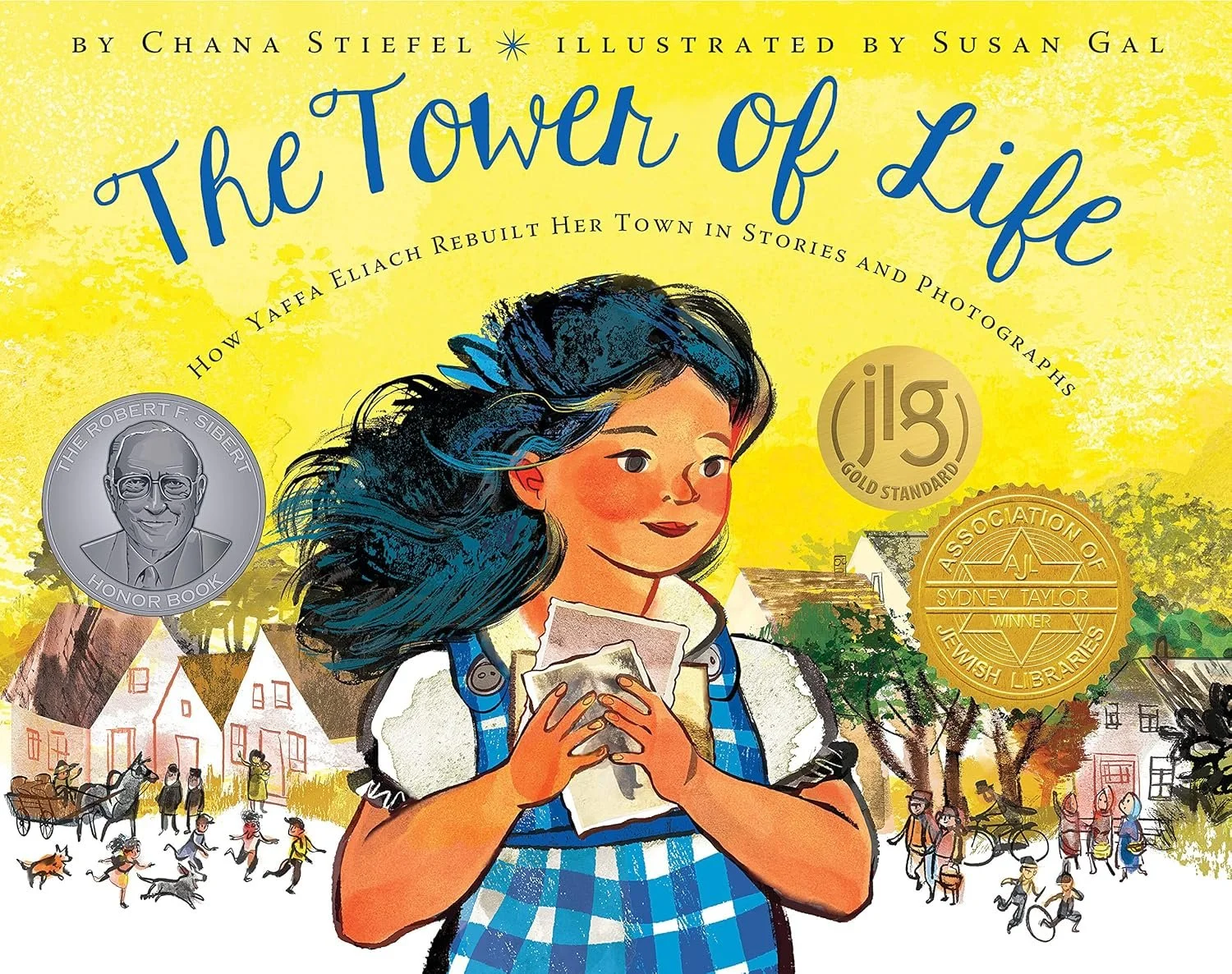
The Tower of Life tells the inspiring true story of Yaffa Eliach, a Holocaust survivor who dedicated her life to preserving the memories of the Jewish community of Eishyshok, a town largely destroyed during the Holocaust. After spending years collecting thousands of family photographs from around the world, Yaffa created the "Tower of Life" exhibit at the United States Holocaust Memorial Museum to honor the lives, stories, and humanity of those who were lost. The book demonstrates the power of memory, historical preservation, and personal stories in helping future generations understand history.
Recommended Questions:
Why was the camera Yaffa's family purchased so important to the story? How did the photographs it captured help preserve the memories and history of a community that was later destroyed?
How can a photograph help us understand history in ways that dates and facts alone cannot?
Yaffa's grandmother was a photographer who captured the joyful moments of daily life. How did this family tradition influence Yaffa's identity and her future work as a historian?
What challenges might Yaffa have faced in locating photographs and stories decades after the Holocaust?
Why is preserving personal stories an important part of understanding historical events?
Why do you think Yaffa Eliach was chosen to create the Tower of Life memorial at the United States Holocaust Memorial Museum? What experiences, skills, and personal connections made her uniquely qualified for this project?
Why do museums play an important role in preserving history and helping people learn from the past?
Most of the photographs in the Tower of Life show ordinary, joyful moments such as weddings, family gatherings, and children playing. Why is it important to remember the culture, traditions, and everyday lives of people—not just the tragedies they experienced?
How does the Tower of Life help visitors see Holocaust victims as individuals with unique lives, families, and dreams rather than as statistics?
The book explains that the Nazis tried to dehumanize people by erasing their names, identities, and stories. How was Yaffa's work an act of remembrance, justice, and resistance?
NCSS Theme 2: Time, Continuity and Change
This book explores how Dr. Yaffa Eliach used photographs, personal stories, and historical evidence to preserve the nearly 900-year history of her Polish village after it was destroyed during the Holocaust. By collecting thousands of images from survivors and families around the world, she reconstructed a vibrant community that might otherwise have been lost to history. The story demonstrates how individuals use memory, documentation, and primary sources to maintain a sense of continuity in the face of catastrophic change, helping students understand how preserving the past allows future generations to learn from and connect with those who came before them.
Social Justice Anchor Standard 16: Empathy when people are excluded
Yaffa's work demonstrates how preserving and sharing people's stories can build empathy and understanding. By helping others learn about the lives behind the photographs, she encourages readers to recognize the humanity of those affected by injustice and to honor the experiences of others.
WA Social Studies Skills 1: Uses critical reasoning to analyze and evaluate clsims
The Tower of Life demonstrates how photographs, oral histories, artifacts, and personal stories can serve as valuable historical evidence. Students can examine how Yaffa used primary sources to reconstruct the history of a community and preserve the memories of people whose lives might otherwise have been forgotten.
