Revolutionary Mary
Book Summary:
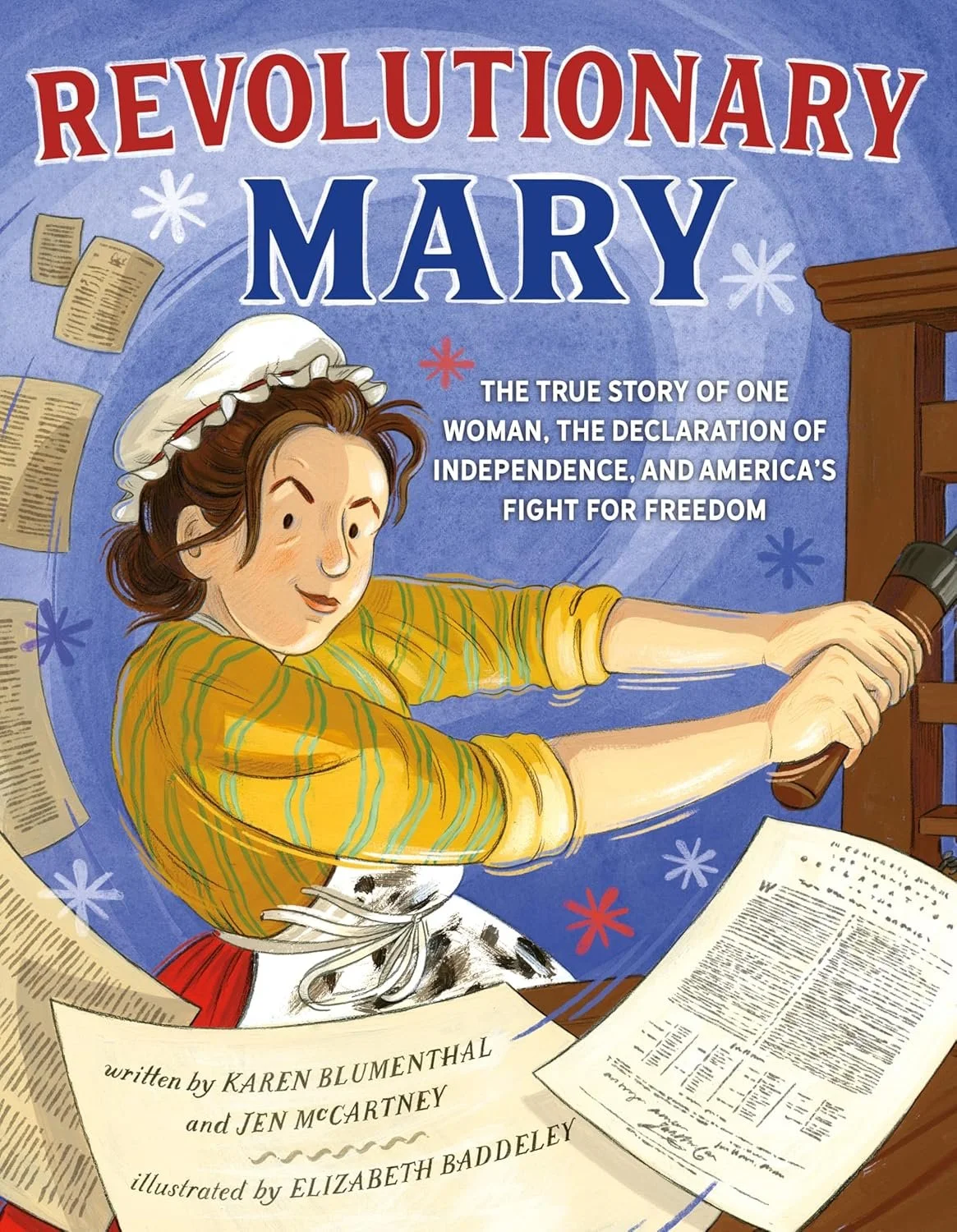
Revolutionary Mary tells the remarkable true story of Mary Katharine Goddard, the courageous printer who published the first edition of the Declaration of Independence to include the names of its signers. During the American Revolution, Mary used her printing press to spread news, support the cause of independence, and ensure that the signers publicly stood behind their decision to break from Britain. The book highlights the often-overlooked contributions of women and demonstrates how information, communication, and civic participation played critical roles in America's fight for freedom.
Recommended Questions:
In the 1700s, women were often excluded from politics and public life. How does Mary’s story change your understanding of who contributed to the American Revolution?
For years, Mary used only her initials, “M. K. Goddard,” in her newspaper. Why do you think she chose to use her full name for the first time on the Declaration of Independence?
Why was printing the names of the Declaration’s signers such a risky act? How did publishing their names help legitimize the new American government?
Why is it important for citizens to have access to information when governments and leaders are making important decisions?
What role should the media play when a society is debating important public issues?
Why is a free press—the ability to publish news and information without government control—important for both democracy and the economy?
During the Revolution, resources such as paper and ink were often scarce. How did Mary’s skills as a business owner and entrepreneur help her keep her printing operation running during difficult times?
If you had lived in the colonies in 1776, would you have supported independence or remained loyal to Britain? What evidence would have influenced your decision?
How can access to reliable information influence the choices people make as citizens, consumers, and community members?
NCSS Theme 6: Power, Authority and Governance
Revolutionary Mary explores how power, authority, and legitimacy are established, challenged, and transferred during times of political change. As a printer, Mary Katharine Goddard used her position to support the emerging American government by publishing the first edition of the Declaration of Independence to include the names of its signers. This act of "public treason" used her power as a printer to legitimize the new government, showing how a free press can shift the balance of power from a monarchy to the people.
Social Justice Anchor Standard 1: Identity and membership in multiple groups
This book describes how Mary Katharine Goddard developed a strong sense of self as a master printer and postmaster in a time when women were socially restricted to the domestic sphere. It allows students to explore how she navigated her multiple identities—as a daughter, business owner, and patriot—to create a professional life that challenged the gender norms of the 18th century.
WA Economics 3: Governments role in an economy
This book examines how Mary Katharine Goddard’s printing business provided the essential service of a free press, which was a vital economic and political resource for the colonies. By managing scarce supplies to keep information flowing, she proved that an independent press is a necessary infrastructure for a functioning democracy and a stable society.
