Solstice
Book Summary:
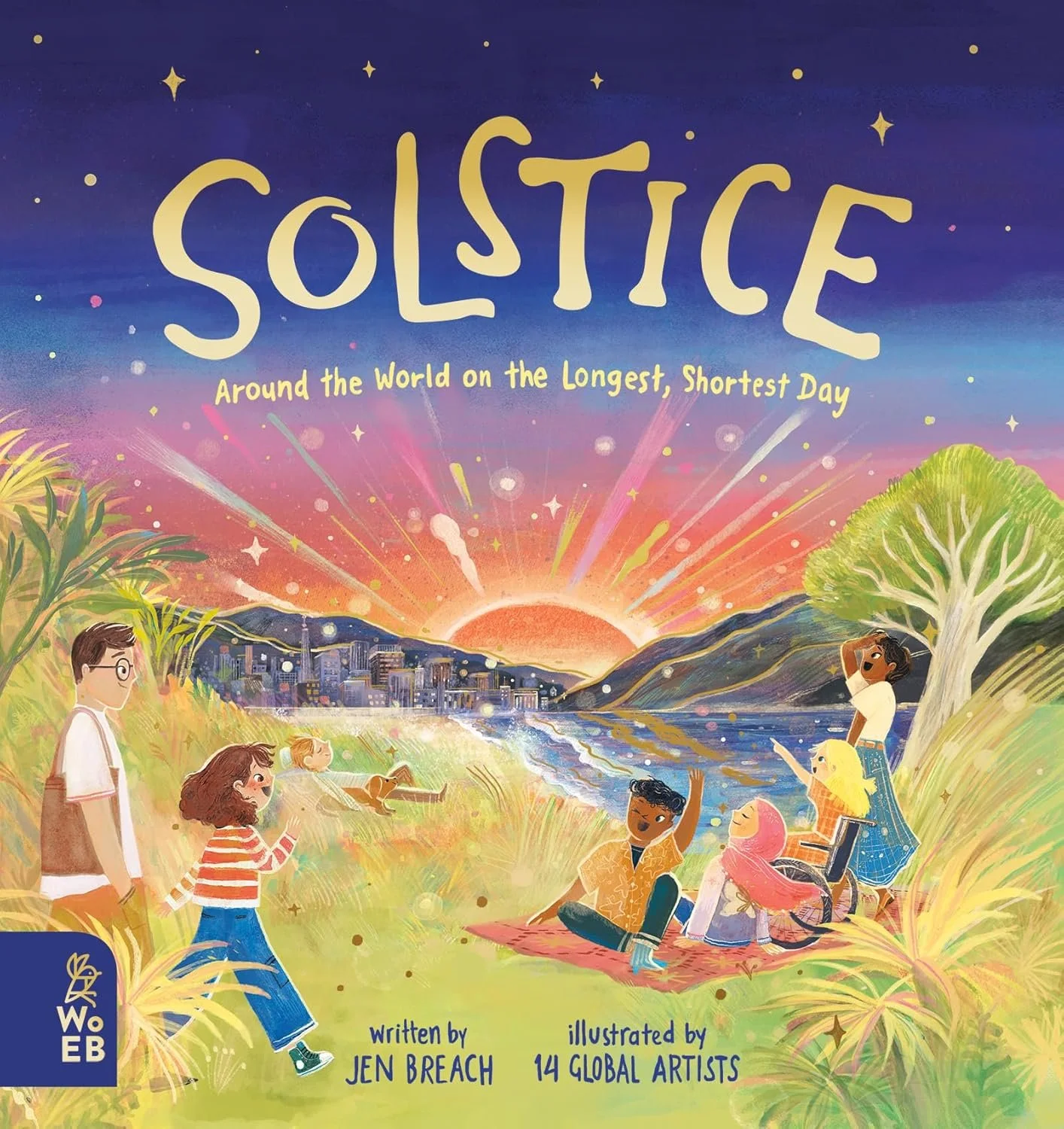
Solstice Around the World: On the Longest, Shortest Day explores how people around the world celebrate the June 21 solstice. The book highlights fourteen specific locations, weaving together cultural traditions, maps, hours of sunlight, and local language to show how celebrations are shaped by geography, seasons, and daylight. Through vivid stories and illustrations, the book emphasizes both global diversity and the shared human connection to the sun and the Earth. The locations featured include the South Pole, Argentina, Australia, South Africa, Ecuador, Indonesia, Nigeria, Nepal, Morocco, China, Turkey, the United States, the United Kingdom, and Norway.
Recommended Questions:
What is a solstice, and why does it matter to people all around the world?
Choose two places from the book. How are their solstice celebrations similar, and how are they different?
How do differences in geography and daylight affect how people experience and celebrate the solstice?
Why do you think the title includes the phrase “the longest and shortest day”? How does this idea connect to the way people around the world experience and celebrate the solstice differently?
Why do you think people across the globe have created traditions connected to the sun and the changing seasons?
How does learning about solstice celebrations help us understand global connections between cultures?
What traditions does your family or community have that are connected to seasonal changes or nature?
Choose one country not featured in the book and research its solstice traditions. Create an entry for that country that includes hours of daylight, typical weather, a map, key vocabulary, and a short story describing how people celebrate.
How can studying celebrations around the world help us better understand and respect people from different cultures?
NCSS Theme 9: Global Connections
This book shows how people around the world are connected through shared experiences with the Earth’s cycles. Although solstice traditions vary across the 14 locations highlighted, communities everywhere respond to the same global phenomenon—the movement of the sun. Students learn how local traditions are shaped by global patterns, helping them understand interdependence and worldwide connections.
Social Justice Anchor Standard 8: Respectful curiosity about history and lived experience of new places
This book encourages students to explore and appreciate cultural traditions from many parts of the world without comparison or judgment. By highlighting 14 different communities, it fosters curiosity, respect, and understanding of diverse ways people mark time and meaning. This supports inclusive thinking and cultural appreciation.
WA Geography 3: Understands the geographic context of global issues and events
This book helps students understand how Earth’s tilt, sunlight, and seasons affect people differently depending on where they live. By examining solstice celebrations across many regions of the world, students see how geographic location influences cultural practices. This supports geographic reasoning about global patterns and human responses to the environment.
