Cantora-English
Book Summary:
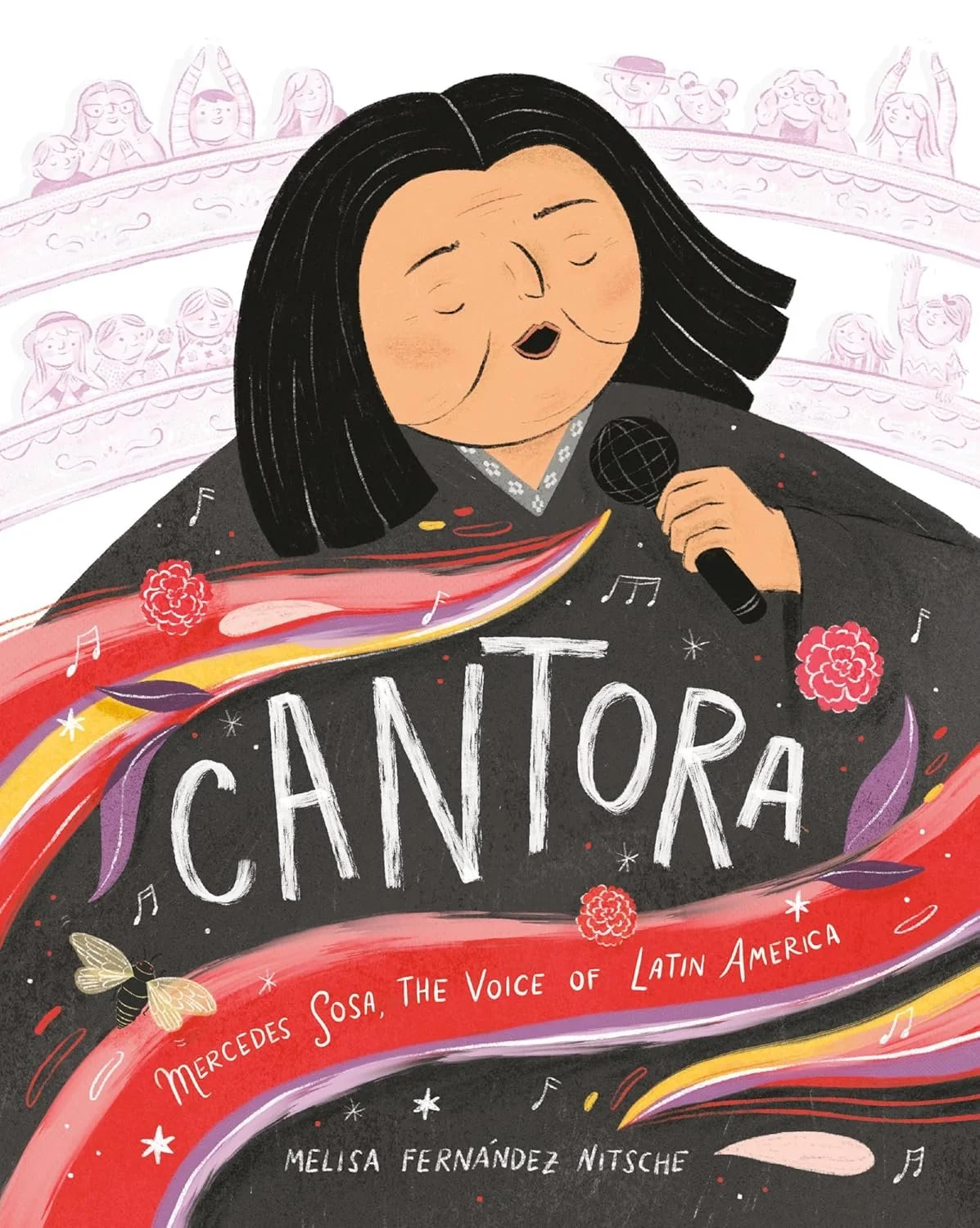
Cantora tells the story of Mercedes Sosa, the legendary Argentine singer who used her powerful voice to stand up for justice, human rights, and democracy across Latin America. Through music, she spoke out against oppression and was forced into exile during Argentina’s military dictatorship. The book highlights how her songs united people and gave hope during times of political struggle.
Recommended Questions:
Research what was happening in Argentina during Mercedes Sosa’s lifetime. Be sure to investigate the Argentine Military Dictatorship (1976–1983), sometimes referred to as La Guerra Sucia (“The Dirty War”). After completing your research, reread the book and identify new details or deeper meanings you notice.
Why was Mercedes Sosa’s music considered dangerous by the government?
What risks did she take by continuing to sing songs about justice and human rights?
How did Mercedes Sosa give a voice to people who felt silenced?
Why is freedom of expression essential in a democracy?
Why do you think she became known as “the Voice of Latin America”?
Research and listen to songs by Mercedes Sosa to explore how she used music as a form of activism. One recommended song is “Sólo le pido a Dios.” A key translated phrase from the song states: “I only ask of God that I not be indifferent to injustice.” The song became an anthem across Latin America for human rights and peace. For the song you choose:
Explain its key message.
Describe how it connects to events in Mercedes Sosa’s life and to the book.
Analyze how the song served as a voice for the community.
Explain how performing this song was an act of civic engagement or resistance.
NCSS Theme 10: Civic Ideals and practices
This book demonstrates how individuals can participate in public life through artistic expression. Mercedes Sosa used music as a form of civic engagement, advocating for freedom, equality, and human rights. Her story demonstrates how citizens can influence society and resist injustice.
Social Justice Anchor Standard 19: Stand up to injustice
Mercedes Sosa modeled courage by using her voice to challenge injustice, even when it placed her at risk. The book encourages students to consider how they can speak up for fairness in their own communities. It reinforces the idea that advocacy can take many forms—including art and music.
WA History 4: Understands how historical events inform analysis of contemporary issues and events
The book situates Mercedes Sosa’s life within the time period of Argentina’s military dictatorship (1976–1983), when the government suppressed political opposition and censored artists. Students can examine how this era of repression shaped movements for human rights and freedom of expression in Latin America. Understanding this period helps students connect past struggles for democracy to current global conversations about civic participation and artistic activism.
