A Song of Frutas
Book Summary:
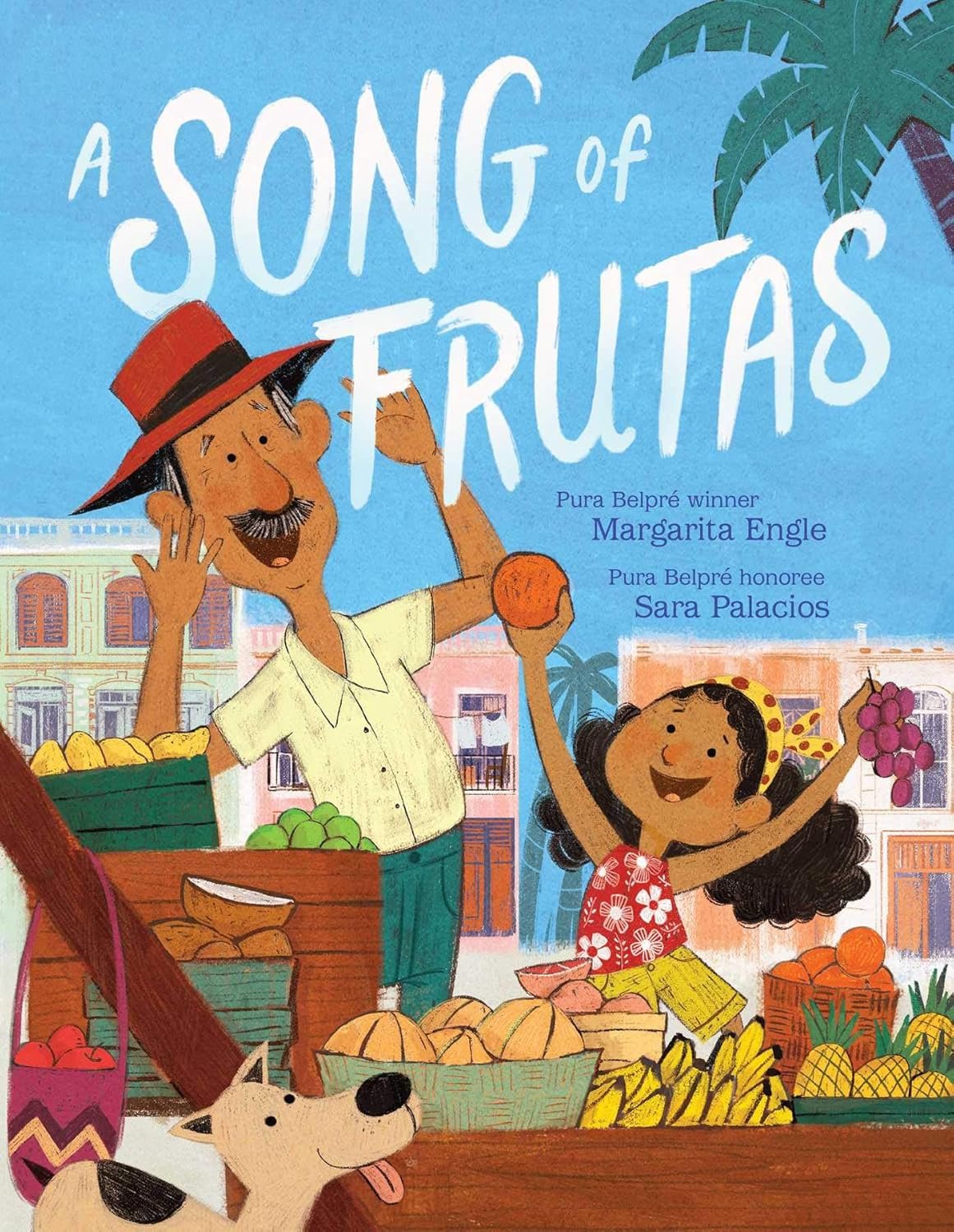
A Song of Frutas tells the story of a young girl who visits her grandfather in Cuba, where he works as a pregonero—a singing street vendor calling out his fruits throughout the neighborhood. Together they sing the names of the fruits as they walk, and their voices become a joyful rhythm that celebrates food, family, and cultural traditions. Even when they are far apart, they stay connected through letters that feel like abrazos—hugs—shared across the distance.
Recommended Questions:
What traditions do you notice in the book that reflect the girl’s culture?
How does the story show the connection between food, language, and family?
How might the fruits in the story be different if the setting were in another country or region? What does that tell us about geography and climate?
How is buying food from street vendors different from shopping at a grocery store? What are the advantages of each type of shopping environment?
What does the marketplace reveal about community life in Cuba?
Why do you think the author includes the tradition of making wishes while eating twelve grapes on New Year’s Eve? What does the granddaughter wish for, and why is her final wish especially meaningful?
Research the travel restrictions between Cuba and the United States to better understand the granddaughter’s wish for “friendship between countries.” Based on what you learn, why does the book suggest that the grandfather has not visited the United States? Why does the granddaughter wish she could travel to Cuba more often?
Two well-known Cuban singers have recorded songs about pregones (the musical calls of street vendors). Listen to one or both of these songs to learn more about this tradition: “El Manisero” by Moisés Simons and “Vendedores” by Celia Cruz. How does the music help you better understand the role of the pregonero in Cuban culture? What similarities do you notice between the songs and the rhythm, repetition, or language used in the book?
NCSS Theme 9: Global Connections
The book highlights how relationships between nations affect families’ everyday lives. The granddaughter’s wish for “friendship between countries” reflects the impact of U.S.–Cuba travel restrictions that have historically limited movement between the two nations. The story helps students understand that international policies and political conflicts are not abstract—they influence real people, families, and communities across borders.
Social Justice Anchor Standard 1: Positive Social Identities
The story affirms the girl’s cultural identity through her language, family practices, and shared memories with her grandfather. It supports students in valuing their heritage and recognizing the importance of cultural traditions. This helps build students’ confidence in their identities while also honoring the diversity of others.
WA Geography 1: Understands the physical characteristics, cultural characteristics, and location of places
This book introduces students to cultural and regional characteristics of Cuba through everyday scenes in a marketplace and the life of a street vendor. Students can explore how climate and geography influence what fruits grow in different regions and how people share traditions around food. The story helps students understand how human cultures are connected to place, community, and movement.
