Mi Papá es Agrícola
Book Summary:
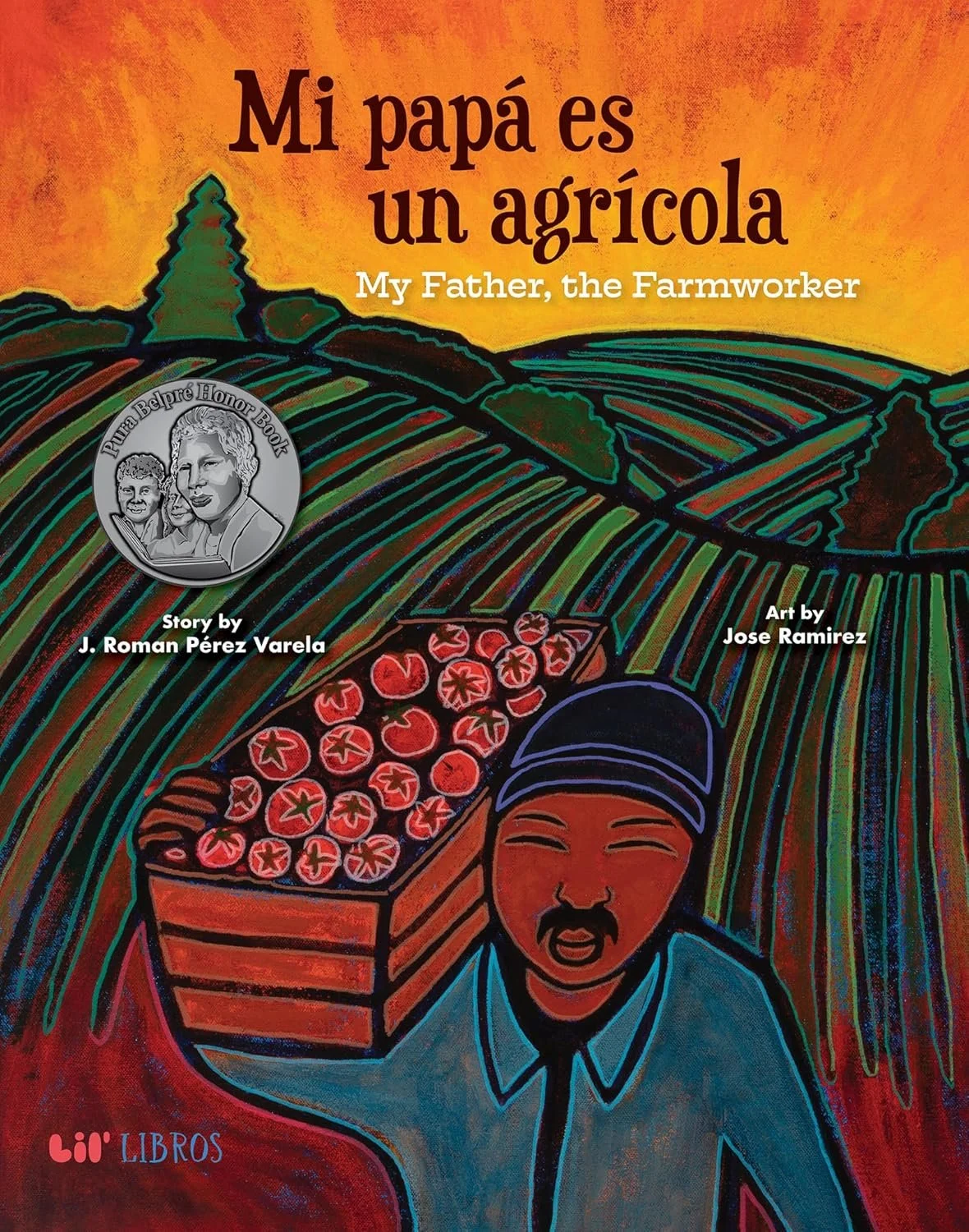
Mi Papá es Agrícola/My Father Is a Farm Worker is told from the perspective of a child who describes the long, difficult days his father spends harvesting crops. The story honors the strength, sacrifice, and dignity of farmworkers while showing the pride the child feels in his father’s labor. It highlights themes of family love, hard work, and resilience.
Recommended Questions:
What role does the father play in the food production system?
Why are farmworkers essential to communities across the country?
What challenges might farmworkers face that other workers may not experience?
How does the child express pride in his father’s work? Why is that pride significant?
The final page shifts the reader’s perspective. Why do you think the author chose to end the book this way? How do the illustrations deepen your understanding of the message?
How do you think the parents feel about their kids accomplishments?
How do you think the kids feel about their parents sacrifice?
The author’s note references the Bracero Program. Research this post–World War II labor program. How does learning about the Bracero Program deepen or change your understanding of the father’s work in the story?
NCSS Theme 7: Production, Distribution and Consumption
The book shows how farmworkers are essential to the production of food that reaches grocery stores and families across the country. Students can examine how agricultural labor fits into larger economic systems of production and distribution. The story encourages understanding of how everyday goods depend on the work of often unseen laborers.
Social Justice Anchor Standard 12: Individual and institutional injustice
The author’s note specifically references the Bracero Program, a U.S. labor agreement that brought Mexican workers to the United States between 1942 and 1964. While the program provided needed agricultural labor, many braceros experienced low wages, poor working conditions, and discrimination. By connecting the personal story of a farmworker family to this historical policy, the book helps students recognize how institutional systems can create unfair conditions.
WA Economics 2: Understands the components of an economic system
This book illustrates the role of labor within the agricultural sector of the economy. Students can analyze how workers, natural resources, and markets interact to produce and distribute food. The book provides a foundation for discussing wages, labor conditions, and the importance of workers within economic systems.
