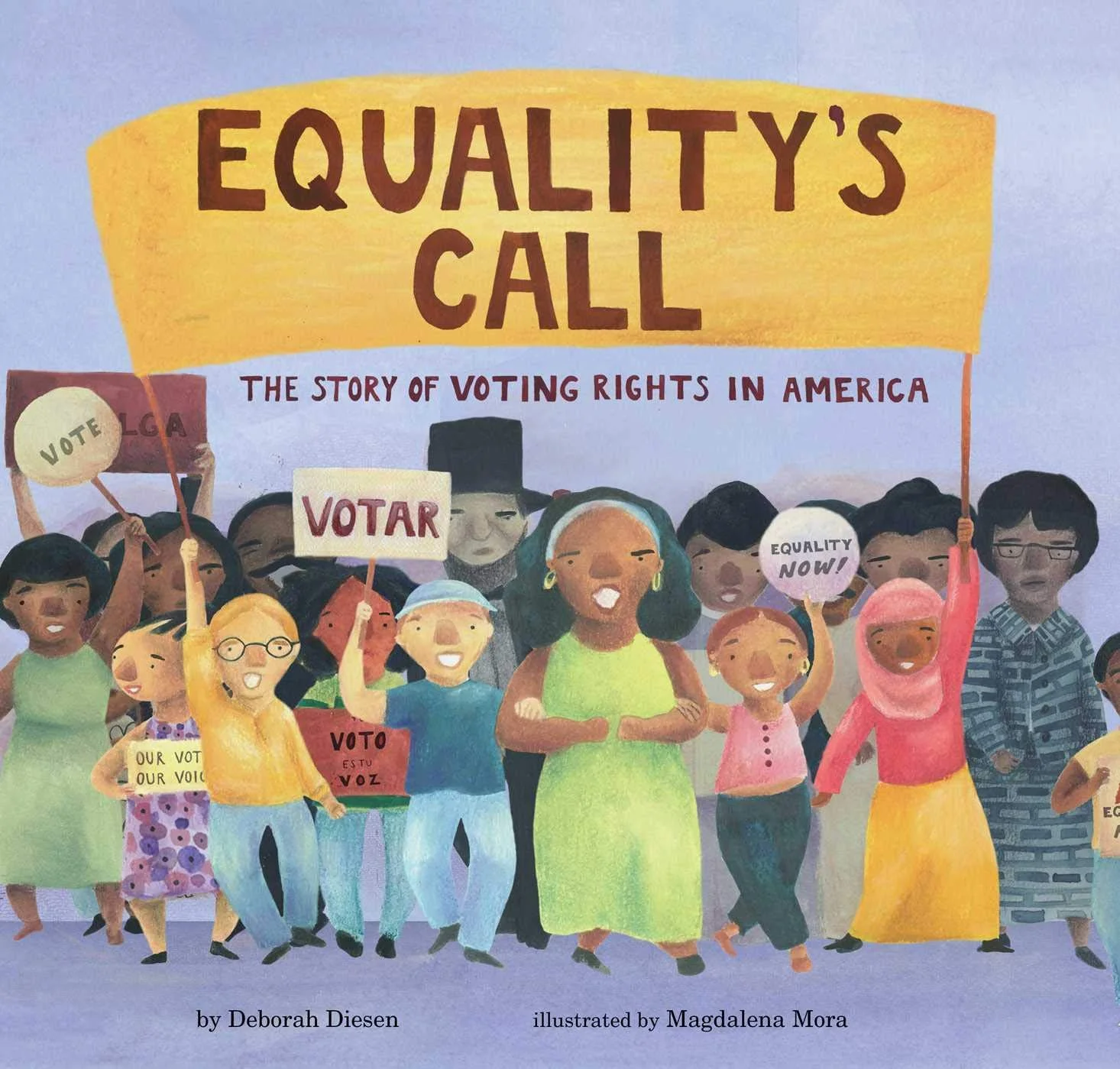
Equality’s Call
Book Summary:
Equality’s Call traces the history of voting rights in the United States, showing how many groups—including women, Black Americans, Native Americans, and young adults—fought for the right to vote. The book highlights both progress and ongoing challenges in achieving equal access to the ballot. Through lyrical text and historical examples, it emphasizes that democracy requires participation and vigilance.
Recommended Questions:
The Declaration of Independence states that “all men are created equal.” Why do you think voting rights were not originally granted to all people?
How does expanding voting rights strengthen democracy?
Why do you think the author repeats the phrase, “A right isn’t a right till it is granted to all”? What message does this repetition emphasize?
Why is it important to recognize institutional unfairness, not just individual prejudice?
Why does the book suggest that the fight for voting rights is ongoing?
How can young people participate in civic life before they are old enough to vote?
The back of the book highlights 11 voting rights amendments and pieces of legislation. Choose one to research and explain why it was important.
The back of the book also features more than 50 voting rights activists. Choose one to research and describe their contributions to expanding democracy.
NCSS Theme 2: Time, Continuity and Change
Equality’s Call traces the historical development of voting rights across different eras in U.S. history. The book shows how access to the ballot has changed over time through constitutional amendments, legislation, and civic activism. Students can analyze patterns of progress and resistance, understanding how past struggles for suffrage continue to shape contemporary debates about voting rights today.
Social Justice Anchor Standard 12: Individual and institutional injustice
This book highlights how laws and systems historically excluded certain groups from voting. It helps students recognize institutional discrimination and understand how unjust systems can be challenged and reformed through collective action.
WA Civics 1: Understands key ideals and principals of the United States
Equality’s Call examines the founding ideal that “all are created equal” and showing how that principle was not initially applied to all citizens. The book highlights constitutional amendments—such as the 15th, 19th, and 26th Amendments—that expanded voting rights and brought the nation closer to its democratic ideals. Students can analyze how foundational principles guide civic action and how citizens have worked to align laws with the values of equality and representation.
