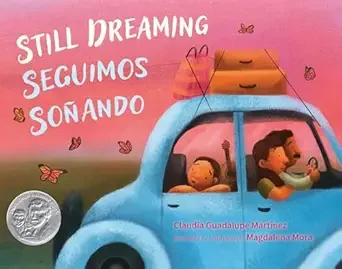
Still Dreaming
Book Summary:
Still Dreaming tells the story of a young immigrant navigating fear, uncertainty, and hope while holding on to dreams for the future. Through personal reflection, the book highlights the emotional realities of immigration, belonging, and resilience. It emphasizes the power of perseverance and the importance of being seen and valued in society.
Recommended Questions:
What events or conditions caused the character and their family to move to Mexico? Be sure to read the authors note for additional context.
How do you think the family feels about being separated and living in two different countries? What evidence from the story supports your thinking?
What examples of mistreatment or unfair treatment of Mexicans can you find in the story and illustrations?
Why do you think so many families in the story talk about the jobs they once held in the United States while migrating to Mexico?
How does the story show the many ways Mexican workers contributed to U.S. society and the economy?
Research the symbolism of the monarch butterfly. Why do you think this butterfly appears throughout the story?
Why do economic problems affect some communities more than others?
How do decisions made in one country affect people living in another?
How can societies work to address shared economic challenges in fair and humane ways?
NCSS Theme 9: Global Connections
Still Dreaming highlights how immigration is shaped by global economic, political, and social forces that cross national borders. The story helps students understand how decisions made in one country can deeply impact families and children in another. Through a personal narrative, the book humanizes global migration and encourages students to see immigration as a global issue rather than an isolated local event.
Social Justice Anchor Standard 14: Power, Privilege and Systems
This books shows how economic power and privilege shaped relationships between U.S. employers, Mexican workers, and government institutions during the Mexican Repatriation. Mexican laborers were recruited when their work benefited U.S. businesses but were later excluded and deported when economic conditions changed. The story helps students recognize how institutional decisions, driven by power and privilege, affected families, communities, and interpersonal relationships.
WA Social Economics 4: Understands the economic issues and problems that all societies face
Still Dreaming is rooted in the early 20th century, when U.S. employers actively recruited Mexican workers because they could pay them lower wages. When the Great Depression struck, widespread economic hardship led to major changes, including the loss of jobs for Mexican workers and mass repatriations to Mexico. The story helps students understand how economic crises can reshape labor systems, migration patterns, and the lives of families.
