Phyllis’s Orange Shirt
Book Summary:
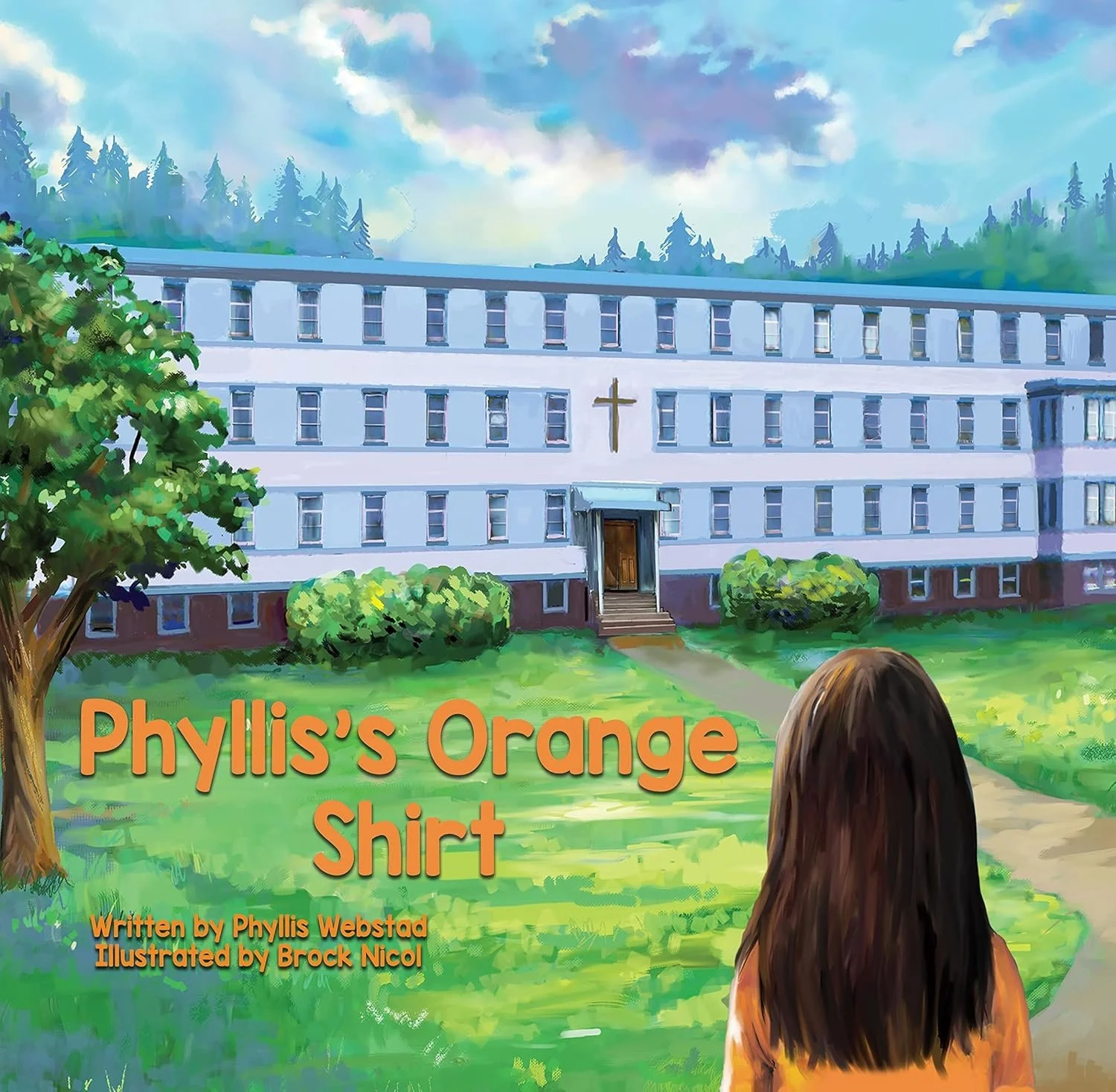
Phyllis’s Orange Shirt tells the true story of Phyllis Webstad’s first day at residential school, when her new orange shirt was taken away. Through her personal experience, the book shows how residential schools harmed Indigenous children by stripping them of identity and belonging. The story helps readers understand history through one child’s lived experience.
Recommended Questions:
How does Phyllis’s story show the importance of cultural identity and traditions?
How does Phyllis’s story demonstrate injustice at an institutional level?
What did losing her orange shirt symbolize about her culture and sense of belonging?
What evidence from the book helps you understand the effects of residential schools?
The book describes Phyllis’s deep sadness about residential schools while also noting the kindness her teacher showed her. How can we understand both of these emotions happening at the same time?
The book describes how so few children were left for Phyllis to play with because many had been sent to residential schools. How did this lack of children affect the lives of tribal members? How did it impact the traditions that were typically passed down from one generation to the next?
Phyllis’s story takes place in Canada, but similar schools and unfair practices occurred in the United States. Research Indian Boarding Schools in the U.S., focusing especially on those near where you live.
The author’s note at the end of the book describes the history of Orange Shirt Day and the role Phyllis Webstad played in creating it. Using what you learned, create a proposal explaining why your class wants to invite your school community to participate in Orange Shirt Day.
***Teachers may want to learn more about Orange Shirt Day to build stronger background knowledge before reading this book. Additional educator resources and materials are available at: https://orangeshirtday.org/
NCSS Theme 1: Culture
This book aligns with Culture because it explores how Indigenous identity, traditions, and belonging were attacked through forced assimilation. The loss of the orange shirt symbolizes the loss of cultural expression and personal dignity. Students learn why culture is essential to identity and community.
Social Justice Anchor Standard 17: Responsibility to stand up to injustice
Phyllis’s Orange Shirt encourages students to reflect on how exclusion and prejudice impacted Indigenous children in residential schools. By learning Phyllis’s story, students can recognize the importance of standing up against unfair treatment and honoring the dignity of others. The book inspires young learners to take responsibility for promoting inclusion, respect, and justice in their own communities.
WA Social Studies Skills 1: Uses critical reasoning skills to analyze and evaluate claims
Phyllis’s Orange Shirt encourages students to think critically about the experiences of children in residential schools. Readers can analyze Phyllis’s story, evaluate the fairness of how children were treated, and consider the broader social and historical claims about residential schools. The book provides an accessible way for students to apply reasoning skills to understand injustice and the impact of historical policies on real people.
