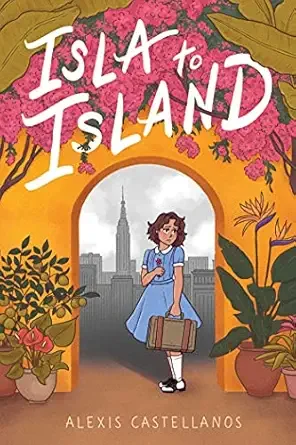
Isla to Island
Book Summary:
Isla to Island is a historical, mostly wordless graphic novel that follows Marisol, a young girl in 1960s Cuba who is sent alone to the United States for safety as political unrest grows at home. The vibrant colors of her life in Cuba become gray in Brooklyn as she struggles with language barriers, loss, and adaptation, but slowly regain color as she connects with her new environment, culture, and community, discovering that “home” can be more than a place. The story powerfully depicts immigration, identity, resilience, and the universal search for belonging
Recommended Questions:
How does Marisol’s experience of leaving her home, language, and culture affect her sense of identity?
Why do you think the author chose to make this a mostly wordless book? How does this storytelling choice enhance your understanding of Marisol’s experiences?
How does the use—or non-use—of color in the illustrations help convey emotions and moods throughout the story? Give specific examples.
Read the author’s note to learn about Operation Pedro Pan, then research it to learn more. How does this historical context change or deepen your understanding of Marisol’s journey?
After learning about Operation Pedro Pan, reread the book. What new details, symbols, or moments did you notice that you didn’t see before?
Why do you think the family in the United States chose to welcome Marisol into their home?
How did Marisol and the family build trust and connection over time? What does this teach us about kindness, empathy, and relationships across cultures?
How was sending Marisol to the United States an act of love and sacrifice by her family?
Unlike many immigrants, Marisol and the children from Operation Pedro Pan were welcomed into the United States. Why do you think the U.S. government and society responded differently to these children compared to other immigrant groups?
NCSS Theme 9: Global Connections
This story shows how global events—like political unrest and the Cuban Revolution—directly influence individual lives and families, prompting migration and resettlement. Students can explore how historical and political events in one country can create ripple effects across borders, affecting education, culture, family structures, and identity. The book encourages learners to think about their own place in a globally connected world and the shared responsibilities we have to one another.
Social Justice Anchor Standard 13: Analyze the harmful impact of bias and injustice
Isla to Island illustrates how political upheaval, displacement, language barriers, and cultural misunderstandings can create uncomfortable, isolating experiences for immigrants. Students can analyze the ways bias, exclusion, and policy decisions have historically created hardship for people like Marisol and continue to affect immigrants and refugees today, fostering deeper empathy and critical awareness
WA History 4: Understands how historical events inform analysis of contemporary issues and events
Isla to Island shows how the Cuban Revolution and the political upheaval of the 1960s forced children like Marisol to leave their homes and migrate to the United States. By examining her personal experiences, students can connect historical events, such as Operation Pedro Pan, to the present-day challenges faced by immigrant children and families. The book encourages reflection on how past government policies, social biases, and migration patterns continue to influence contemporary issues around immigration, displacement, and belonging. Through Marisol’s story, learners can analyze the ongoing human impact of historical events in both local and global contexts.
