The William Hoy Story
Book Summary:
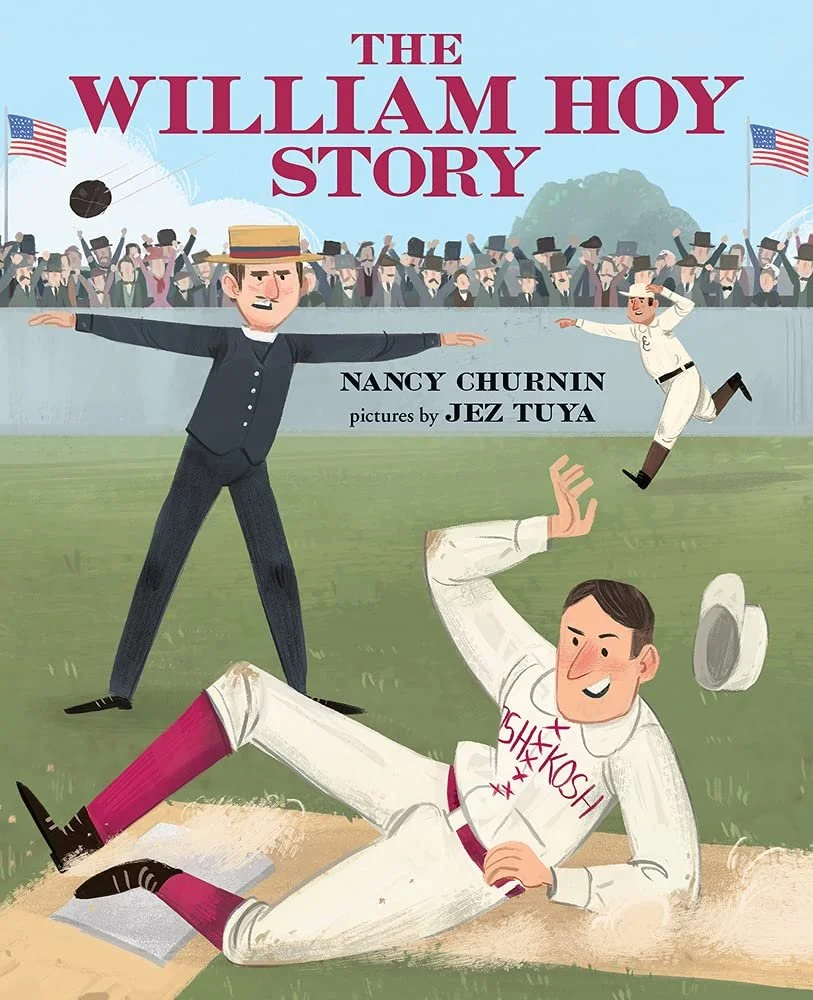
The William Hoy Story by Nancy Churnin tells the true story of William Hoy, a deaf man who played professional baseball in the late 1800s. Despite facing discrimination and low expectations, Hoy’s talent, determination, and love of the game helped him succeed at the highest level. To make baseball accessible, Hoy encouraged the use of hand signals for calls, transforming how the game was played. His innovations not only helped him participate fully but also improved the game for everyone and are still used today.
Recommended Questions:
What questions would you ask William Hoy if you could interview him today?
List at least three ways in which Hoy experienced discrimination in this story. How could each of these have been avoided?
How did William Hoy’s experience as a deaf player shape the way he approached baseball and problem-solving?
Why do you think the umpire agreed to use the suggested hand signals? What risks or benefits might the umpire have considered?
How did Hoy’s hand signals help himself and others better enjoy the game? Can you think of other ways that accessibility for some increases accessibility for all?
The historical context at the end of the book describes how Hoy called himself “Dummy.” Why is it important to understand historical context when examining language, and why must we ensure hurtful language is not used today?
Why was it unfair for the manager to offer Hoy less money? Imagine you have three minutes to speak to the manager—what would you say to explain why this decision was wrong?
What personal strengths did William Hoy demonstrate besides athletic skill? Which of these strengths do you admire most, and why?
How might William Hoy’s story inspire you to advocate for fairness or accessibility in your own school or community?
What lessons about inclusion can we learn from Hoy’s experiences, and how can we apply them in our daily lives? country?
NCSS Theme 4: Individual Development and Identity
This book explores how William Hoy’s deafness shaped his experiences, challenges, and sense of self. The story shows how Hoy developed confidence, resilience, and agency in the face of exclusion, and how embracing his identity ultimately led to meaningful contributions that benefited others.
Social Justice Anchor Standard 11: Recognize stereotypes and relate to people as individuals
The book highlights ableism, exclusion, and inequitable treatment faced by William Hoy because of his deafness. Students are encouraged to recognize how stereotypes and unfair practices limited Hoy’s opportunities and to consider how challenging injustice can lead to systemic change and greater inclusion.
WA Economics 4: Understands the economic issues and problems that all societies face
The William Hoy Story illustrates the economic problem of fairness in compensation and access to employment. Hoy was offered less pay and faced barriers to advancement because of discrimination, reflecting how societies often struggle with inequitable treatment of workers. The story helps students understand that when economic systems exclude or undervalue people based on disability, everyone loses potential talent, innovation, and productivity.
Baseball Marker at Gallaudet University naming baseball field after William Hoy
Learn more about Gallaudet University
