The William Hoy Story
Book Summary:
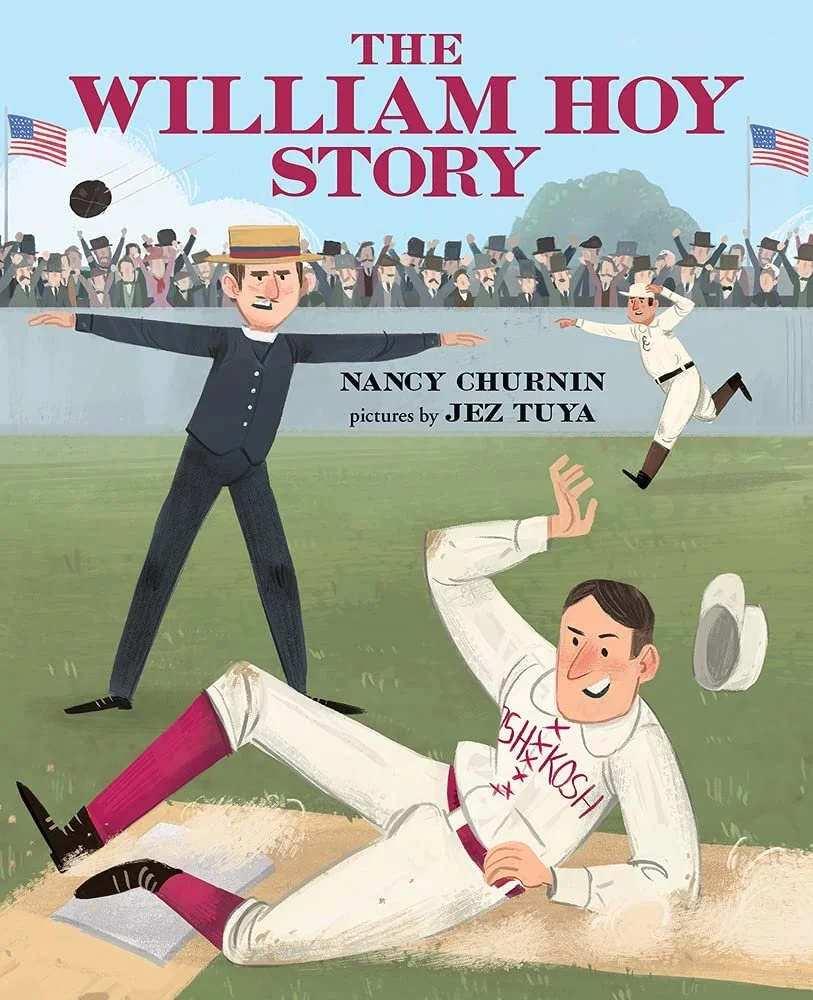
The William Hoy Story tells the true story of William Ellsworth Hoy, a deaf baseball player in the late 1800s and early 1900s who overcame prejudice and communication obstacles to become a successful major league player. When he couldn’t hear umpires’ calls, Hoy developed hand signals that umpires now use in baseball, forever changing how the game is played.
Recommended Questions:
List at least three ways William Hoy experienced discrimination in the story. How could each of these situations have been avoided if people had acted more fairly or empathetically?
In the historical note, Hoy is described as calling himself “Dummy.” Why is it important to understand the historical context of words? Why is it important to avoid using hurtful or outdated language today?
How did Hoy’s use of hand signals help him play baseball more successfully? How did these signals also help umpires, teammates, and fans better enjoy the game?
Why was it unfair for the manager to offer Hoy less money because he was deaf? Imagine you have three minutes to speak to the manager—what would you say to explain why this decision was wrong?
Why do you think the umpire agreed to try Hoy’s suggested hand signals? What does this decision show about openness to change and inclusion?
How does learning about Hoy’s challenges help you better understand the experiences of people with disabilities today?
How might William Hoy’s story inspire you to advocate for fairness or accessibility in your own school or community?
What lessons about empathy, inclusion, and standing up for yourself can we learn from Hoy’s experiences?
NCSS Theme 2: Time, Continuity and Change
William Hoy’s story connects to this theme because it illustrates how the actions of one individual can create lasting change over time. By developing hand signals to communicate as a deaf baseball player, Hoy not only adapted to his own challenges but also influenced how the game of baseball is played for generations. His story helps students understand how historical events and personal innovations shape social practices and institutions over time.
Social Justice Anchor Standard 16: Empathy when people are excluded
William Hoy, a deaf baseball player, faced exclusion and prejudice because of his disability. By learning about his experiences, students can understand the challenges of being marginalized and practice empathy. Hoy’s creative solution—developing hand signals—also shows how advocating for inclusion can help change communities and institutions for the better.
WA History 4: Understands how historical events inform analysis of contemporary issues and events
William Hoy’s story helps students see how historical experiences of exclusion and innovation continue to influence society today. By learning how Hoy developed hand signals to participate fully in baseball despite being deaf, students can analyze contemporary issues of accessibility, inclusion, and advocacy. This standard encourages students to connect historical solutions and struggles to ongoing efforts to create equitable communities and institutions.
